
Classic Rock
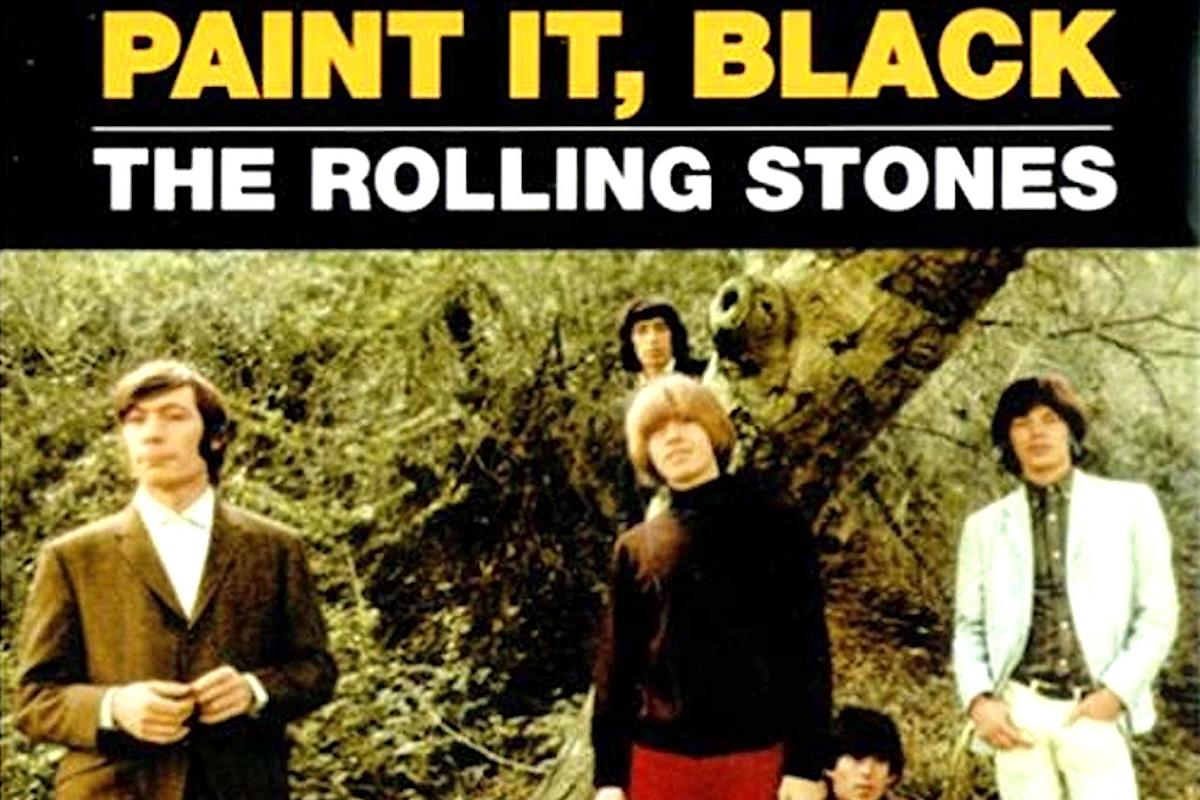
Why Rolling Stones Struggled With ‘Paint It Black’
May
As the Rolling Stones began releasing original music, their subject matter darkened. Nervy hit singles like 1965’s “(I Can’t Get No) Satisfaction” and 1966’s “19th Nervous Breakdown” spoke to a turbulent age characterized by generational conflict and an escalating war.
“Our songs were taking on some kind of edge in the lyrics – cynical, nasty, skeptical, rude,” Keith Richards wrote in his autobiography, Life. “The lyrics and the mood of the songs fitted with the kids’ disenchantment with the grown-up world of America, and for a while we seemed to be the only provider – the soundtrack for the rumbling of rebellion, touching on those social nerves.”
Then there was “Paint It Black.” The track began life as something else entirely before being released as a single on May 7, 1966, about a month after the arrival of its U.S. parent album Aftermath. Richards had created a skeletal melody while Mick Jagger completed lyrics about a lost lover that were filled with era-appropriate portent. But the song itself remained stalled out.
How ‘Paint It Black’ Became a Group Effort
“‘Paint It Black’ was just going to be like a beat group number,” Jagger later lamented. The Rolling Stones were long past that point. “If you’d been at the session, it was like one big joke.”
Then their often-overlooked bandmates stepped in.
“I kept saying, ‘It sounds a bit empty in the bottom end,’ although I played bass on it and Charlie [Watts] played drums well,” Bill Wyman recalled on the Ultimate Classic Rock Nights radio show. “But something seemed lacking, and I said, ‘Can I try something?'”
Listen to the Rolling Stones’ ‘Paint It Black’
He created an exotic cadence using the pedals on a Hammond organ, but with his fists instead of his feet. “I lay on the floor under the organ,” Wyman wrote in his memoir The Story of a Rock ‘n’ Roll Band, “and played a second bass riff on the pedals, at double-time.”
As Watts picked up on this new rhythm pattern, “Paint It Black” began to build on the vaguely Yiddish feel that Richards’ original idea had inadvertently encouraged. “We’d been doing it with funky rhythms and it hadn’t worked,” Richards told Rolling Stone, “and he started playing it like this and everybody got behind it.”
The Rolling Stones had been moments away from giving up. “That song was going nowhere,” Rolling Stones manager and producer Andrew Loog Oldham said. “Another 10 minutes,” he remembered thinking, “and it’ll be time to move on.”
Late Rolling Stones co-founder Brian Jones completed “Paint It Black” on sitar. (Ivan Keeman, Getty Images)
What’s the Unusual Sound on ‘Paint It Black’?
Meanwhile, Brian Jones offered his own otherworldly instrumentation. Elsewhere, he was dotting the Aftermath sessions with new sounds, including marimba and dulcimer. He’d also taken an interest in the sitar, after hearing George Harrison play the Indian instrument late the year before on the Beatles‘ “Norwegian Wood.”
“Brian had pretty much given up on the guitar by then,” Richards told Rolling Stone. “If there was [another kind of] instrument around, he had to be able to get something out of it. It gave the Stones on record a lot of different textures.”
READ MORE: The Best Song From Every Rolling Stones Album
Jones was serious about the sitar. He took lessons from virtuoso Harihar Rao, who had studied under Harrison’s teacher Ravi Shankar. “I love the instrument,” the late Jones told Melody Maker. “It gives you a new range, if you use an instrument like that. It has completely different principles from the guitar and opens up new fields for a group in harmonics and everything.”
His masterful turn on “Paint It Black” completed the song. “That’s it!” Oldham enthused. “I’d heard the sound and movement we needed.” But Jones, dressed in all white, sat apart when the Rolling Stones subsequently played their new chart-topping single on The Ed Sullivan Show.
Listen to the Rolling Stones’ ‘Paint It Black’ in Concert
Who Deserved ‘Paint It Black’ Songwriting Credit?
Richards had heaped praise on Wyman’s offbeat turn on the organ pedals – and he agreed that Jones’ contribution had been invaluable. “What’s amazing about that one for me is the sitar,” Richards told Rolling Stone. “Brian playing the sitar makes it a whole other thing.”
Despite everyone else’s musical additions, however, “Paint It Black” was credited only to Jagger and Richards. Jones’ presence in the group he co-founded would continue to diminish until he was fired during sessions for 1969’s Let It Bleed. He died a month later, having only added sparse backing instruments to his two final Rolling Stones songs.
READ MORE: Top 10 Post-‘Some Girls’ Rolling Stones Songs
“You know, Keith would come in with a riff – that’s all – and over the course of a week we would come up with a song,” Wyman later told Guitar World. “Then Mick would write the lyrics, and it would come out on an album credited as ‘Jagger/Richards.’ That would happen all the time. … We just had to live with it or leave.”
In later years, Richards would take over Jones’ iconic part during the Rolling Stones’ live performances of “Paint It Black” – but on electric guitar.
Rolling Stones Albums Ranked
Ready to journey through the past (darkly)? Check out Rolling Stones Albums Ranked Worst to Best.
Gallery Credit: Bryan Wawzenek
You Think You Know the Rolling Stones?
