
Pop/Hip Hop/R&B
15 Best Ukulele Players of All Time
May
Small in size but vast in spirit, the ukulele has traveled from royal Hawaiian courts to global stages, charming audiences with its bright, unmistakable voice. In the hands of a true master, those four humble strings become something extraordinary—capable of dazzling virtuosity, soulful storytelling, and genre-defying innovation. Over the decades, a select group of musicians has elevated the instrument beyond novelty, transforming it into a serious artistic force. From pioneers who preserved its roots to modern trailblazers redefining its limits, these players have shaped the ukulele’s legacy in profound ways. This journey through the 15 best ukulele players of all time celebrates not just technical brilliance, but creativity, influence, and the magic that happens when passion meets precision. Whether you’re a seasoned player or simply a curious listener, prepare to discover the legends who turned simplicity into something truly unforgettable.
1. Jake Shimabukuro
Jake Shimabukuro is the rare musician who made the ukulele sound boundless. His defining performance of “While My Guitar Gently Weeps” remains one of the great modern ukulele moments, not because it treats the instrument as a novelty, but because it reveals its hidden orchestral power. In his hands, a familiar George Harrison melody becomes lyrical, muscular, and deeply personal. Shimabukuro’s best known pieces, including “Dragon,” “Blue Roses Falling,” “143,” and “Sakura Sakura,” show his gift for turning the ukulele into a complete emotional language. He can move from delicate harmonics to flamenco inspired speed, from cinematic balladry to rock intensity, without ever losing the instrument’s intimate voice. What makes his catalog so compelling is the balance between technique and feeling. Many players can impress, but Shimabukuro sings through the strings. His recordings helped redefine what a solo ukulele career could look like in the twenty first century, inspiring players around the world to take the instrument seriously as a concert voice.
2. Israel Kamakawiwoʻole
Israel Kamakawiwoʻole, affectionately known as IZ, gave the ukulele one of its most beloved recordings with “Somewhere Over the Rainbow” combined with “What a Wonderful World.” The performance is simple on the surface, yet almost impossible to imitate convincingly because its power comes from tenderness, breath, and spiritual warmth. His ukulele playing was never about flashy runs. It was about space, pulse, and the feeling that every chord carried the weight of home. Beyond that iconic medley, his finest songs include “Hawaiʻi 78,” “White Sandy Beach,” “Kaleohano,” and “Maui Hawaiian Sup’pa Man.” These recordings reveal an artist deeply connected to Hawaiian identity, land, language, and memory. His voice was immense, but the ukulele gave it a gentle frame, almost like sunlight around a mountain. IZ remains essential because he brought Hawaiian music to a global audience without sanding away its soul. His best songs still feel communal, prayerful, and human, proving that musical greatness often arrives quietly.
3. Taimane
Taimane is one of the most electrifying ukulele performers of the modern era, known for turning the instrument into a theatrical force. Her signature piece “Neptune’s Storm” captures her artistic personality beautifully. It is dramatic, rhythmically intense, and full of sudden emotional shifts, moving like a story told through waves, fire, and moonlight. Taimane’s strongest performances often blend classical themes, Latin colors, rock energy, and Polynesian atmosphere, making her stage work feel more like a ritual than a recital. Songs and arrangements such as “The Moon,” “Samba Pa Ti,” “Phantom of the Opera,” and her fiery medleys show how fluently she connects genres without making them feel pasted together. As a player, she has remarkable command of dynamics. She can strike with percussive force, then immediately soften into a whispering melodic phrase. What separates Taimane from many virtuosos is her sense of visual drama and emotional pacing. She treats the ukulele as both instrument and character. Her best work proves that the ukulele can be fierce, sensual, cinematic, and completely commanding.
4. James Hill
James Hill is admired by serious ukulele players because his music shows an almost architectural understanding of the instrument. His famous treatment of “Billie Jean” became a landmark because it demonstrated bass line, chords, percussion, rhythm, and melody happening at once on four strings. Yet Hill is much more than a clever arranger. His original and recorded work, including “Uke Talk,” “Voodoo Child,” “One Small Suite for Ukulele,” and “The Satisfactory Waltz,” reflects a musician with deep roots in folk, jazz, classical thinking, and old time string traditions. He often approaches the ukulele like a miniature orchestra, but never loses its earthy charm. There is wit in his playing, but also discipline and warmth. Hill’s best songs and arrangements invite listeners to hear the ukulele as a complete instrument rather than an accompaniment tool. He has also been enormously influential as an educator, helping players understand rhythm, harmony, and technique in practical ways. His artistry lies in making astonishing musical intelligence sound playful, friendly, and natural.
5. Herb Ohta
Herb Ohta, widely known as Ohta San, is one of the most elegant ukulele stylists ever recorded. His international hit “Song for Anna” remains a perfect doorway into his sound. The melody is gentle, polished, and quietly sentimental, but the performance has a master’s control behind every note. Ohta’s playing is smooth without becoming bland, refined without losing the ukulele’s island warmth. Other essential recordings include “Sushi,” “Body Surfing,” “Hana,” and his many lyrical Hawaiian standards. Where some artists emphasize speed or spectacle, Ohta built his reputation on tone, phrasing, and impeccable taste. He helped move the ukulele into lounge, jazz, pop, and easy listening spaces while preserving its Hawaiian identity. His influence is enormous because he showed that the instrument could carry melody with the grace of a violin or the intimacy of a nylon string guitar. Listening to his best work is like studying breath control in instrumental form. Each phrase lands softly, but it stays in the ear long after the final chord fades.
6. Eddie Kamae
Eddie Kamae was more than a dazzling ukulele player. He was a cultural guardian, bandleader, composer, historian, and one of the great interpreters of Hawaiian music. As a founding force in the Sons of Hawaii, Kamae helped renew interest in older Hawaiian songs while also expanding the role of the ukulele in ensemble playing. His best known work includes “E Kuʻu Morning Dew,” “Kūlia I Ka Nuʻu,” “Waipiʻo Pākaʻalana,” and many performances that blend crisp instrumental detail with deep reverence for tradition. His playing had a bright, articulate quality, often dancing around the melody with rhythmic confidence and clean melodic invention. Kamae’s greatness cannot be separated from his commitment to preserving stories, places, and voices that might otherwise have faded. He understood songs as living archives. When he played, the ukulele was not merely cheerful accompaniment. It was a storyteller’s instrument, capable of carrying genealogy, landscape, humor, grief, and pride. His finest recordings remain essential listening for anyone who wants to understand the ukulele’s cultural depth.
7. Lyle Ritz
Lyle Ritz gave the ukulele a jazz vocabulary that still feels fresh. Best known for albums such as “How About Uke?” and “50th State Jazz,” he treated the instrument with the harmonic sophistication of a seasoned jazz bassist and arranger. His standout recordings include versions of “Lulu’s Back in Town,” “Have You Met Miss Jones,” “Ain’t She Sweet,” and “Stardust.” Ritz had a relaxed swing feel that made difficult chord movement sound effortless. He did not force the ukulele into jazz. He revealed that jazz had been waiting inside it all along. His tone was warm and rounded, and his chord melodies were voiced with uncommon clarity. Ritz also became famous as a studio bassist, contributing to countless major recordings, but his ukulele work has a special cult status among players who care about harmony. His best songs are miniature lessons in taste. They prove that the ukulele can handle chromatic movement, elegant substitutions, and sophisticated standards while still sounding inviting. Ritz remains a patron saint of jazz ukulele.
8. Roy Smeck
Roy Smeck, often called the Wizard of the Strings, was one of the first great multimedia virtuosos of fretted instruments. His ukulele work dazzled early film and stage audiences because it combined musical skill with showmanship, humor, and physical command. Pieces and performances associated with Smeck, including “His Pastimes,” “Ukulele Bounce,” “Twelfth Street Rag,” and his many vaudeville style showcases, reveal a player who understood entertainment as a total art. He could strum, tap, slide, pluck, and toss off novelty effects while keeping the rhythm alive. Smeck’s importance lies partly in timing. He helped popularize the ukulele during an era when recorded sound and film were reshaping public taste. Yet his playing was not merely historical curiosity. Even now, the speed, coordination, and comic precision in his performances remain startling. He belonged to a generation of musicians who had to win over audiences instantly, and every gesture in his playing carries that pressure. His best work is joyful evidence that virtuosity can be theatrical, witty, and wonderfully fearless.
9. George Formby
https://www.youtube.com/watch?v=gbLG1Ew8BkQ
George Formby became one of Britain’s most recognizable entertainers through a fast strumming style, comic timing, and a bright banjolele sound that cut through dance halls and cinema screens. His best known songs include “Leaning on a Lamp Post,” “When I’m Cleaning Windows,” “With My Little Stick of Blackpool Rock,” and “I Always Get to Bed by Half Past Nine.” Formby’s music was built on charm, speed, and character. The songs often carried cheeky humor, but the playing underneath was serious business. His right hand technique had remarkable drive, producing a rolling rhythmic sparkle that became instantly identifiable. He was not a Hawaiian style ukulele figure, nor a modern fingerstyle virtuoso, but his influence on popular fretted instrument entertainment is enormous. Formby proved that a small instrument could carry a large public personality. His recordings still have the crackle of music hall energy, full of quick wit and rhythmic lift. For players, his catalog remains a treasure chest of syncopated strumming, comic phrasing, and old fashioned stagecraft.
10. Brittni Paiva
Brittni Paiva brought a smooth, contemporary instrumental voice to the ukulele, blending Hawaiian warmth with pop, jazz, reggae, and island inspired grooves. Her strongest recordings include “Lights,” “Sunday Morning,” “Tahiti Nui,” and her elegant arrangements of familiar melodies. Paiva’s playing is polished but never sterile. She has a graceful sense of melody, often favoring lyrical lines that float above relaxed rhythm tracks. What makes her work special is the way she places the ukulele in modern instrumental settings without making it feel secondary. It leads, sings, and converses with the band. Her tone is clean and expressive, and she has a gift for making technically demanding passages sound smooth rather than showy. Paiva also helped broaden the image of the contemporary ukulele artist, especially for younger players seeking a path beyond novelty strumming or traditional repertoire. Her best songs have a sunlit sophistication. They are accessible enough for casual listeners, yet detailed enough for musicians to admire. In her hands, the ukulele becomes a sleek modern lead instrument with heart, clarity, and island soul.
11. Abe Lagrimas Jr.
Abe Lagrimas Jr. is a deeply musical player whose work bridges jazz, classical color, pop melody, and Hawaiian feeling. His performance of “I Will Follow You Into the Dark” shows the sensitivity that defines much of his playing. He does not simply translate songs to ukulele. He reharmonizes, breathes, and reshapes them until they feel newly intimate. His recordings and performances include “Spain,” “On the Beach at Waikiki,” “Hana,” and a wide range of jazz influenced interpretations. Lagrimas is also a strong multi instrumentalist, and that broader musicianship is audible in his ukulele phrasing. He thinks like a drummer when he handles groove, like a jazz musician when he approaches chords, and like a singer when he shapes melody. His touch is precise, but never cold. Among modern ukulele players, he stands out for taste and versatility rather than theatrical flash. His best work is especially rewarding for listeners who enjoy harmony and subtle rhythmic nuance. Lagrimas shows that the ukulele can be sophisticated without becoming distant, and virtuosic without losing emotional warmth.
12. Daniel Ho
Daniel Ho is a remarkably versatile musician, producer, composer, and instrumentalist whose ukulele work sits within a much wider creative world. His best known pieces include “Pineapple Mango,” “Living in Paradise,” “E Kahe Malie,” and recordings that move fluidly through Hawaiian, world, folk, and contemporary instrumental styles. Ho’s ukulele playing often favors clarity, tunefulness, and balance. Rather than overwhelming the listener with ornament, he builds pieces around memorable melodic shapes and clean arrangements. That restraint is one reason his music travels well across audiences. He understands how to make the ukulele sound polished in the studio while preserving its natural sweetness. As a producer, he has also helped frame Hawaiian and island influenced music for broader listeners, giving the ukulele a refined contemporary platform. His best songs are bright, melodic, and carefully crafted, often carrying the feel of a relaxed coastal morning. Ho’s artistry is rooted in musicianship rather than spectacle. He is the kind of player whose choices seem simple until one tries to copy them. Then the elegance becomes clear.
13. Bill Tapia
Bill Tapia was a living bridge between the earliest ukulele boom and the modern revival. Born in the early twentieth century, he played through eras that most musicians only read about, bringing jazz, Hawaiian standards, and show business wisdom into every performance. His signature repertoire included “Stars and Stripes Forever,” “Sweet Georgia Brown,” “Lady Be Good,” and countless standards delivered with wit and swing. Tapia’s greatness was not just longevity, though his long career was astonishing. It was the ease with which he made music feel conversational. His phrasing had the relaxed authority of someone who had shared stages, absorbed traditions, and learned how to entertain without strain. Tapia could be funny, elegant, rhythmically sharp, and emotionally direct all within a single tune. His ukulele playing carried old Honolulu, jazz age America, vaudeville sparkle, and personal memory. For younger players, his recordings offer something beyond technique. They offer perspective. Tapia reminds us that songs are not museum pieces. In the right hands, they remain alive, flexible, and full of character.
14. Grace VanderWaal
Grace VanderWaal introduced a new generation to the ukulele through original songwriting that felt raw, youthful, and unmistakably personal. Her breakout song “I Don’t Know My Name” became popular because it used the ukulele not as decoration, but as an honest songwriting companion. The instrument matched the song’s vulnerability, giving her voice a direct and unguarded setting. Her other major songs, including “Moonlight,” “Clay,” “Beautiful Thing,” and “Light the Sky,” show a young artist drawn to identity, self expression, and emotional immediacy. VanderWaal is not a traditional virtuoso in the lineage of Jake Shimabukuro or Herb Ohta. Her importance comes from a different place. She made the ukulele feel current for pop listeners who might never have explored the instrument otherwise. Her strumming is simple, but that simplicity serves the songs. It leaves room for her distinctive vocal tone and lyrical personality. In the broader history of ukulele culture, VanderWaal represents the instrument’s power as a songwriting tool. Her best work proves that a few chords can still feel startling when the voice behind them is sincere.
15. Tiny Tim
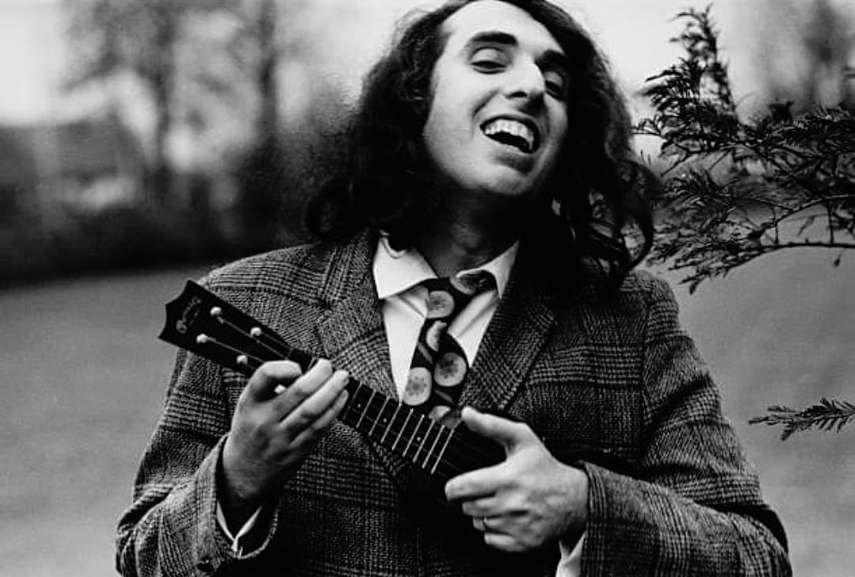
Tiny Tim occupies one of the strangest and most fascinating corners of ukulele history. His version of “Tip Toe Through the Tulips With Me” became his signature, powered by falsetto, theatrical eccentricity, and a deep affection for early popular song. To casual listeners, he can seem like a novelty figure, but that reading misses the depth of his archival passion. Tiny Tim knew old songs obsessively, especially music from the early twentieth century, and he used the ukulele as a portal into that vanished sound world. His notable performances include “Livin’ in the Sunlight, Lovin’ in the Moonlight,” “Then I’d Be Satisfied With Life,” and many antique pop pieces revived with surreal devotion. His playing was not technically dazzling in the modern virtuoso sense, but it was inseparable from his persona. The ukulele became an emblem of innocence, strangeness, nostalgia, and theatrical vulnerability. Tiny Tim’s best music matters because it preserved forgotten repertoire through an utterly singular lens. He made the ukulele weird, memorable, and oddly touching, proving that influence sometimes comes from being impossible to confuse with anyone else.

Edward Tomlin is a frequent contributor to Singers Room. Since 2005, Singersroom has been the voice of R&B around the world. Connect with us via social media below.
Source link
