
Alternative Rock
The Flatliners On Brotherhood, Sharing The Weight & New Album ‘Cold World’
May
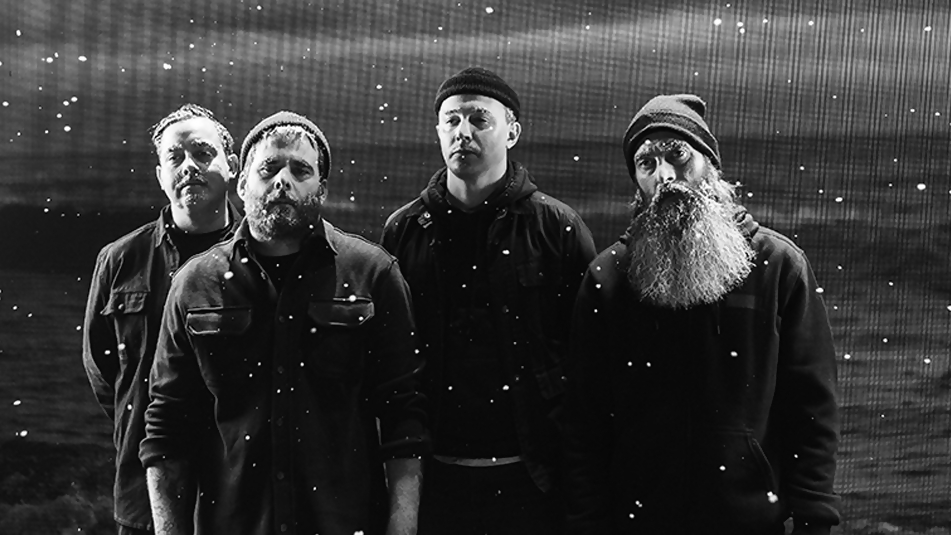
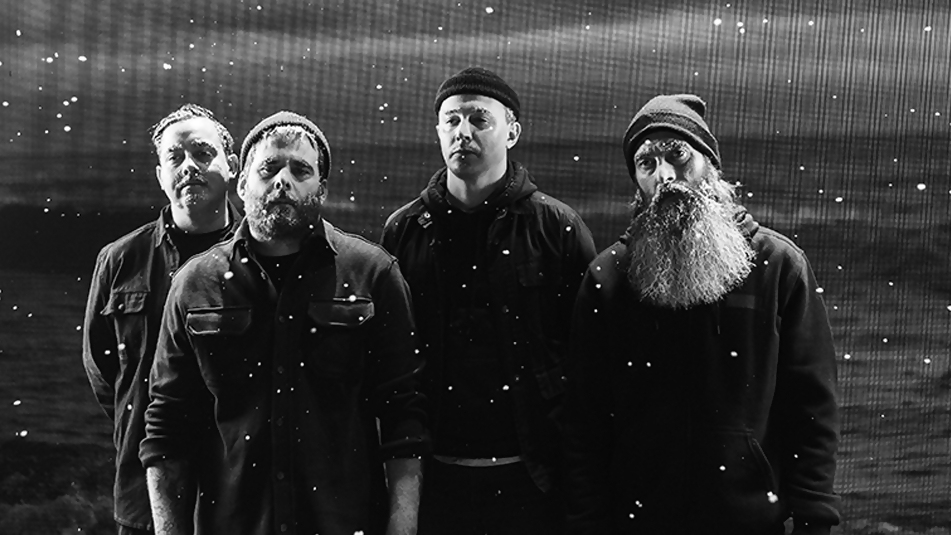
At the end of all things, The Flatliners hope that you’re going to see in total oblivion with your friends.
Of course, there’s a morbidness to that sentiment, but the truth is that it’s hard to avoid the darkness at the moment. So, you may as well try and have a good time whilst it takes over.
That’s very much where the band’s new full-length ‘Cold World’ sits. Continuing to deliver some of the most rousing, melodically beautiful and thrashing heartland punk you’re ever going to hear, the quartet are also making sure they’re not sugar-coating their view on things. But even though things may be bleak, they hope that them soundtrack this unexpected voyage can provide a bit of solace and serenity. A reminder that you’re not dealing with these things alone, and it’s okay to want to scream into the nothingness a little bit.
To chart where this album has come from and where he hopes it takes them moving forward, Rock Sound sat down with vocalist/guitarist Chris Cresswell.
RS: So, where do you feel as though The Flatliners sit right now, off the back of what you have done with this new record?
Chris: There’s a lot of externalising what was previously internalised on this record. There’s a lot of reporting on the world around us. That’s kind of always been our style over the years. When we first started, and as reflected in our records, ‘The Great Awake’ and ‘Cavalcade’, a lot of those songs were about the world around us, but that world was on tour in the van. Playing shows and getting to experience this beautiful planet of ours as friends. And that’s how we’re also making new friends elsewhere, getting to see these Far and Away exciting places, and having these experiences. Positive and negative, like the sacrifice of always being away from home and missing it. Now, years later, the band is 24. You know, we’re all in our late 30s. This is the seventh record we’ve made, and the world around us is still the one we’re reporting on, but now we have more responsibilities in our lives. The things that take up your time in good ways and sometimes in bad, you know, in ways that you maybe don’t want them to steal your time away from you. But the point being that as artists, I think our duty is to report about that world around us and the world around us right now has given us a lot of material on how fucked up things are and how just truly exhausting and challenging it can be just to be alive.
The record isn’t supposed to be a sob story. It’s more about digging your heels in the mud and being like, ‘Alright, we’ve got to figure this out the way we can as a band.’ That’s maybe about allowing people an escape from the world around them by listening to this record, or helping them dive deeper into these challenges and exhaustion with this music. I mean, the music is there for us, and we’re working through these feelings about the world around us in real time, too. There’s a lot of grief on this record. We lost a few really close friends of the band in the last year, and we’re getting to that age where it just starts to happen more often. There’s a lot of reality here, and that reality is that when you get to your late 30s, you feel like the fire is still burning in all of us to figure out how to climb the mountain of these challenges in our lives. How to right the wrongs.
RS: The fact that you exist in a scene which is built upon that fire as well must play a huge part. There is belief and hope and optimism stitched into the anthems that live here, and the anthems that you yourself have written. But when you’re looking back on how you made those feelings heard in the past, how does that compare to the way that you may make them happen now?
Chris: I think so much of writing music, especially within my seat on the ride, is lyrically, there’s always a lot of self-reflection. I feel like there’s always this mirror being held up by my own hand to look inward and take stock, whilst I’m writing with the other one. That part of the process hasn’t really changed too much. It always evolves a little bit. I think I can trust myself a little more now. Maybe I take it more seriously each time. I’m also able to keep that blade sharp and that muscle moving. But all the decisions I’ve made up to this point have allowed me to live this life, and it can be a bit of a luxury sometimes. And I do go back to this teenage version of myself who is saying, ‘This is what I wanted, and I have it now, but it turns out I’m still a human being with challenges in life. That’s never going to go away for anyone. So at least I have the opportunity in the outlet to write about it. And some people can create beautiful art about the good things in life. I am not one of those people. I tend to be drawn to the dark corners to try to understand them better and shine a light on them.
But musically, we know ourselves more. Like each time we make a record, all these chords, all these words, all these musical notes, they all exist. We have to find them. So putting themselves or putting those pieces together allows us to find new parts of ourselves, kind of. It can be a mountain to climb to make a record, but I love it.
RS: And each time you make that decision to go back into making a record, to go out on tour, to step into this and spew out what you need to. You’ve made the conscious decision to do it, so you may as well do it with your whole heart and soul.
Chris: There’s a whole swath of opportunity now in how to be an artist, in a way where you don’t have to do it the way that we did when we were kids. And yes, we did make this conscious decision, but the way we operate now involves a lot of communication. I mean, we talk every day as a band and as friends and all these things, and there’s always stuff going on. But there are these elements of this band’s existence that are almost telekinetic at this point, because we’ve been doing this together for 24 years. We were friends for years before this band started. Scott and I met on the first day of kindergarten. John and I were in the same grade two class and discovered that we lived on the same street, so we walked to school together every day for the rest of our school days. It’s this funny thing where it’s a sibling thing now, so there is a lot that can remain unspoken. We’re just moving as a unit.
RS: The truth is that how can you really speak candidly about your place in the world with your bandmates if you don’t already know them inside and out? But it’s amazing how rare that is, too. You’re in a truly unique position to have that closeness and trust.
Chris: And the things you learn about operating as a human being in the real world, just from being in a band, too. There are many transferable skills. In terms of emotional intelligence, being in a band can send you one of two ways that are in complete different directions. There’s a 100% of the time opportunity to be in touch with your vulnerability as a person and the people around you, and just to be yourself when you’re all in the van together, you’re all on stage together, you’re all working on this music together. Or it can go the other way, where just because you do that on stage, because you do that in the studio, because you do that for a living, then the moments you have for yourself are just for yourself. It’s a very interesting way to live.
RS: And without it, your view on the world and the way things are going would be so different, too. You would see what is going on in such a negative, detrimental, broken light, but this life in the band serves as an anchor in the hope that things could change.
Chris: Absolutely, I would be a much different person if I didn’t have the outlet I do. It’s clear to me that it’s helpful, and it turns out it’s good to talk about your feelings.
RS: And that’s something that you talk about a lot in ‘Good, You?’, a song that goes right to the heart of people, especially men, not talking about their feelings in a healthy way. Of bottling it up.
Chris: It’s not just guys, but I think it’s more prevalent in guys. I think people in general are a little hesitant to let their guard down and talk about these things. Everyone’s going through a version of something. I’m in my late 30s, and I’m, I’m the son of parents who were born a decade after World War Two. So if you go two generations back in my family, you’re talking about people being at war and literally fighting a war. They’ve come home now, if they’ve survived that, and they’ve started a family, and no shit that they don’t want to talk about it. So it’s not surprising that, looking back, our parents’ generation was raised by people who didn’t want to talk about their feelings, so maybe they don’t talk about their feelings as much either. That distils down to our generation a little bit. And each time, maybe with each generation there, there’s more and more of letting your guard down, dropping your shoulders, literally and figuratively, and letting people in on what’s going on, because we all have something going on.
I think the younger generations are really good at sharing stuff. Maybe they’re sharing too much sometimes, but at least we’re talking to each other, you know what I mean? But you don’t want to burden people around you with this kind of thing, and it gets to the point where you have all these things going on in your life that maybe are bringing you down, and then someone asks you, ‘How are you doing?’ and you go, ‘Yeah, good. You?’ Yeah, that’s it. Or, ‘Not bad’. Like, let’s just let some shit fly. Let’s be here for each other.
RS: You mention younger generations there. What has it been like to see the shift and to see so many people over the years gravitate towards the band for different reasons?
Chris: It’s exciting. We have two kinds of parties involved within our fan base, which is really cool. We have a lot of folks who have grown up with us, and now they’re coming to our shows with their kids. And then you have a younger generation that has just found us on their own. I don’t think we’re the only band ever to experience this, but it is really beautiful to see those two worlds mix. And I think there’s more of a belief in what we’re doing musically. There’s more of a belief in what I’m writing about lyrically. Part of that is just because there’s a fucking mountain of shit to climb over these days. There’s an opportunity for everyone to talk about it all, which is great.
RS: And people want to experience things. They have a thirst for storytelling and for feeling things they wouldn’t otherwise. And if you’re there to provide that, then they are going to continue to come from angles.
Chris: There is so much noise out there now. Discourse, social media, internet, all this kind of shit. If you can at least choose the noise that you want to listen to, then you’re curating your own experience a little bit.
RS: And the fact that the core of what The Flatliners is within that has stayed steady and the same throughout your story. Like, how lucky are you to be able to say that as a truth, and to have done it with the same people the same way, with no end in sight?
Chris: It’s funny you bring that up, because that’s actually a huge component of this record’s theme, you know? The last song, ‘United In Spite’ is a thesis song within that. It’s about friendship at the end of the world. You’re choosing who you want to ride this out with. No matter what happens, at least you have your people. With everything that’s swirling around you as a human being these days, it’s a lot to process. You only have so much energy to combat or celebrate each day. You’re not an endless reserve of energy. So pick your battles, man. Choose your people if you can. Talk about your life with them. That’s what this record boils down to.
Source link
