
Classic Rock
Peter Frampton Is a Friend to All: ‘Frampton’ Film Review
Jun
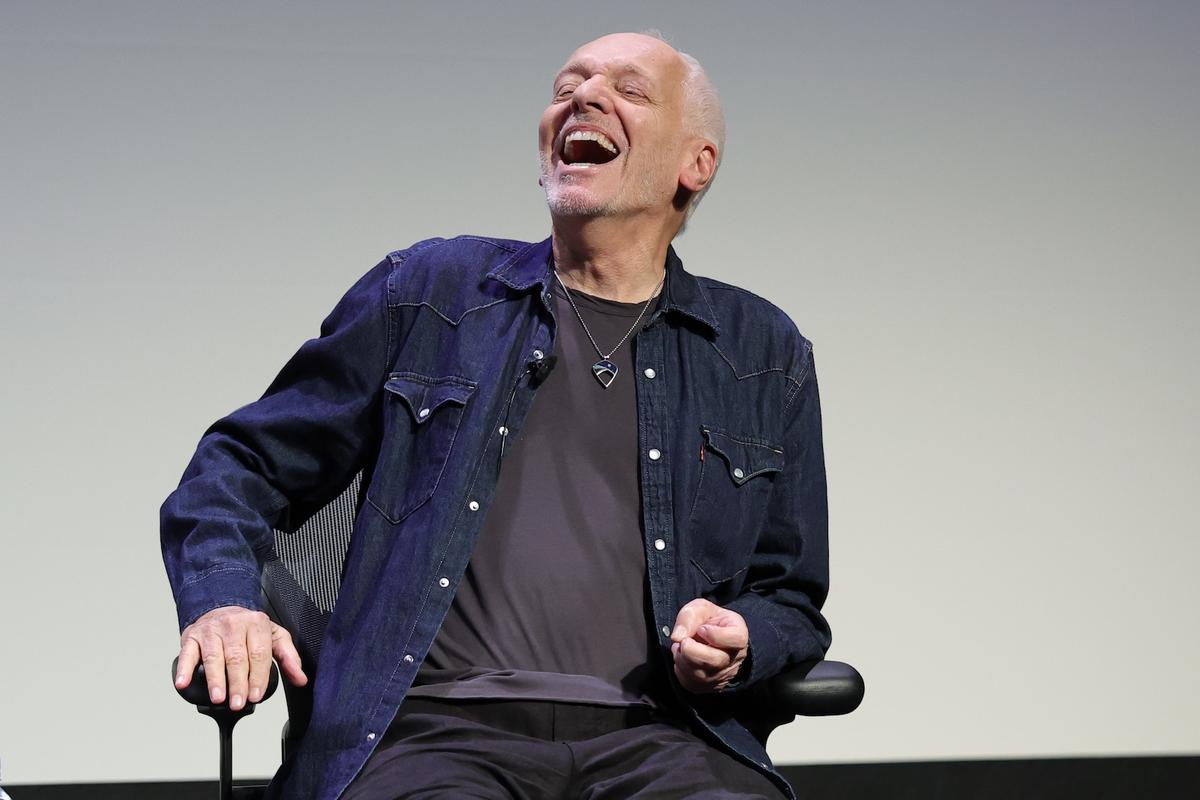
On Thursday evening in Manhattan, under the shadow of the World Trade Center, Peter Frampton and his longtime bandleader Rob Arthur sat for a conversation that followed the global premiere of a new documentary, Frampton.
When Arthur, the film’s director, began conceptualizing the film and inviting various industry folk to speak about Frampton, he found there was zero hesitation on anyone’s part.
“Everybody loves this guy,” Arthur said from the stage, noting that even Ringo Starr, a Beatle, wasted no time saying yes to an on-camera interview. Frampton and Starr first met back in the late ’60s, crossing paths in London studio sessions. “Pete was cool, he was very open,” Starr says in the film. “We became pals.”
Becoming and remaining pals is a central theme in Frampton, which traces the guitarist’s life and career from childhood, through his rollercoaster ride with fame and all the way up to the making of his 2026 album, Carry the Light. Pals, that is, in every shape and form.
“Good Lord, I’m getting chills here,” Frampton says in one scene in which he revisits Abbey Road Studios, the place where he contributed to George Harrison‘s seminal All Things Must Pass, standing in the exact spot he remembers sitting on stools with the Beatle, recording acoustic guitar. Frampton’s first wife, Mary Lindes, notes that Harrison took Frampton, barely out of his teens, on “like a little brother.”
As most rock ‘n’ roll fans are aware, Frampton’s story is one of extremes. His 1976 album Frampton Comes Alive! saw him “strapped to a rocket” as Cameron Crowe puts it, straight to the top of the charts and the covers of every magazine. Frampton’s face — and body, to his chagrin, decked out in tacky-looking satin clothing that always exposed his lean torso – was everywhere then. It was “the summer of Frampton,” Sheryl Crow says in the film.
‘Pete Was on His Own’
Despite what one might think, the top is a lonely place. Starr notes that he had his three bandmates with him, but “Pete was on his own.”
As this portion of the film mounts, it cuts to a more recent Frampton, sitting on his tour bus somewhere around 2019, lamenting how swollen his feet have gotten and insisting that he’ll visit with a doctor on one of the tour’s off days. This was around the time Frampton revealed to the world a diagnosis of IBM, Inclusion Body Myositis, a rare degenerative disease that slowly weakens muscles over time. Frampton feared that it would effectively end his career.
Cut back to the ’70s and Frampton’s fame can only last so long. After a derailing experience in the 1978 movie Sgt. Pepper’s Lonely Hearts Club Band — “awful,” Frampton says — a near-fatal car accident in the Bahamas that same year, failed follow up albums to Alive!, being dropped from A&M Records and the realization that his managers had been stealing money out from under him for years, Frampton did not know where to turn. In one shot, a dispiriting image of a Frampton Comes Alive! copy is shown, sitting in a record store bin with a 99 cent sticker and another that reads “the nice price.”
But in came more of those friends. Ahmet Ertegun of Atlantic Records wrote Frampton a check for $100,000 to help him get back on his feet. A phone call arrived in the ’80s from his old grade school pal, a man named David Bowie, asking if he’d like to come on tour. It didn’t happen overnight, but Frampton steadily climbed his way back into a position of respect. He started touring again and releasing more successful albums, both artistically and commercially.
There are more cuts between time periods. In the present day, Frampton shows the camera how he’s typically unable to pick up his cell phone without using his entire hand, and even that proves a difficult for his weakened fingers. In another scene, he demonstrates how he uses a grabber tool at home, for when he drops objects and needs them picked up. His trained service dog, Bigsby, named after the electric guitar parts brand, helps him retrieve a fallen cane.
READ MORE: How Peter Frampton’s Documentary Finally Came Alive
This somewhat upsetting juxtaposition runs throughout Frampton — exuberant youth versus life-altering physical pain, tanned, toned ’70s skin versus a weathered body that has had to re-learn basic movements. The thing that has remained unchanged, however, is Frampton’s own optimistic personality, his determination to find a way through and, of course, his friends.
That includes the friendships he’s formed with his now adult children, Julian, Mia and Jade, who speak candidly in the film about missing their father during their childhood and coming to terms with his incurable illness. Julian, a musician himself who collaborated with his father extensively on Carry the Light, gets emotional describing an old video of himself as a toddler being helped up a set of stairs by his dad. These days, he says, it’s the other way round.
Frampton’s brother, Clive, is present as well. It was Clive who slept on the floor next to Frampton’s bed as he recovered in a New York City hospital from the aforementioned car accident, and Clive who shooed away photographers who attempted to capture Frampton at his lowest point. Together, the two Frampton brothers take a trip down memory lane in their hometown, proudly pointing out the school that still bears a logo drawn by their art teacher father.
READ MORE: Why Peter Frampton Left Humble Pie Before ‘Rockin’ the Fillmore’
And then there are more of Frampton’s musical friends: Bill Wyman, Tom Morello, Alice Cooper, Roger Daltrey, Tommy Shaw, Nancy Wilson and others, people who found inspiration in his career, relatability in his fame and comfort in his unsinkable attitude. Crow, for example, was 14 years old when she went to her very first rock concert, Frampton on the Frampton Comes Alive! tour in 1976, an experience she describes as entirely eye-opening. It made her realize, she says, that she too wanted to make people feel the way Frampton did, and still does.
“I’m a live guy,” Frampton himself says in the film, as shots of him on his tour bus and in his home studio sail by. “I’ve got to be out doing it.”
Arthur’s intention, the filmmaker told the audience on Thursday night, wasn’t to make a movie about how to be a rockstar, though Frampton would fit that bill. His goal was to showcase Frampton’s character, the hard-working, deeply resilient artist, father and friend who chose to never give up even when most everything else was stacked against him. In that sense, Frampton is undeniably a success.
Nothing, including IBM, has ultimately kept Frampton down and away from making music with his friends. He’s now proud to own that courageous legacy, admitting toward the end: “I’m stronger than I thought.”
Watch the Trailer for ‘Frampton’
Peter Frampton Albums Ranked
‘Frampton Comes Alive!’ made him a star. This is his story before and after that career-defining blockbuster.
Gallery Credit: Michael Gallucci
