Alternative Rock
Finding Styles That Flatter Every Body Type · Bubbling Box
Nov
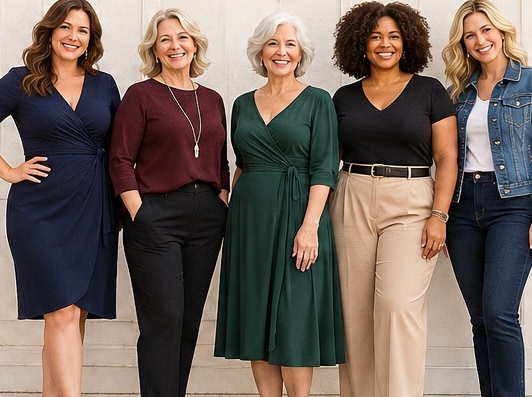
Let’s talk about something we all experience: seeing a beautiful outfit on someone else, trying it on ourselves, and wondering why it doesn’t look quite the same.
Here’s the thing. Different bodies carry clothing differently, and that’s perfectly natural.
Learning a little about proportions can make shopping easier, more enjoyable, and a lot less frustrating.
The pear or triangle shape
If your hips are broader than your shoulders, you might enjoy tops with interesting necklines, structured shoulders, or colorful details. A-line dresses and gently flowing skirts can also feel wonderful.
The inverted triangle shape
When shoulders are broader than hips, wide-leg pants, flowing skirts, and softly draped tops can create a balanced silhouette. V-necklines are another option worth exploring.
The rectangle shape
If your shoulders, waist, and hips have fairly similar measurements, you can experiment with creating definition. Belts, wrap dresses, peplum tops, and tailored jackets offer interesting possibilities.
The hourglass shape
With shoulders and hips of similar proportions and a more defined waist, wrap dresses, fitted jackets, and high-waisted trousers can highlight natural curves. Of course, looser clothing can look beautiful, too.
The apple or round shape
If you carry more fullness around your midsection, you may enjoy empire-waist dresses, open jackets, soft fabrics, and tops that drape comfortably. Straight-leg pants can provide another easy styling option.
But here’s the most important part.
These shapes are simply guidelines, not categories you must squeeze yourself into.
Many women fall somewhere between them. And bodies change over time.
You don’t have to dress to look smaller, taller, curvier, or anything else unless that’s the effect you want.
Sometimes the most flattering outfit is simply the one that lets you move comfortably, stand confidently, and feel like yourself.
Let’s talk fashion: Have you discovered a particular cut, neckline, or style that always makes you feel wonderful?
Words: Leah.
Thank you for reading independent culture. Join the discussion below.
Source link
