
 Public Enemy "What You Gonna Do When The Grid Goes Down"
  Rolling Stones "Tattoo You" (40th Anniversary, Ltd. Ed.)
 Pop/Hip Hop/R&B
10 Best The Stranglers Songs of All Time
Aug
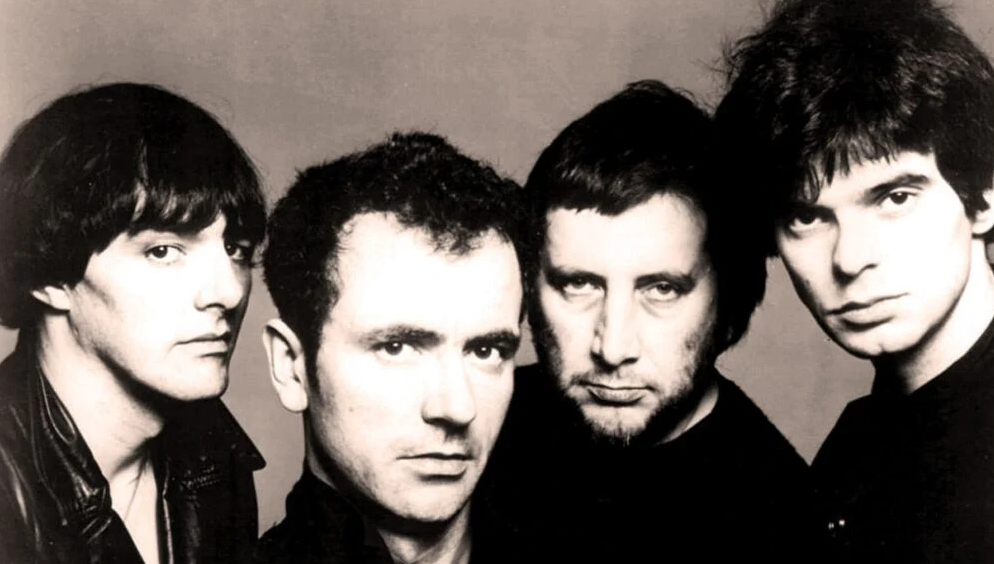
Few bands emerged from Britain’s punk explosion with a sound as dark, sophisticated, and instantly recognizable as The Stranglers. Combining snarling bass lines, swirling keyboards, sharp guitar work, and an unmistakable sense of menace, the group always stood slightly apart from their contemporaries. Their music could be aggressive and confrontational one moment, then unexpectedly melodic and elegant the next. From the haunting beauty of “Golden Brown” and the irresistible pulse of “No More Heroes” to the atmospheric brilliance of “Always the Sun” and the provocative energy of “Peaches”, The Stranglers built a remarkably diverse catalog. Their willingness to mix punk, new wave, progressive influences, and sophisticated pop helped give their music lasting character, ensuring that their greatest songs remain as intriguing, unconventional, and compelling as ever.
1. Golden Brown
“Golden Brown” stands as one of the most unusual songs ever to become a major popular success, and it remains the recording most immediately associated with The Stranglers for millions of listeners. Appearing on La Folie, the song represented an extraordinary departure from the aggressive reputation the group had established during the British punk era. Instead of snarling bass, confrontational guitar, and abrasive energy, listeners encountered an elegant arrangement shaped by Dave Greenfield’s distinctive keyboard work, acoustic textures, graceful melody, and an unusual rhythmic structure that gives the music an almost timeless quality.
Hugh Cornwell’s vocal is wonderfully restrained. He sings with a detached smoothness that allows the mysterious lyric to remain open to interpretation. The words can suggest romantic fascination, dangerous temptation, or something more narcotic and consuming. That ambiguity is central to the song’s fascination. Rather than explaining exactly what Golden Brown represents, The Stranglers created a seductive image that becomes increasingly mysterious with every repetition.
Greenfield’s keyboard contribution is essential. The harpsichord like sound provides the recording with an almost baroque atmosphere, making it feel far removed from conventional rock music. Yet beneath that elegance is a carefully controlled rhythmic tension. The changing meter gives the song a subtle instability that listeners may feel even if they never consciously identify what is happening.
Perhaps the greatest achievement of “Golden Brown” is the way complexity disappears beneath beauty. The arrangement is unusual, the rhythm is unconventional, and the lyric is deliberately elusive, yet the finished recording sounds effortless. Its melody is immediately memorable and strangely comforting.
“Golden Brown” demonstrated that The Stranglers could reinvent themselves without losing their individuality. What might have sounded completely unexpected from another punk era band instead became one of their defining statements, an elegant, haunting, and endlessly fascinating piece of British popular music.
2. No More Heroes
“No More Heroes” captures The Stranglers at their most urgent, confrontational, and immediately recognizable. Released during the band’s explosive early period, the song combines Hugh Cornwell’s cutting vocal delivery, Jean Jacques Burnel’s enormous bass sound, Dave Greenfield’s swirling keyboards, and Jet Black’s relentless drumming into a performance that feels both disciplined and barely contained. The title itself became one of the defining slogans associated with British punk, yet the music was considerably more sophisticated than the simplicity of that phrase might initially suggest.
The song questions the disappearance of larger than life figures while simultaneously sounding suspicious of the very idea of hero worship. Historical personalities appear within the lyric, but the central question feels broader. Where have the people gone who once seemed capable of inspiring fascination, fear, rebellion, or admiration? The Stranglers do not provide a reassuring answer. Their skepticism is part of what gives the recording its enduring edge.
Burnel’s bass is especially important. Rather than remaining politely underneath the guitar, it pushes aggressively toward the front of the mix. That muscular sound became one of the group’s signatures and helped distinguish them from many of their contemporaries. Greenfield’s keyboards provide another unusual element. At a time when punk was often associated with stripped down guitar music, The Stranglers proudly used keyboards as a central melodic and atmospheric instrument.
Cornwell delivers the lyric with a mixture of contempt, amusement, and restless energy. He never sounds interested in comforting the listener. Instead, the vocal intensifies the song’s questioning spirit.
“No More Heroes” remains one of The Stranglers’ essential recordings because it contains the complete early band in concentrated form. It is aggressive without being primitive, catchy without becoming harmless, and intelligent without sacrificing physical impact. Few songs capture their particular combination of punk hostility and musical sophistication more effectively.
3. Peaches
“Peaches” is one of the most unmistakable recordings in The Stranglers’ catalog, beginning with a bass figure so distinctive that only a few seconds are needed to identify the song. Jean Jacques Burnel’s playing dominates the opening, establishing a slow, swaggering groove that immediately separates the track from the frantic tempos commonly associated with the British punk explosion. Rather than racing forward, “Peaches” strolls with deliberate confidence, giving Hugh Cornwell plenty of room to deliver one of his most provocative early performances.
The lyric presents a deliberately exaggerated male gaze as Cornwell describes walking along a beach and noticing the people around him. The performance is humorous, crude, theatrical, and intentionally provocative, qualities that helped make The Stranglers controversial from the beginning. Heard today, some of the language inevitably belongs to a very different cultural moment, but the song remains an important example of the band’s willingness to make listeners uncomfortable while wrapping that confrontation inside an irresistible groove.
Burnel’s bass tone is the true star. It is thick, elastic, and almost percussive, occupying the space that a guitar riff might fill in another rock song. Dave Greenfield adds keyboard textures that make the arrangement stranger, while Jet Black’s measured drumming keeps everything locked into a steady pulse. Cornwell’s guitar is comparatively economical, proving how little the group needed to create a massive sound.
The vocal performance has an almost conversational quality. Cornwell sounds less like someone delivering a conventional melody than a character wandering through his own private monologue. That casual style perfectly matches the music’s unhurried swagger.
“Peaches” remains popular because its personality is impossible to mistake for anyone else’s. The bass line, dry vocal, dark humor, and unusual groove combine into a recording that could only have come from The Stranglers. It is provocative, rhythmically brilliant, and completely unforgettable.
4. Always the Sun
“Always the Sun” reveals just how far The Stranglers had traveled from the confrontational sound of their earliest recordings. By the time the song appeared on Dreamtime, the band had developed a more spacious and melodic approach, embracing atmospheric keyboards, carefully layered guitars, and reflective songwriting without sacrificing the subtle darkness that had always distinguished them. The result is one of their most accessible recordings and one of the clearest examples of their ability to evolve.
The lyric balances frustration with a strange form of optimism. Questions about responsibility, authority, disappointment, and the absurdities of public life move through the verses, yet the recurring image of the sun provides a reassuring constant. Human beings may create confusion, politicians may disappoint, and circumstances may refuse to behave as expected, but somewhere beyond those temporary problems there remains something larger and more dependable.
Musically, the song is beautifully controlled. Dave Greenfield’s keyboards provide atmosphere without dominating the arrangement, while guitar and bass contribute to a broad, polished sound. The rhythm section maintains steady momentum, giving the song a sense of forward movement even when the lyric becomes reflective.
Hugh Cornwell’s vocal is notably mature. The aggressive sneer associated with some earlier Stranglers recordings has largely given way to a calmer, more thoughtful tone. He sounds observant rather than confrontational, which allows the song’s questions to carry more emotional weight.
What makes “Always the Sun” especially enduring is the contrast between melancholy and reassurance. It acknowledges disappointment without surrendering completely to cynicism. That balance gives the recording a warmth not always associated with The Stranglers.
“Always the Sun” remains one of the group’s finest later period songs because it demonstrates evolution without loss of identity. The band became more polished and melodic, but the intelligence, ambiguity, and quiet unease remained unmistakably their own.
5. Strange Little Girl
“Strange Little Girl” is one of The Stranglers’ most hauntingly melodic songs, replacing the aggression of their early work with a mood of sadness, observation, and emotional distance. The recording tells the story of a young woman who leaves the security of home and enters an unfamiliar world, only to discover that independence can bring loneliness as well as freedom. The simplicity of the narrative is part of its strength. The band does not overload the song with explanation, leaving the listener to imagine the experiences that have shaped its central character.
Hugh Cornwell’s vocal performance is unusually gentle. Rather than judging the girl or dramatizing her situation, he observes her with a mixture of sympathy and detachment. That restraint makes the sadness more convincing. The song feels like a brief glimpse into someone else’s private life, seen from just enough distance that many details remain unknown.
Dave Greenfield’s keyboards are crucial to the atmosphere. His melodic lines give the recording a dreamlike quality while maintaining the slightly unsettling character that appears throughout much of The Stranglers’ work. Jean Jacques Burnel’s bass is considerably more restrained than on early songs such as “Peaches”, but his playing remains central to the song’s sense of movement.
The arrangement is concise and elegant. Nothing feels unnecessary, and the musicians understand that the emotional power comes from leaving space around the melody. This restraint reflects how much the group had developed beyond the raw force of their earliest recordings.
“Strange Little Girl” endures because it demonstrates a side of The Stranglers that casual listeners sometimes overlook. Beneath the reputation for provocation and aggression was a band capable of considerable tenderness. The song is melancholy without becoming sentimental, melodic without sounding conventional, and emotionally affecting without ever explaining too much.
6. Skin Deep
“Skin Deep” is one of the defining songs of The Stranglers’ polished 1980s period, demonstrating how effectively the band adapted its distinctive personality to a more atmospheric musical environment. Featured on Aural Sculpture, the recording is built around shimmering keyboards, carefully shaped guitar textures, a controlled rhythm section, and a melody that feels elegant on the surface while carrying an unmistakable warning underneath.
The lyric is concerned with trust and appearances. Someone may seem friendly, attractive, or dependable, yet outward impressions can conceal very different motives. The title captures that idea perfectly. What appears appealing on the surface may not extend very far beneath it. The message is delivered with enough ambiguity that it can apply to romance, friendship, professional relationships, or almost any situation involving misplaced confidence.
Dave Greenfield’s keyboard sound plays a major role in establishing the song’s identity. Instead of the abrasive organ textures associated with some earlier Stranglers recordings, his playing creates an airy, almost luminous atmosphere. That brightness contrasts beautifully with the caution contained in the lyric. The music appears inviting while the words encourage suspicion.
Hugh Cornwell sings with cool control. He does not need to shout the warning because the calmness of his delivery makes it feel more convincing. Jean Jacques Burnel’s bass provides depth beneath the polished surface, while Jet Black’s measured drumming keeps the arrangement moving with quiet precision.
The brilliance of “Skin Deep” lies in this balance between accessibility and unease. It sounds smooth enough to fit comfortably within sophisticated 1980s pop, yet its emotional perspective remains characteristically Stranglers.
“Skin Deep” proved that the band could modernize its sound without becoming anonymous. The aggression became subtler, the production became more spacious, and the melodies grew smoother, but the skepticism and darkness remained. That combination makes the song one of their most enduring later classics.
7. Something Better Change
“Something Better Change” is The Stranglers in pure early form, impatient, confrontational, muscular, and completely unwilling to accept the world as it is. Appearing during the band’s breakthrough period, the song captures the combustible atmosphere surrounding British rock in the late 1970s. Yet even at their rawest, The Stranglers sounded different from the standard image of punk. Their musicianship was too distinctive, their rhythms too heavy, and Dave Greenfield’s keyboard work too prominent for the group to fit comfortably into anyone else’s formula.
The title functions as both demand and warning. Hugh Cornwell sings with the conviction of someone who has already exhausted patience. The exact target can feel deliberately broad. Social attitudes, personal relationships, authority, cultural stagnation, and general frustration all seem capable of falling within the song’s sights. That openness helped the phrase become larger than its immediate context.
Jean Jacques Burnel’s bass once again provides tremendous physical force. His aggressive tone gives the track a low frequency attack that makes the entire band feel heavier. Jet Black’s drumming maintains a firm pulse while Greenfield’s keyboards add the eccentric edge that separated The Stranglers from bands built solely around distorted guitar.
Cornwell’s delivery is particularly effective because it contains both anger and dark humor. The Stranglers rarely sounded purely earnest. There was often an ironic edge behind the aggression, making it difficult to determine exactly how seriously the listener was supposed to take any particular threat or complaint.
“Something Better Change” remains essential because it captures the sensation of dissatisfaction turning into momentum. The song does not offer a detailed political program or philosophical solution. It simply insists that remaining still is unacceptable. With its pounding rhythm, memorable chorus, and unmistakable attitude, it remains one of the strongest examples of the band’s original punk era power.
8. Nice ‘N’ Sleazy
“Nice ‘N’ Sleazy” finds The Stranglers pushing their music into darker and more rhythmically adventurous territory. Featured on Black and White, the track revolves around one of Jean Jacques Burnel’s most hypnotic bass grooves, creating a sinister foundation that feels closer to dub, funk, and experimental rock than straightforward punk. The title perfectly describes the atmosphere. The music is stylish and controlled, yet something grubby and threatening seems to be lurking beneath the surface.
Burnel’s bass dominates the track with a thick, repetitive figure that seems almost impossible to escape once it begins. Instead of simply supporting the harmony, the instrument becomes the structural center of the recording. Jet Black’s drums reinforce the groove with patience, allowing repetition to become hypnotic rather than monotonous.
Dave Greenfield contributes strange keyboard colors that deepen the sense of unease. His role within The Stranglers was always unusual because he could make an organ or synthesizer sound aggressive enough to compete with guitar. On “Nice ‘N’ Sleazy”, those textures help create an atmosphere that feels urban, nocturnal, and faintly dangerous.
Hugh Cornwell’s vocal performance is detached and sardonic. He sounds like an observer who has entered a questionable environment and decided to document it rather than escape. That emotional distance makes the recording feel even stranger. Nothing is explained too clearly, leaving the listener inside the mood rather than outside it.
The song is also an excellent example of why The Stranglers never fit neatly inside conventional punk history. Their willingness to explore unusual rhythms and extended grooves placed them closer to experimental rock in many respects.
“Nice ‘N’ Sleazy” remains compelling because atmosphere is as important as melody. It is funky, unsettling, darkly humorous, and wonderfully eccentric, capturing a band becoming increasingly confident about following musical ideas far beyond the boundaries others expected them to respect.
9. European Female
“European Female” captures The Stranglers during one of the most intriguing transitions in their career, when the aggression of their early records was giving way to an elegant, continental atmosphere built around synthesizers, restrained rhythm, and cool romantic detachment. Appearing on Feline, the song feels dramatically removed from the dense attack of Rattus Norvegicus or No More Heroes, yet the band’s identity remains immediately recognizable.
The arrangement is spacious and controlled. Rather than filling every moment with instrumental activity, the musicians allow individual sounds to breathe. Dave Greenfield’s keyboards create a sleek atmosphere while Hugh Cornwell’s guitar contributes texture rather than constant attack. Jean Jacques Burnel’s bass remains unmistakably present, but its role is subtler than on the band’s early classics. The result is music that feels sophisticated, nocturnal, and distinctly European in mood.
The vocal carries an air of fascination and distance. The woman described in the song seems less like a conventional romantic partner than an idealized figure glimpsed through travel, memory, and imagination. That sense of distance gives the recording much of its appeal. The listener is never entirely sure whether the woman is real, symbolic, or some mixture of both.
What makes “European Female” especially important is the way it illustrates The Stranglers’ refusal to remain trapped by their origins. A band associated with punk confrontation was now creating sophisticated music shaped by electronic textures and subtle mood. The transformation never feels like surrender. Instead, it reveals how broad their musical instincts had always been.
“European Female” remains one of the band’s most elegant recordings. Its restrained pulse, atmospheric keyboards, understated vocal, and romantic mystery create a song that feels cool without becoming emotionally empty. It proves that The Stranglers could generate tension through silence and space just as effectively as they once did through sheer volume.
10. Walk on By
“Walk on By” is one of the most remarkable reinterpretations in The Stranglers’ catalog, taking the elegant pop composition associated with Dionne Warwick and transforming it into a dark, expansive piece of keyboard driven rock. The original song, written by Burt Bacharach and Hal David, is built around heartbreak and emotional restraint. The Stranglers preserve that sadness while surrounding it with an entirely different musical personality.
Hugh Cornwell approaches the melody without trying to imitate Warwick’s celebrated performance. His voice is cooler, darker, and more detached, making the narrator’s attempt to hide emotional devastation feel almost numb. The contrast is fascinating. Instead of emphasizing graceful vulnerability, The Stranglers create the impression of someone attempting to maintain control while darker feelings move underneath.
The arrangement becomes increasingly adventurous as the performance develops. Dave Greenfield’s keyboard work is extraordinary, transforming the song into a vehicle for extended instrumental exploration. His organ sound can be melodic one moment and almost psychedelic the next. Jean Jacques Burnel’s bass gives the music considerable weight, while Jet Black’s drumming holds the expanding arrangement together with remarkable steadiness.
The band’s willingness to stretch the composition far beyond the expectations of a conventional cover is what makes the recording so distinctive. They do not merely reproduce the chords with louder instruments. They reinterpret the emotional architecture of the song until it belongs naturally within their own musical universe.
This performance also reveals the depth of The Stranglers’ influences. For all their association with punk, they were musicians capable of engaging with sophisticated pop, soul, psychedelia, progressive ideas, and extended improvisation.
“Walk on By” remains a magnificent example of how a cover version can become an act of genuine transformation. The familiar melody survives, but everything surrounding it becomes darker, stranger, and more expansive. In The Stranglers’ hands, a classic song is not simply revisited. It is completely reimagined.

Edward Tomlin is a frequent contributor to Singers Room. Since 2005, Singersroom has been the voice of R&B around the world. Connect with us via social media below.
Source link
