Alternative Rock
Beth McCarthy On ‘Pretty Villain’ & Embracing Her Darker Side
Sep
Beth McCarthy has never been particularly interested in hiding the messier parts of life.
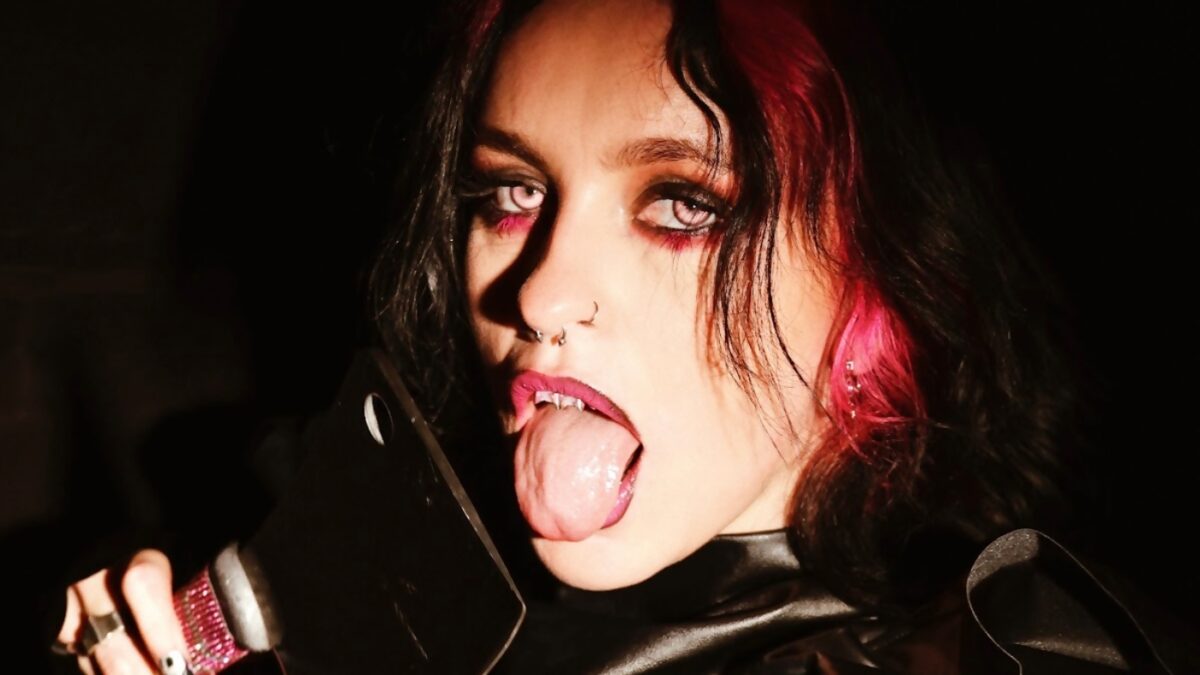
From the wide-eyed queer discovery of 2024 EP ‘IDK How To Talk To Girls’ to the gleefully chaotic energy of its 2025 follow-up ‘Hot and Stupid’, the York-born singer-songwriter has built her entire artistic identity around radical openness. Pairing deeply personal, confessional lyrics with sugary pop hooks, crunchy guitars and a playful sense of humour, she’s built up a community in the most natural way, always leaving the doors wide open to anyone who has ever felt a little too loud, too confused or too complicated to fit neatly into one box.
Now though, Beth is thinking bigger, with new single ‘Pretty Villain’ introducing an entire cinematic universe inspired by cult movies, iconic anti-heroines and the messy motivations behind the characters we’re taught to root against. Still grounded in her own experiences, it transforms her personal stories into something a little more theatrical, encouraging us to embrace the parts of ourselves that aren’t always the most ‘likeable’ or ‘palatable’ to the masses.
With plenty more music on the way after her bucket list performance at Reading & Leeds, Beth is leaning into the weirdness harder than ever in 2026. To celebrate, Rock Sound caught up with her to talk about creating the ‘Pretty Villain’ universe, learning that you can’t please everybody, and how she’s finally finding where she’s supposed to be.
ROCK SOUND: ‘Pretty Villain’ feels like the beginning of a distinct new world for you. When did you realise you weren’t just writing another song, but potentially creating a whole character and visual universe around it?
BETH MCCARTHY: It’s funny. I guess it found its own life in that way. I started with the intention of just writing a bunch of songs, and then as I was doing that, I came up with this concept of ‘Pretty Villain’. It’s this idea that everybody has a villain in their story, and you’re probably a villain to someone else. That person may even be a villain to you. It can be super cyclical. I really liked that idea of owning that power. If someone’s going to paint you out to be a bad guy, then you’re just going to be that person for them. That can actually be a really confident thing.
With the other songs that I was writing, it felt like there was a way for them all to fit together. At the end of the day, they’re all me at the core. Humans are so multifaceted, and so are villains. All the villains that we know have a story and a reason why they became that way. I’m so used to being this little chaotic rock and roll girly that it felt like time to move into this more mature version of that. I’m still chaotic and still having all of these emotions, but maybe in a more laid-out, mature and elevated way. That’s how the ‘Pretty Villain’ era was born.
RS: Cinema and storytelling feel like huge inspirations for this project. Has looking beyond music for references opened up a different type of creative freedom for you?
BETH: I think it’s probably always been there in a more subtle way. Particularly when it comes to visuals, I love pulling things in from other places. I love having little nods to things outside of music, whether that’s media, film, other songs or artists.
I love it when music almost breaks the fourth wall of other creations, like when you hear a song’s name in another song. I also love double meaning, wordplay in lyrics, innuendos and things that can be taken multiple ways, so it’s happened in little bits and pieces over the years. With this project though, it started to feel like I was writing a rock opera or a rock musical. Then when you bring in the visuals, it’s almost like a series or a film. I love that because it gives you so much more creative freedom, which is what I was craving moving into this project.
Having a character and narrative to lean into gives you so much more to play with, rather than being stuck in a story that is so specific. I write songs that are very much offering my heart on a plate, and this still is that, but in a more grandiose storytelling way. It’s quite nice to have a bit of fun with it and not take it too seriously.
RS: Sonically, it also feels like you’re becoming increasingly confident in that idea of being a rock artist with pop at the heart of your songwriting. Has making this project helped you figure out what Beth McCarthy actually sounds like a bit more?
BETH: If anything, this project has given me the freedom to just do whatever. Everybody’s looking for their sonic identity, and from the day I started, I’ve always struggled to pinpoint exactly what that sound is. Ultimately, I am a pop songwriter. I started with an acoustic guitar in that world, almost with a bit of country influence. I grew up with Miley Cyrus, but I’ve also always loved rock bands. I’m heavily inspired by Queen and AC/DC, and going to see those bands live has always influenced me too. I’ve always been in both of those worlds, and it’s taken a while to find the balance within that, but also to realise that I can just do it all within different songs. Not every song on a record has to have the same stamp on it.
This upcoming record is so all over the place sonically. It’s such whiplash, and I love that. It’s all me, it’s all my voice, and that’s the only sonic stamp I really need. Everything else is just whatever the song needs and wants. It obviously has those rock and pop threads through it, but it also has these other weird sprinkles that take it in whichever direction the song wants to go. Whether or not it’ll work, I don’t know, but at least I’m having fun with it. That’s what actually matters.
RS: Your previous eras have always had a clear theme binding them together. ‘IDK How To Talk To Girls’ focused on your queer discovery, then ‘Hot and Stupid’ was about embracing the messiness of life. What ties this new chapter together?
BETH: This is where I’ve really gone to town on the concept and the campness of it all. It’s a chronological storytelling of this villain’s journey and this villain arc. I’ve really paid attention to which part of the story each song is, and paired with a visual, it all starts to make sense. At the same time though, if you don’t want to lock into that world, you can also just listen to the songs and hopefully relate to them outside of this spooky villain world that I’m creating.
I’m building a world and telling a story, but that all comes from human experiences. We’re all so multifaceted, and often evilness come from being hurt by someone else. There are moments where you feel on top of the world about it, then other moments where you feel heartbroken, and others where you start to discover yourself again. I’ve been through that journey multiple times in my life now. Something happens to you, you learn from that, but then maybe you make mistakes of your own along the way.
I feel like that doesn’t get covered in music a lot, the messier side where you’re not doing everything right. My whole life has been spent writing songs for people who don’t often have songs written about them. I always want to keep that in my music. It’s for the misfits, for the bad guys, or for whoever else needs it.
RS: Those stories are now increasingly being told through things outside of music, too. From the styling and makeup looks to the videos and the characters you’re creating… Have you enjoyed having all of those extra tools to play with?
BETH: So much. I write music that comes from such a personal place.’ I’m completely unguarded with my experiences, maybe a little bit too much sometimes. I love that, and it means that I’ve got this really special connection with the people who listen to my music and come to my gigs. Now that I have that though, it gives me the freedom to be more creative with it and have more fun. I was craving the ability to not have too much attachment to the reality of it all. I wanted to take a concept and be like, ‘Oh, that happened to me. How can I translate that into this villain character?’
This whole project is going to happen in parts. I can do act one, act two and act three, and they can all represent different parts of the journey and different emotions. They tie together in their own little pockets, but I’m writing three different endings for it because I haven’t really decided how it ends. That’s so much fun.
I miss music that feels like art. I loved being a fangirl as a teenager, when you would keep an eye on everything a band would post, working out how it all tied together. I think all of the greats do that. They push boundaries and experiment with characters. It’s about the way that they present themselves in their music, using multiple different voices and ways to sing things. Lady Gaga has so many different characters in the way that she sings things, and Freddie Mercury often did the same thing. On this record, I’ve done things vocally that I never would have thought I’d do, but it’s so much fun. I’m like, ‘How can we make it weirder?’
RS: There’s also something very fitting about embracing the idea of being a villain at a time when female artists are still expected to always be likeable and easy to understand. Is this era partly about rejecting that pressure?
BETH: For sure. Women are respected for it after, rather than respected for it at the time. If you look back at Lady Gaga, Britney Spears, Miley Cyrus, they all went through that phase of people hating on them for pushing the boundaries, and now they are the icons. Now, they’re looked at as legends, and that’s what they are. At the time though, they were always criticised. It’s always, ‘You should be doing something different. That’s too sexy. That’s too weird.’ Men just do not get that same level of criticism. It is important to keep pushing that.
Often, we fall back into feeling as though we’ve got to play it safe, and I do feel like I’ve been doing that in the past. I definitely had my mind on, ‘I can’t do that because it’s not palatable enough, and it’s not what people want to hear from me.’ This next era has way more of a ‘fuck it’ attitude to it. We’ll be in the studio and it’s like, ‘Can I do that? Fuck it, let’s find out’. You have to own this power to do what you want. If people don’t like it, then they don’t like it, but they’ll probably come around to liking it down the line.
RS: Where do you think that shift in your attitude has come from?
BETH: I think I’ve probably found it through facing backlash for everything. When I started being open about my queerness in my music, that was something I felt really passionately about wanting to represent. It’s a big part of me, and I think it’s so important that we have more queer artists and more people singing queer songs.
Initially, you get brought in by a community, but then you get picked apart for your choices within that. I faced a lot of backlash for being bi and not being as queer as everybody thought I was. I wrote a song about being bi called ‘Good Bi’, and people were commenting on it saying, ‘Where’s the song for pansexual people?’ You literally cannot get it right, so you may as well just do what you want to do.
The more confident you are in doing whatever and pushing those boundaries, it almost forces people to get on board with it. If you go into something timidly, they’re more likely to come at you and try to find that little point of weakness. I’m accepting that maybe people won’t get this, but that’s kind of the point.
RS: Increasingly, the live show seems to be influencing the kind of music you make too. How much are you imagining those rooms and those communal moments while you’re writing now?
BETH: It’s everything. The stage is where my soul lives and sets on fire. That has only been made more of a thing by the fact that the people who come to my gigs feel that too. It really feels like a community. It feels like a place where people come to forget their lives and enjoy themselves. It’s a place where they belong. That only drives me to keep creating that space in whatever way I can. It definitely influences the type of songs that I write because I’m like, ‘How will this fit on a stage? How does it fit in the set? How are people going to sing along to it? What moment will they scream along to?’
This new era is so much more grandiose and theatrical than anything I’ve ever done, so it feels like that opens up a whole new space for me at my live shows. I can lean into that visually and bring in some more moments that people don’t expect.
RS: That real-world audience is growing alongside the huge community you’ve built online as well. How do you make sure those numbers always translate back into actual people?
BETH: I think I’m really lucky in the fact that it has been a slow build to where I am now. Not a lot of people are in that position anymore, or at least they’re not vocal about it, because nobody talks about the long process. I’m not exciting or new. I’ve been here a while, and I’ve been through it. That has meant that I’ve found my people over and over again, to the point where I no longer feel scared that I’m going to lose them. I think that’s such a precious thing to have as an artist. Every time I do something new, I know they’re going to back it.
I’ve seen it happen time and time again where an album gets huge, and then everybody hates the second album because it’s not exactly the same as the first. Maybe I’m too confident, but I almost know that’s not going to happen to me. If I love what I put out, and they can tell that I worked hard on it, my fans will love it as well.’
It’s about finding your people. That’s why it’s so important that you persevere with it, because they’re the ones that stick around. I make sure that I’m always in contact with that. I see everything they do. I keep an eye on their posts. A lot of them message me all the time. I meet them at gigs, and I know a lot of them now. Keeping yourself plugged into those people is what keeps it grounded and makes you realise that the numbers are people.
RS: With all of this new music and the wider ‘Pretty Villain’ story still unfolding, what would you love this next year to unlock for you?
BETH: I feel like everything I’ve ever done has felt bitty, and almost unprepared. It feels like I’ve been a train on a track that’s been wobbling around for my whole career, and this is the first time that I know exactly where it’s going. I don’t know the destination, but I know the route, and that’s enough for me.
As long as that train goes past the people who already know about it, and then hopefully past a few more, it can elevate things. If it can get me to a point where I could do an even bigger tour and reach more people, that would be amazing. I’m excited to create something that feels longer-term and that people can really get involved with. Hopefully it can be something that stands the test of time, but we’ll see where it all goes from here.
Source link
