
Pop/Hip Hop/R&B
10 Best Nat King Cole Songs of All Time
Sep
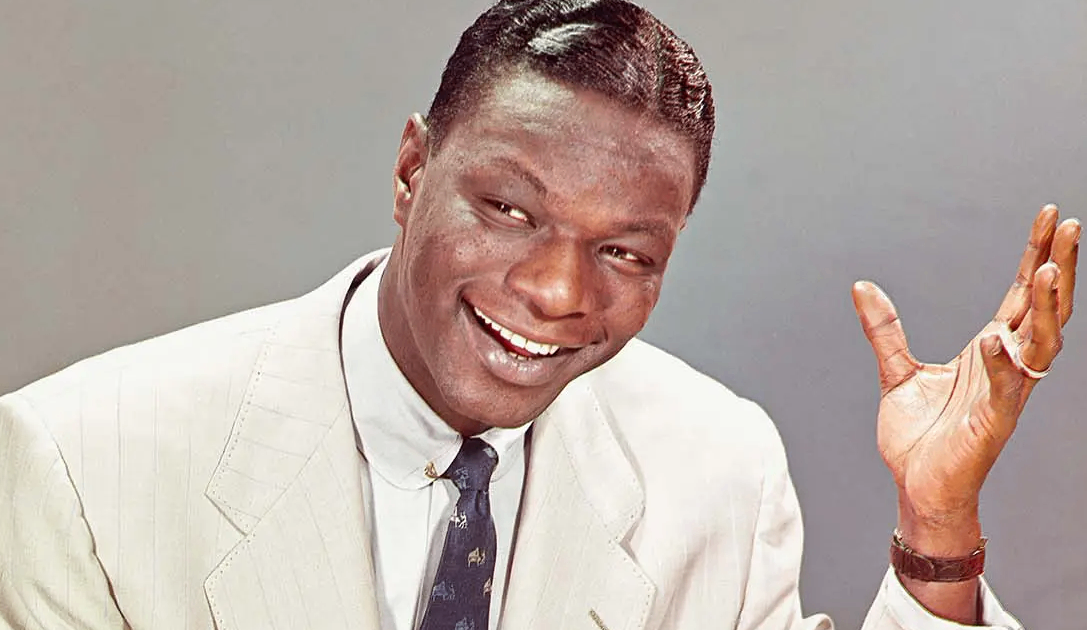
Few voices in popular music are as instantly comforting and effortlessly elegant as Nat King Cole. With his velvety baritone, impeccable phrasing, and natural sense of swing, Cole became one of the defining vocalists of the twentieth century while also earning admiration as a gifted jazz pianist. His recordings could be romantic, playful, sophisticated, or deeply sentimental, often turning simple melodies into timeless performances through the warmth of his delivery. Classics such as “Unforgettable,” “Mona Lisa,” and “L O V E” remain beloved because Cole never seemed to force emotion. He allowed it to unfold with remarkable ease. Whether accompanied by lush orchestration or a smaller jazz setting, his voice carried grace and intimacy. The most popular Nat King Cole songs continue to charm listeners with elegance, tenderness, and unmistakable style.
1. Unforgettable
“Unforgettable” is perhaps the purest expression of what made Nat King Cole such a singular interpreter of romantic music. Recorded in 1951, the Irving Gordon composition seems almost perfectly designed for Cole’s extraordinary sense of phrasing. Nothing in the performance feels rushed or exaggerated. He allows each phrase to unfold with elegant patience, creating the sensation that the singer is speaking directly to one person rather than performing for millions. That intimacy became one of Cole’s greatest artistic gifts, and few recordings display it more beautifully.
Nelson Riddle’s orchestral setting surrounds Cole with strings that sound luxurious without overwhelming his voice. The arrangement gives the song a dreamlike atmosphere while preserving enough space for every subtle vocal detail to register. Cole’s tone is warm and polished, but there is also a slight wistfulness beneath the surface. The song celebrates someone who cannot be forgotten, yet the very act of remembering suggests distance. That emotional ambiguity keeps the recording from becoming merely sentimental.
Cole’s background as an accomplished jazz pianist contributed greatly to the sophistication of his singing. He understood rhythm from inside the music, which allowed him to approach melodies with unusual freedom. On “Unforgettable”, he rarely seems trapped by the written line. He floats around the beat, delaying certain words and gently emphasizing others until the lyric sounds newly discovered.
The song acquired another remarkable chapter decades later when Natalie Cole recorded a celebrated version that electronically paired her voice with her father’s original performance. That later recording introduced the song to another generation while emphasizing just how timeless Nat King Cole’s original had become.
What makes “Unforgettable” endure is its complete absence of strain. Cole never needs to demonstrate how deeply he feels because the feeling is already contained in his tone. The performance is elegant, romantic, slightly melancholy, and astonishingly intimate. It remains one of the defining love songs of twentieth century popular music and one of the clearest reasons Nat King Cole’s voice continues to sound unforgettable in every sense of the word.
2. L O V E
“L O V E” captures Nat King Cole at his most playful, charming, and rhythmically effortless. Recorded near the end of his life and released as the title song of his 1965 album L O V E, the number possesses a bright optimism that makes it nearly impossible to hear without smiling. Written by Bert Kaempfert with English lyrics by Milt Gabler, the song takes the simplest possible subject and turns it into an irresistible celebration of romantic devotion.
The arrangement immediately establishes a light swinging atmosphere. Brass accents, a buoyant rhythm section, and beautifully judged orchestral colors create a setting that feels sophisticated without becoming formal. Cole enters with complete ease, delivering the clever spelling concept with the timing of both a jazz singer and an experienced entertainer. Each letter becomes an opportunity for rhythmic emphasis, and Cole understands precisely how much personality to place into every phrase.
One reason the recording remains so effective is its lack of unnecessary drama. Cole does not treat love as a source of anguish here. Instead, affection feels joyful, civilized, humorous, and uncomplicated. His voice has the warmth of someone enjoying the act of singing as much as the sentiment itself. That sense of pleasure communicates immediately to the listener.
The song also demonstrates how effortlessly Cole moved between generations of popular music. His career had begun in the world of jazz piano and intimate trio performances, yet by the 1960s he had become one of the supreme interpreters of orchestrated popular song. “L O V E” contains traces of both worlds. The rhythmic elegance comes from jazz, while the polished arrangement belongs to the sophisticated pop environment Cole had mastered.
Its popularity has only grown with time. The recording appears continually in films, advertisements, celebrations, and romantic settings because its mood is instantly recognizable. Yet familiarity has never diminished Cole’s performance. Listen closely and the brilliance remains in the details: the easy swing, the impeccable diction, the subtle humor, and the relaxed confidence of a master singer who never needs to force his charm. “L O V E” sounds effortless because Nat King Cole had spent a lifetime learning exactly how difficult true effortlessness really is.
3. Mona Lisa
“Mona Lisa” became one of Nat King Cole’s defining recordings by transforming a film song into a haunting portrait of emotional mystery. Written by Ray Evans and Jay Livingston for the motion picture Captain Carey, U.S.A., the composition won the Academy Award for Best Original Song, but Cole’s interpretation gave it a life far beyond the movie. Released in 1950, his recording became a major success and helped confirm that the brilliant jazz pianist was also becoming one of America’s most important popular vocalists.
The lyric uses Leonardo da Vinci’s famous portrait as a metaphor for romantic uncertainty. The woman being addressed is beautiful, but her expression cannot be easily understood. Is she happy, lonely, teasing, or hiding disappointment? Cole approaches those questions with wonderful restraint. Rather than attempting to solve the mystery through theatrical singing, he preserves it. His smooth baritone sounds fascinated and slightly unsettled, which makes the woman seem even more elusive.
The orchestral setting contributes greatly to that atmosphere. Strings provide elegance, while the arrangement moves slowly enough to allow Cole’s phrasing to dominate. He places words with remarkable care, often giving the impression that he is contemplating the lyric while singing it. That reflective quality separates his interpretation from more straightforward romantic performances.
“Mona Lisa” also marked an important stage in Cole’s artistic evolution. Earlier audiences knew him primarily through the Nat King Cole Trio, where his superb piano playing and relaxed vocals flourished within a smaller jazz format. Records like this demonstrated that his voice could thrive inside expansive orchestral arrangements as well. His success as a singer eventually became so enormous that many casual listeners forgot what a remarkable pianist he had been.
The recording remains compelling because mystery never goes out of fashion. People are endlessly fascinated by those they cannot fully understand, and Cole captures that fascination without exaggeration. His performance is gentle, elegant, and inquisitive. Rather than defining the woman in the song, he leaves her unknowable. That unresolved quality gives “Mona Lisa” its enduring magic and helped create one of the most recognizable recordings of Nat King Cole’s extraordinary career.
4. The Christmas Song
“The Christmas Song” has become so closely associated with Nat King Cole that for millions of listeners his voice seems almost inseparable from the holiday season itself. Written by Mel Tormé and Robert Wells, the composition contains an extraordinary collection of winter images, yet Cole’s interpretation is what transformed those images into a permanent piece of popular culture. His warm baritone makes every detail feel inviting, from glowing fires to bundled children and the anticipation surrounding Christmas morning.
Cole first recorded the song during the 1940s and returned to it more than once, with later orchestrated versions becoming especially familiar. That history is significant because it illustrates how naturally the composition fit his evolving career. Whether surrounded by the intimate setting of his trio or the richness of strings and orchestra, Cole understood that the song required warmth rather than excessive sentiment.
His delivery is astonishingly relaxed. He does not oversing the familiar melody or attempt to turn every phrase into a dramatic event. Instead, he allows the images to accumulate gradually. The listener is invited into the scene rather than instructed how to feel about it. Cole’s careful diction also plays an important role. Every word remains clear, yet nothing sounds stiff or overly formal.
The orchestration gives the recording a luxurious glow while leaving Cole’s voice at the center. Strings provide softness, subtle instrumental details create movement, and the rhythm remains understated. The result feels both grand and intimate, as though a large orchestra has somehow entered a quiet living room without disturbing the atmosphere.
The enduring popularity of “The Christmas Song” is remarkable because seasonal recordings can easily become trapped in nostalgia. Cole’s performance avoids that fate. Its emotional warmth remains immediate even for listeners hearing it for the first time. The recording does not depend upon novelty, humor, or elaborate production. It depends upon melody, atmosphere, and one of the most comforting voices ever captured on record. Every December, countless performances of holiday standards return to circulation, yet Nat King Cole’s interpretation remains the benchmark. It sounds less like a recording played during Christmas than part of the emotional landscape of Christmas itself.
5. Nature Boy
“Nature Boy” is among the strangest and most mesmerizing recordings ever associated with Nat King Cole. Written by the unconventional songwriter eden ahbez, the composition arrived in 1948 with an atmosphere unlike the conventional popular songs surrounding it. Its mysterious melody, unusual harmonic movement, and philosophical lyric created an almost mythical setting, and Cole responded with a performance that treats the material with complete seriousness.
The song tells of an enigmatic wandering figure who possesses a simple piece of wisdom about love. That description could easily have become overly precious in another singer’s hands, but Cole maintains a sense of wonder without sacrificing emotional credibility. His voice is calm and controlled, allowing the unusual story to unfold like a fable being passed quietly from one person to another.
The arrangement adds tremendously to the otherworldly atmosphere. Orchestral colors create a sense of mystery, and the melody often seems suspended rather than firmly grounded. Cole’s smooth baritone becomes the stable element within that strange landscape. Because he never exaggerates the mystical qualities of the lyric, the song feels more mysterious rather than less.
The recording became a major success and represented an important moment in Cole’s transition from celebrated jazz musician toward mainstream vocal stardom. Yet it remains unusually adventurous for such a popular record. The melody is not built around the most obvious commercial hooks, and the philosophical message is far removed from conventional romantic storytelling.
What gives “Nature Boy” lasting power is the simplicity waiting beneath all its mystery. The wandering character ultimately arrives at an idea that listeners can understand immediately: loving and being loved may be among life’s greatest forms of wisdom. Cole delivers that realization without turning it into a slogan. Instead, the message seems to emerge naturally from the strange journey of the song.
Many singers and jazz musicians have interpreted “Nature Boy,” but Cole’s recording remains foundational because it balances mystery with clarity so beautifully. His voice welcomes the listener into an unfamiliar musical world and makes it feel strangely timeless. The performance is dreamy, philosophical, romantic, and unlike almost anything else in his enormous catalog.
6. When I Fall in Love
“When I Fall in Love” is one of Nat King Cole’s supreme romantic performances, a recording that captures idealism without allowing it to become naive. Written by Victor Young and Edward Heyman, the song expresses a desire for love that will endure rather than disappear with changing circumstances. Cole’s interpretation, associated with his celebrated 1957 album Love Is the Thing, gives that sentiment extraordinary dignity and emotional depth.
Gordon Jenkins’s orchestral arrangement provides an ideal environment for Cole. The strings are lush, but they never feel merely decorative. They create a vast romantic space around the singer, making his restrained delivery seem even more intimate by comparison. Cole does not compete with the orchestra. He allows it to swell around him while maintaining remarkable vocal composure.
His phrasing is the performance’s greatest strength. Cole understood that a lyric about permanent love becomes less convincing when oversung. Instead of making extravagant promises, he sounds thoughtful and certain. There is almost a sense that the narrator has considered the alternative and decided he would rather wait than accept something temporary. That quiet seriousness gives the song unusual emotional authority.
The recording also demonstrates how effectively Cole could communicate through small changes in tone. A slight pause can suggest hesitation. A softened phrase can reveal tenderness. A carefully sustained word can make the listener feel the weight of commitment. None of these effects announce themselves, which is why the performance rewards repeated listening.
“When I Fall in Love” has been recorded by countless artists, but Cole’s version remains one of the standards by which later interpretations are measured. His voice possesses a combination of warmth and elegance that makes the sentiment feel timeless. He sounds romantic without becoming theatrical and confident without becoming boastful.
The song belongs to an era when great singers were expected to interpret compositions rather than merely personalize them through vocal display. Cole was one of the finest masters of that tradition. He enters the emotional world of the song completely, then allows the composition itself to shine. The result is a performance that continues to define what sophisticated romantic singing can sound like.
7. Smile
“Smile” became one of Nat King Cole’s most beloved recordings because his voice gives its message of perseverance exactly the right balance of sadness and encouragement. The melody originated with Charlie Chaplin’s 1936 film Modern Times, while John Turner and Geoffrey Parsons later supplied the words. Cole recorded the vocal version in 1954, transforming a beautiful film theme into an enduring popular standard.
The lyric encourages someone to keep smiling through sorrow, but Cole never makes that advice sound simplistic. His performance recognizes that optimism has greater meaning when it emerges from genuine difficulty. There is melancholy in his voice, particularly in the opening phrases, and that sadness prevents the message from becoming empty reassurance. He sounds as though he understands exactly why smiling might be difficult.
The orchestral arrangement supports that emotional balance beautifully. Strings create warmth without erasing the underlying wistfulness of the melody. Cole sings with exceptional control, never pushing for a dramatic climax when a gentler approach communicates more. His baritone carries reassurance simply because it sounds calm and trustworthy.
The melody itself is unusually graceful, rising and falling in a way that mirrors the emotional movement of the lyric. Cole understands those contours instinctively. His jazz background gives him the ability to phrase naturally around the melody while still respecting its shape. Every word sounds deliberate without appearing calculated.
“Smile” has remained culturally powerful because its message is universally applicable. Heartbreak, disappointment, grief, and uncertainty belong to every generation, and the song acknowledges those realities while insisting that despair does not have to be permanent. Cole never promises that pain will instantly disappear. Instead, he suggests that maintaining hope can itself become an act of resilience.
That subtle distinction is what makes his interpretation so moving. The song is not cheerful in a shallow sense. It is hopeful because sadness is fully present. Cole’s voice becomes the bridge between those emotional states. His performance remains one of the finest examples of how a great singer can communicate encouragement without denying suffering, turning a simple command to smile into something compassionate, humane, and enduring.
8. Route 66
“Route 66” captures the swinging, jazz rooted side of Nat King Cole that can sometimes be overshadowed by his later reputation as a master of romantic ballads. Written by Bobby Troup in 1946, the song celebrates the famous American highway connecting Chicago with Los Angeles, transforming a road map into one of the most infectious travel songs in popular music. The King Cole Trio recorded it soon after its creation, and their performance helped establish the number as a lasting standard.
Cole sounds completely at home in the song’s easy rhythmic environment. Before becoming one of America’s most famous vocalists, he was already an exceptional jazz pianist, admired for his touch, harmonic imagination, and impeccable timing. “Route 66” allows both sides of his musicianship to shine. His singing is relaxed and playful, while the instrumental setting has the intimate swing associated with the trio format.
The lyric’s sequence of American locations could easily have sounded like simple geography, but Cole gives each place rhythmic personality. The names become part of the groove. His phrasing makes the journey feel spontaneous, as though the listener has climbed into the car and joined him somewhere along the highway.
The recording also captures an important period in American culture. Automobile travel was becoming increasingly central to ideas of freedom and possibility, and Route 66 represented adventure on an enormous scale. The song celebrates movement rather than destination. What matters is getting out onto the road and experiencing the places encountered along the way.
Numerous rock, blues, country, and jazz artists later recorded “Route 66,” demonstrating how flexible Troup’s composition proved to be. Yet Cole’s interpretation remains one of the essential versions because it establishes the song’s effortless swing. He never sounds as though he is trying to make the track exciting. The excitement is already embedded in the rhythm.
For listeners who primarily associate Nat King Cole with orchestras and candlelit romance, “Route 66” provides an essential reminder of his jazz foundation. It is witty, mobile, elegant, and full of rhythmic life. The song captures Cole not simply as a magnificent singer, but as a musician whose understanding of swing shaped every part of his art.
9. Too Young
“Too Young” became one of Nat King Cole’s most important early vocal successes by giving him a beautifully simple story about young love challenged by the skepticism of older people. Written by Sidney Lippman and Sylvia Dee, the song became a major hit for Cole in 1951 and helped establish his position at the center of American popular music. Its enormous appeal came from a theme that remains immediately recognizable: outsiders may dismiss youthful love as temporary, but the people experiencing it believe their emotions are completely real.
Cole approaches the song without irony. He never treats the young lovers as foolish or inexperienced. Instead, his smooth baritone gives their feelings dignity. That choice is crucial. The lyric gains emotional power because the singer seems to understand the frustration of being told that one’s deepest emotions cannot possibly last.
The orchestral accompaniment is warm and carefully balanced. Strings support the melody while leaving Cole’s voice in clear focus. The arrangement belongs to the polished popular style of the period, but Cole’s subtle rhythmic instincts keep the performance from becoming rigid. Even inside an orchestral ballad, traces of his jazz sensibility remain audible in the way he places phrases around the beat.
The song also illustrates an important aspect of Cole’s appeal during the early 1950s. He could communicate sophistication without creating emotional distance. His diction was elegant and his tone beautifully controlled, yet listeners still felt personally addressed. That combination allowed him to reach an enormous audience across age groups and musical tastes.
“Too Young” continues to resonate because generations keep rediscovering the same conflict between youthful certainty and adult skepticism. Every generation believes its emotional experiences are somehow new, while older generations recognize familiar patterns. Cole refuses to decide who is correct. Instead, he gives the lovers their moment and allows their conviction to stand.
The result is one of his most graceful recordings. There are no dramatic vocal fireworks, because none are necessary. Cole’s warmth, timing, and emotional intelligence carry the entire performance. “Too Young” helped make him a major popular vocalist, and decades later it still demonstrates why his understated approach could communicate more feeling than singers who relied on far greater theatricality.
10. Stardust
“Stardust” is one of the great standards of American popular music, and Nat King Cole’s interpretation stands among its most beautiful recordings. Hoagy Carmichael composed the melody, with Mitchell Parish later providing the celebrated lyric, and by the time Cole recorded his version the song had already accumulated decades of history. Yet his performance makes it feel intensely personal, as though the familiar melody has been waiting specifically for his voice.
Recorded for the 1957 album Love Is the Thing, Cole’s version benefits enormously from Gordon Jenkins’s sumptuous orchestral arrangement. The strings seem to float around the vocal, creating an atmosphere of memory suspended outside ordinary time. That quality suits the lyric perfectly. “Stardust” is fundamentally a song about remembering love after the relationship itself has become part of the past.
Cole handles that theme with magnificent restraint. He does not sing as though devastated by loss. Instead, his voice carries the softer ache of someone who has lived with memory long enough for pain and beauty to become inseparable. That emotional maturity is what distinguishes the performance. The past cannot be recovered, but it can still provide comfort through remembrance.
The melody presents considerable interpretive challenges because its phrases are unusually expansive. Cole’s musicianship allows him to navigate them with effortless grace. His breathing, timing, and subtle shifts in emphasis make each long melodic line sound conversational even when the orchestra surrounding him becomes sweeping and romantic.
His background as a pianist is especially important here. Cole understood harmony deeply, so he could feel how each note related to the changing chords beneath it. That knowledge allowed him to sing with extraordinary freedom while preserving the composition’s sophistication.
“Stardust” has attracted generations of jazz musicians and popular singers because its combination of melody and memory offers endless interpretive possibilities. Cole’s version remains exceptional because he never competes with the song’s reputation. He simply inhabits it. The recording feels elegant without becoming remote, nostalgic without becoming excessively sentimental, and romantic without pretending that romance always survives. In Cole’s hands, “Stardust” becomes exactly what its title suggests: the beautiful residue left behind after something brilliant has passed through the night.

Edward Tomlin is a frequent contributor to Singers Room. Since 2005, Singersroom has been the voice of R&B around the world. Connect with us via social media below.
Source link
