Classic Rock
The Story of Bob Dylan’s Very First Pro Tools Album
Aug
No one should ever accuse Bob Dylan, who first started making albums in the early ’60s, of refusing to bend to the arc of technological advancement. He’s always been well aware of its power.
“Let’s not forget,” he said to The Wall Street Journal in 2022 (via bobdylan.com), “science and technology built the Parthenon, the Egyptian pyramids, the Roman coliseum, the Brooklyn Bridge, the Eiffel Tower, rockets, jets, planes, automobiles, atom bombs, weapons of mass destruction. Tesla, the great inventor, said that he could take down the Brooklyn Bridge with a small vibrator. Today, we can probably do the same thing with a pocket computer. Log in, log out, load and download; we’re all wired up.
“Technology can nurture us, or it can shut us out.”
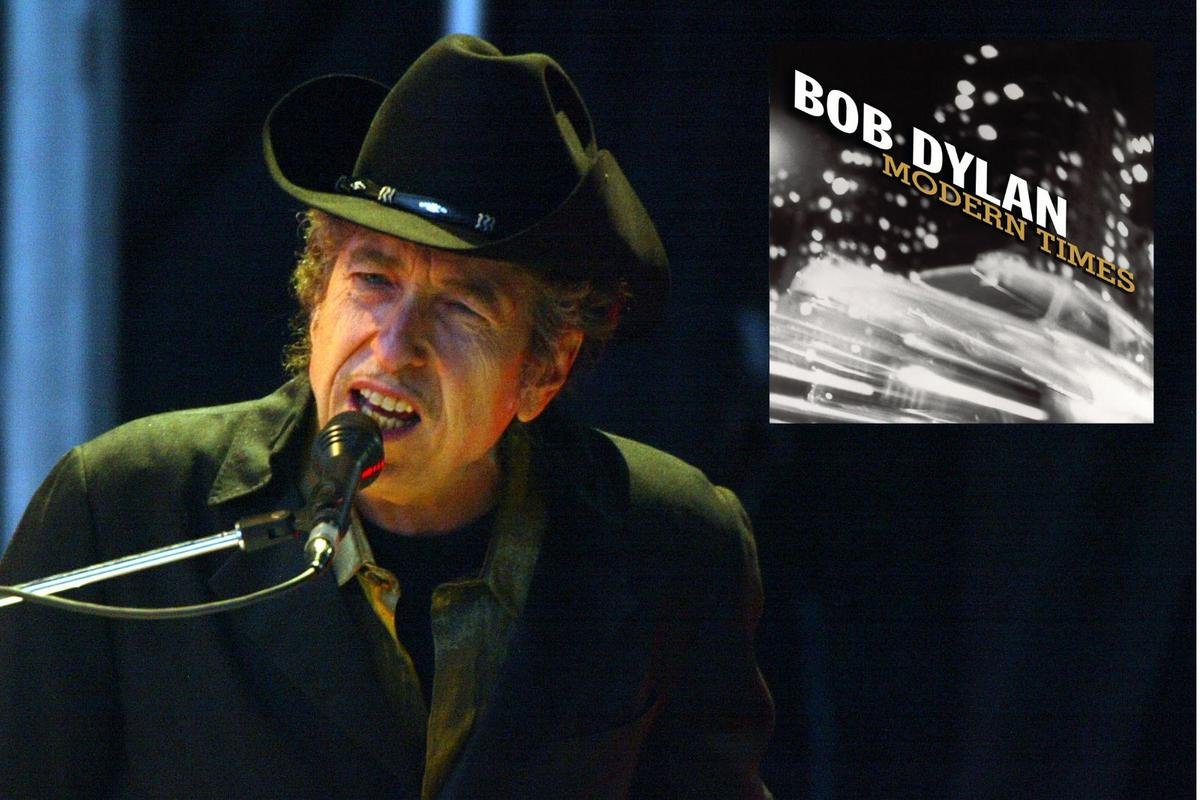
In 2006, Dylan allowed it to nurture the making of his new album, the aptly-titled Modern Times.
How Bob Dylan Learned About Pro Tools
There are many ways to make an album, but at the very end of the ’80s came something called Pro Tools, a software program that revolutionized the way music could be recorded, edited and mixed. Dylan didn’t use it, however, until the early 2000s when he started working with engineer Chris Shaw.
Shaw had worked with Dylan on his 2001 album “Love and Theft,” after which Shaw suggested utilizing Pro Tools for a handful of one-off movie soundtrack songs Dylan had written — things like “Cross the Green Mountain,” which appeared in the film Gods and Generals starring Jeff Daniels. Since it wasn’t an official album track, why not experiment a bit?
“And he said, ‘Okay, whatever,'” Shaw recalled to Uncut in 2008. “And we did a take of the song, and he was like, ‘Okay, I want to edit out the second verse and put the fourth verse in there.’ And I said, ‘Okay, and by the time he walked into the control room from the studio, I had it done.’ And his eyes just opened wide. ‘You can edit that fast on Pro Tools?’ ‘Yeah.’ ‘And you can keep everything?’ ‘You can keep everything, Bob.’ You could just see the gears in his head suddenly spinning.”
That was about all Dylan needed to see. When it came time to make Modern Times, he had Shaw use Pro Tools, a first in his career.
“That whole record was done digitally,” Shaw said, “and so everything was preserved, we have hours and hours and hours of all the outtakes, because we left the machine running just 24 hours a day.”
Watch the Music Video for ‘Thunder on the Mountain’ From ‘Modern Times’
Shaw may have created a minor monster though.
“The thing is, now, he’s gotten so used to the speed of that, when we were doing Modern Times, he was actually getting impatient with the machine,” he recalled. “He’d be, like, ‘Okay, let’s swap the second and third verse.’ And ten minutes later he’s like, ‘Are you done yet?’ I’m like, ‘Bob, don’t you remember the last record we did, it took me about an hour to do that, can you give me somewhere between zero and an hour to get it done?”
There were also a few heart-dropping moments when computers decided to crash mid-project: “I’ll tell you right now, there is no worse feeling in the world than having to walk out into a live room while the band is playing and have to stand in front of Bob and make him stop and tell him it’s because a computer has crashed. You feel about four inches tall.”
READ MORE: The Best Song From Every Bob Dylan Album
But what Shaw noticed in particular about the sessions was that even with the new technology, Dylan still more or less approached things as he would if he’d been using physical tape.
“He might edit the structure of a song,” Shaw said, “he might switch verses around because it tells the story better, but we never go in and do these micro-edits and tuning instruments or other computer tweaking that so many other people do: basically, to him, the computer is just one big tape machine. And that’s the reason Modern Times sounds so good: yeah, it was recorded using this new technology, Pro Tools, but we used an old desk, old microphones, old pre-amps.”
The ‘Best Band’ Dylan Ever Had
For Modern Times, Dylan employed the following people, several of whom were longtime Dylan collaborators: Denny Freeman (guitar), Tony Garnier (bass, cello), Donnie Herron (steel guitar, violin, viola, mandolin), Stu Kimball (guitar) and George Receli (drums and percussion).
It was, Dylan said to Rolling Stone in 2006, “the best band I’ve ever been in, I’ve ever had, man for man.”
“On this record I didn’t have anybody to teach,” he said. “I got guys now in my band, they can whip up anything, they surprise even me.”
READ MORE: Bob Dylan Album Opening Songs Ranked
When Modern Times was released on Aug. 29, 2006, it set several more precedents for Dylan. It was his first album to debut at the top of the Billboard 200, which also made 65-year-old Dylan the oldest living person at the time to have an album enter the Billboard charts at No. 1. Plus, it was Dylan’s first No. 1 American album since Desire, released 30 years prior.
Most of the album’s critical reception was positive, though some found it disappointing in comparison to previous releases — The Guardian called it “not one of those infrequent, unequivocally fantastic Dylan albums” and noted that Dylan often seemed to be too-heavily praised for simply being Dylan. “It’s hard to hear the music of Modern Times over the inevitable standing ovation and the thuds of middle-aged critics swooning in awe.” (Still, they gave the record four stars.)
Listen to ‘Beyond the Horizon’ From ‘Modern Times’
Not that Dylan cared much for either the criticism or the idea that his albums should compete with one another.
“If I’ve got any kind of attitude about me – or about what I do, what I perform, what I sing, on any level, my attitude is, compare it to somebody else!” he said to Rolling Stone. “Don’t compare it to me. Are you going to compare Neil Young to Neil Young? Compare it to somebody else, compare it to Beck – which I like – or whoever else is on his level.”
And Dylan wasn’t interested in dwelling for too long, even if Modern Times had broken new ground for him: “You got to accept it yourself before you can expect anybody else to accept it. And in the long run, it’s merely a record.”
Bob Dylan Albums Ranked
Through ups and downs, and more comebacks than just about anyone in rock history, the singer-songwriter’s catalog has something for just about everyone.
Gallery Credit: Michael Gallucci
