
Alternative Rock
The Leaving On Friendship, Emotional Response And Their Gorgeous Debut Album
Apr
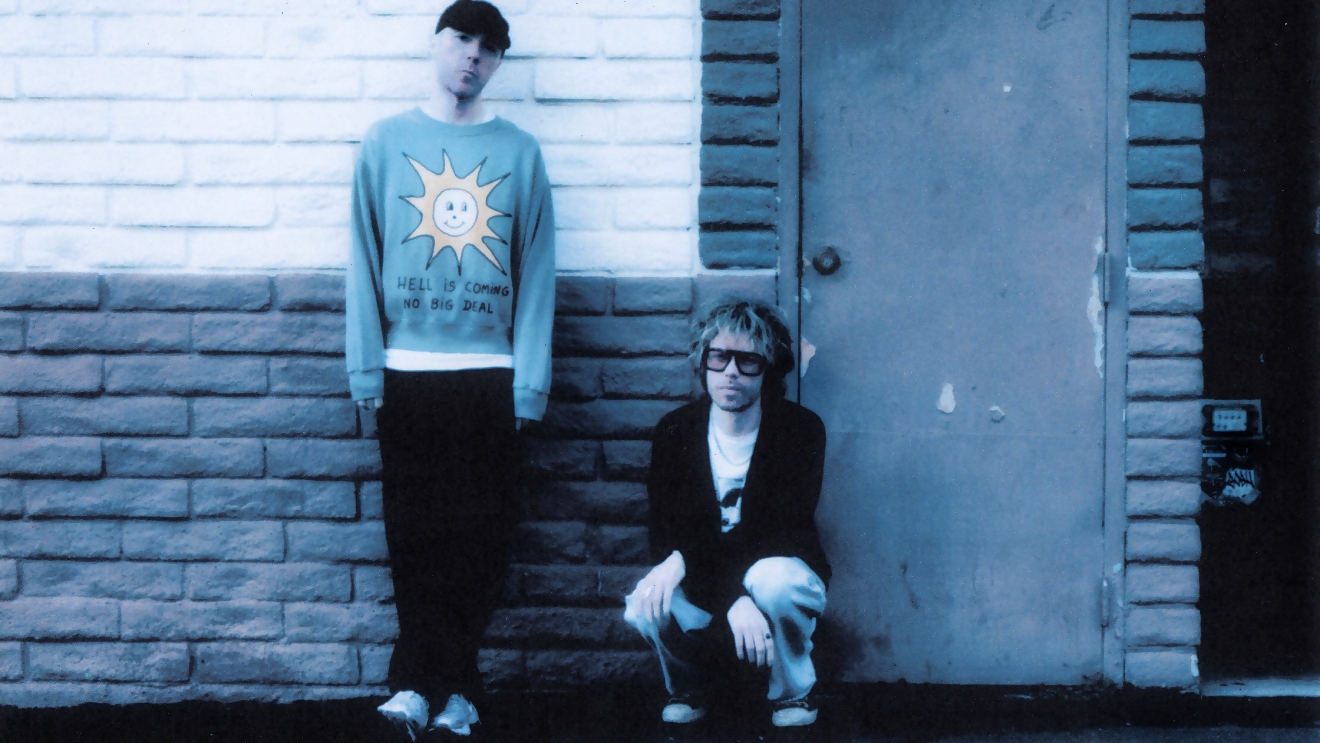
For Martin Doherty and Jonny Scott, The Leaving is a project that has always been ready and waiting for them.
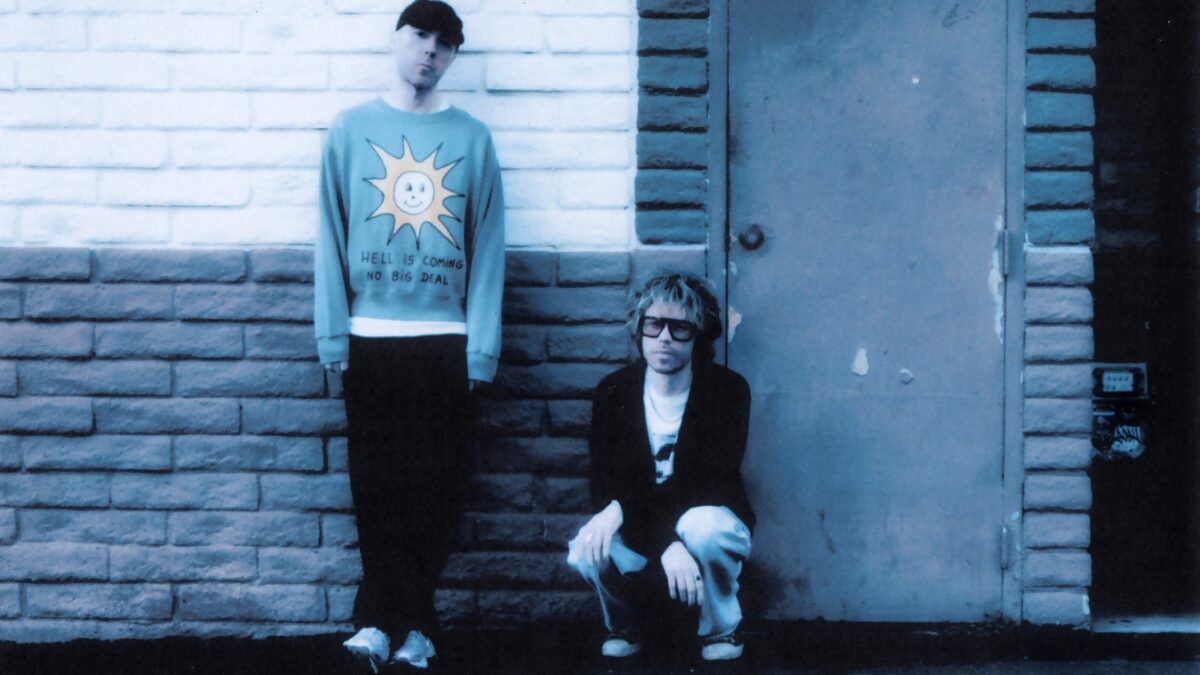
But with their time spent writing and touring the world with CHVRCHES and working with other artists in songwriting and production capacities, the timing to actually make it happen was just never right.
But when things finally slotted into place, the result was so much more than just a way to fill some time. That is apparent when listening to the duo’s full-length debut, ‘Ultimate Buzz’. Nine songs that bridge the gaps between shoegaze, indie rock, post-rock and electronica from across the last 30 years, both in the mainstream and in the underground, it is the sound of true best friends expressing themselves without pressure or pretence. An emotional release that will resonate with anyone with a passing interest in the array of alternative sounds embedded in UK culture, it is the sort of music to lose all inhibitions to. To let loose, let your mind and soul unravel and to ultimately feel in touch with what it means to be human. What it means to feel.
To find out more about the process of bringing this project to life, Rock Sound sat down with Martin and Jonny.
Rock Sound: Where did all of this start for the two of you? Going from a conversation to jamming into a full-blown album?
Martin: It goes way back, and that is the key to being able to make a record like this. It goes back to university. We met at college doing music, and we bonded over the obvious: Radiohead, Smashing Pumpkins, Jeff Buckley, Leonard Cohen. All of the stuff you might bond over at that time. And that was almost 20 years ago now. We have been friends and collaborators on one level or another for all that time without ever actually making a statement and saying, ‘What do we love equally and together?’ What would we make if it were just us? So, a long-term friendship and years of shared musical experience, mixed with the highest highs and lowest lows in life, have all come together somewhere or other on this record. That’s a beautiful thing. It took ages, and it wasn’t. Well, the life part wasn’t easy, but when it came to making it, it felt like the most natural thing on Earth.
Jonny: Yeah, it came out of nowhere, but it also came out of all of that friendship. It’s felt really natural and easy when we got into it, and, a year later, we now have these ten songs pressed on vinyl. Like, where did that come from?
Martin: There are these moments that allowed it, though. Jonny had just moved to LA, and whilst he was waiting to get his place, I said that he could crash on my couch. So we’re hanging out every day, and we went to a screening at this cinema near my house. What they do is curate a playlist for whatever movie they are showing, and they happened to be showing The Substance. The music in that film is a lot of hard electro, but the playlist was full of things like The Faint and stuff we haven’t heard since we were kids. All this weird electronic music. We had no intention of making everything together, but we were in this lobby listening and saying, ‘Remember this record? We used to drink Hardcore Cider and listen to this, and then go out and have a mad one’, and started to wonder where we never made anything that sounds like this. We love this, we always have. I love electronic music. I love rock music. I love shoegaze. So why don’t we get into the studio and fuck around? Then it felt like we didn’t leave that studio for two or three weeks after that.
RS: Life is pretty good at throwing you those moments, the ones that remind you what it means to do something. Because it’s easy to get lost in day-to-day stuff and forget about the things that used to inspire you. So when those moments show themselves, you really have to grab hold of them. Because you never know when you might get that chance again.
Martin: That’s exactly how it went. If we had sat down and academically counted all of the reasons that Jonny and I shouldn’t start a band in 2025 versus the reasons we should start a band, we wouldn’t have got anywhere. But there was no conversation; we just went in, and it really started going somewhere. Two months into that process, we have written half of the record, a lot of the harder and weirder stuff. That’s where our heads were at.
Then that’s when I said to Jonny, ‘I have these lyrics and these demos that I have never shown anyone’. I hadn’t played them for anyone because it was stuff that felt really uncomfortable to talk about. It was a diary of all the terrible things that have happened around me. Things that had gone wrong in my life at pretty much the same time. I had never written lyrics before, but I thought, ‘Fuck it.’ I needed an outlet. Then I was emboldened by how well things were going with Jonny, and I wondered if we could take a lot and try it out. He could help me finish them. Then it all ended up feeling like the same project from there, all these things mixed in as one. For the first time, all of these things made sense to me. There is hard music on here, and there is really emotional music on here, but none of it feels disconnected. It all feels like it was coming from the same well.
RS: What was it like being shown those things, then, Jonny? You know Martin so well, but here he is sharing parts of himself with you that you would never have known if he didn’t take that chance?
Jonny: It’s interesting because this did start as that fun thing. But Martin and I have known each other so long that we have seen each other go through the best and worst times. It felt completely natural to me that he would then share that with me; I didn’t really think about it. It felt like the first time I heard Martin’s band when I was 19 at uni, where all I heard were great songs. I’ve always been a fan of Martin’s stuff. He’s a talented dude, and he can write a great fucking tune. So, hearing personal things about him at that stage felt normal. The subject matter may still be heavy and real, but there are still those elements of fun in there. There are still no fucks being given. That’s what is really important, we’re not just sitting around crying in each other’s arms.
Martin: The Scottishness of it all has just hit me like a ton of bricks. This is why it was so easy. We are so still deeply Scottish, no matter where we are temporarily located. At the core of Scottishness is absolute sadness, but on the face of it, it’s also being up and making the best of it. The horrors persist, but so do I. That’s our natural energy anyway, so it just went through the whole of the record-making process. Yes, we were talking about deep shit, and I had written things down that I thought I was never going to tell anybody, but we were still able to find lightness in it. I feel like that’s so important in everything. If you can’t find levity, then fucking hell, you’re just going to sit around and wallow forever.
RS: That really shows in what you have created. On the surface, there is much optimism, euphoria and affirmation. But if you want to dig deeper and find that difference, then it is there waiting for you. It’s important to charge people on both sides of the coin, given where we are right now. People need that escape; they need to charge up; they need to know they aren’t alone in what they are feeling.
Martin: There are two fundamental reasons why I have always done this and why I continue to do this. To feel less alone and to feel understood. To communicate a feeling. If someone were to stop me in the street and say, ‘I fucking hate your record, I would smile about it. Like, cool. It would please me. The only way you could make me sad within any of the art which I have tried to communicate is if you said it’s just alright or didn’t care. That’s failure to me. Emotional response is everything. It doesn’t even have to be the deepest thing, but if you can stop someone for just a minute, then that’s a success to me.
RS: What would you say is something that you learned that probably wouldn’t have been possible in any other form apart from this one?
Martin: There were so many lessons, and I feel like that’s how you know that something was good. It was a worthy process. If you get to the end of it and you know a lot more than you did before. When we started this thing, I had just come out of doing the classic LA songwriting thing, and what a load of bullshit that is. But when Jonny and I work together, or when Ian, Lauren and I work together, it is completely different. This is home, this is where I am supposed to be. So now I haven’t taken a single session since Day One on The Leaving. There have been plenty of opportunities, but I don’t think it’s what I want to do anymore. I don’t want to go and try to write a hit for someone, have loads of buzzwords thrown at me, and have everyone peacock and try to show off for four hours. If you’re not saying something real in 2026 and it’s not coming from somewhere deeper, then, for me, it is artistically pointless. If it’s not deeply human or about connection or shared experience. What the fuck is the point? That is my biggest lesson from this whole record. Nothing will be more important than that in everything that I do moving forwards.
RS: Speaking of moving forwards, have you thought about whether The Leaving is something that you will take to the stage at all?
Jonny: We’re really excited about bringing that together, actually. It’s something we talk about a lot. It’s taken us a while to really get it together and find the correct moment for it. There are so many different ways it could go as well. It could be a full electronic thing, or drums and guitar. It’s quite exciting to see all of the different ways that this could work on stage. We have a plan together, and it will be awesome. Just Martin and I on stage, absolutely going for it. Being able to translate the studio’s energy to the stage is going to be really fun.
Martin: I’m way more excited to do this in a club than I am to see any algorithmic response. Those numbers on a screen don’t mean anything to me, but seeing people in front of you and reacting to them makes it so much more special. I want it all to be a visceral reaction where we just see what happens.
Source link
