
Alternative Rock
La Dispute’s Jordan Dreyer | Behind The Lyrics

Sep
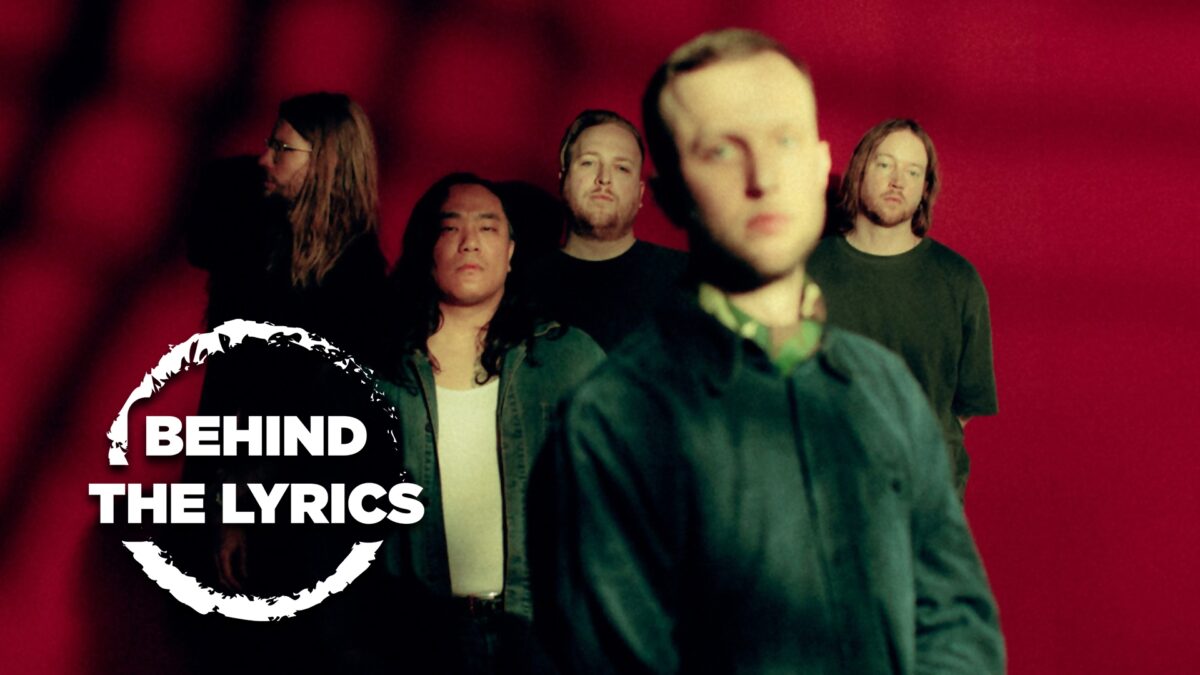
Few lyricists in history write with the same intensity, intimacy, and poetic precision as La Dispute’s Jordan Dreyer.
Since forming in Grand Rapids, Michigan over two decades ago, the band has carved out a unique space at the intersection of post-hardcore, spoken word, and emo, binding it all together with a penchant for deeply introspective storytelling and bold conceptual endeavours.
From gut-wrenching meditations on love and loss to reflections on fleeting beauty and quiet domesticity, Jordan’s lyrics have become a lifeline for those who find solace in art that doesn’t flinch. Inviting us into a world that feels simultaneously universal and painfully personal, the frontman captures the nuance of human experience with stark clarity – often loaded with metaphor, and always delivered in its rawest form.
A writer who has never stopped asking questions and has never once claimed to know all the answers, the band’s latest album ‘No One Was Driving The Car’ contradicts itself at every turn: gentle yet abrupt, comforting yet jarring, reflective yet brimming with anticipation. Pondering the control we have over our own lives – and the inevitable end that awaits us all – it’s a beautiful exploration of our existence, presented as snapshots taken throughout the life of the record’s narrator.
With La Dispute’s music soundtracking thousands of lives across the world, and his words permanently etched into the skin of countless fans, Jordan talks Rock Sound through some of the lyrics he is most proud to have written.
“Where you lay sleeping like a ceiling fan in winter // Gently turning as the wind reaches its fingers through the window // Just to hold you, like I held you // Pressed like a rose between my fingers // Or like stones I keep in pockets // Meant to weigh me underwater” ‘The Surgeon And The Scientist’ – ‘Vancouver’ (2006)
“This is a particularly difficult one to talk about, because I think of ‘Vancouver’ so infrequently. I’ve often avoided talking about it in any meaningful way for that reason, but it’s interesting to read something I wrote so long ago and try to imagine what my headspace might’ve been like at the time. That song was probably written when I was 16 and looking at it now with 20 years of experience, I’m surprised by what still works. It’s an interesting line, and it definitely bears some hallmarks of my writing that have carried through to now. The mention of winter, the idea of a household item like a ceiling fan… A mundane image used to articulate a feeling. On the rare occasion I go through our back catalogue, I see those recurring themes. When I look back now, I can see how even early work like this is part of a larger journey. I used to view it as an artifact of a less polished person or writer, even as something embarrassing. Now though, I can compartmentalise and appreciate its value. For the first time now I’m looking back and thinking, ‘Actually, that’s cool.’”
“We are not our losses // We are only the extent to which we love” ‘The Castle Builders’ – ‘Somewhere At The Bottom Of The River Between Vega And Altair’ (2008)
“It’s one of those catchphrase-y moments, which was really common in the community we were reared and developed in. In Midwest screamo and hardcore scenes, there was always an emphasis on singalong lines. I don’t feel those are my favourite pieces of writing from an aesthetic standpoint, but I do think they have real value. This line in particular is a pretty good encapsulation of our ethos at the time, and a representation of the value we got from music. Just to be in a room, connecting with people who share a similar ideology, and finding our place in the community. I still connect to that sentiment, and it’s about how we define ourselves not by what we’ve lost, but what we put out into the world. The older I get, the more I think about the human experience, and the more I need reminders of that kind of thinking. This line feels like a distillation of something central to both me and our band.”
“Because I thought it might scare you to see me under the ice // Make you remember you cared for me // What would you do if I died? // Would you fly out for my funeral? // Get too drunk at my wake? // Would you make a scene then? // Climb in and try to resuscitate me?” ‘First Reactions After Falling Through The Ice’ – ‘Rooms Of The House’ (2014)
“It’s definitely a morbid line, but I appreciate the vulnerability it speaks to. The idea that someone’s first thought after a near-death experience is about how it might affect someone else… It frames trauma through the lens of a connection to another person. It’s a dramatic first impulse, but a natural one. I like how it escalates too, from wondering how someone would react to your death, to imagining them climbing into the casket at a funeral. I could’ve picked this entire song, honestly. There’s a lot of lines on ‘Rooms Of The House’ I still really love.”
“I let the car drift some // Eye your uncomfortable pose in profile // The postures of long drives // That endless cycling of your numb and near sleeping parts” ‘Scenes From Highways 1981-2009’ – ‘Rooms Of The House’ (2014)
“When we were writing ‘Rooms Of The House’, we stayed in a cabin way up north in Michigan, which is heavily forested and not very populated. I was having a difficult time writing during the first couple of weeks there, and Chad [Sterenberg, guitarist] suggested I stop trying to write for the patterns and structure of the songs and just write something. So, I wrote a poem, recorded it on the porch into a voice recorder, and parts of that poem became this song. This line is almost word-for-word from the poem, and it works as a standalone piece of writing in a way that a lot of my writing doesn’t. I love the image of it. We’ve all been on long drives, falling asleep in uncomfortable positions. I was thinking about my partner and how she could always fall asleep on car rides.”
“There are moments here only yours and mine // Tiny dots on an endless timeline” ‘Woman (In Mirror)’ – ‘Rooms Of The House’ (2014)
“This is probably the most directly I’ve written a love song. That whole record focuses on the physical representations of a shared life, and how objects evoke memories. I’ve come to conceive that those everyday moments are the most powerful representations of love. The life you share informs the love you feel, and when you’re with that person, the everyday becomes something life-defining. I was also thinking about the brief nature of life, and the even briefer time we share with the people we love. I was thinking about the Carl Sagan quote about a photo taken of the Earth via a satellite hurtling into outer space. All you see is a pale blue dot. Our lives are insignificant in the grand scale of the universe, but our shared moments still matter profoundly and define our purpose. That’s what this line is about. It’s a reminder to own the time we have and put value into it.”
“‘Kill me by surprise,’ you said // ‘I don’t want to stay alive // To watch the words go first like hers’” ‘Rhodonite And Grief’ – ‘Panorama’ (2019)
&
“When I die let me do so beside you // When we die let us go at the same time” ‘You Ascendant’ – ‘Panorama’ (2019)
“I love the way these two lines bookend ‘Panorama’. The first one comes from a fictionalised version of a real conversation. It’s about someone losing a loved one to dementia and understanding death in a way we’re not encouraged to. Often, we see our lives as existing in opposition to their inevitable end. We lose a lot by doing so, by not understanding our life in the context of our death and in equilibrium with it. Seeing someone lose speech, memory, identity… They’re contemplating what that means for their own life and death. It’s worth noting that the person works in a trauma hospital, too. The second line is about how I navigate the world without despairing. By connecting to a person that I love, by sharing not only the experience of life, but the experience of death.”
“Amid the forest tones // Amid the harsh wind // Amid the echoed howl of wolves // Throughout the marsh I sat and counted bullets // Just in case they came for me” ‘Kinross’ – ‘Meantime’ (2023)
“This one’s from a project we did during COVID, mainly for our own sanity and to indulge a creative impulse. We weren’t able to get together to write, and the songs took on a more atmospheric, spoken tone, which gave me a chance to write a bit differently. It led me to write as if the only consideration were the arrangement of words on a page, rather than how it would translate into music. I wrote this line thinking of my dad, and of spending time in the Upper Peninsula with him. It captures the feeling of being somewhere isolated, the idea of being young and alone in a harsh environment. There’s something about being in extreme weather that has always appealed to me. It’s a way to remind yourself of your own mortality, and of your ability to be courageous. Being 14 years old, out on a hunting trip with my father, holding a rifle and hearing wolves howl… It’s one of my favourite lines I’ve ever written.”
“And to catch the light in you // To be celebrated // Try to pull the time behind you forward // Bends and breaks you // In the early morning stopped by the ever ticking clock // Not the clicking when the hands move // But the absence of a sound in between // Un-do, un-settled, un-easy // Can you feel it? // It’s the opposite of peace” ‘Sibling Fistfight At Mom’s Fiftieth / The Un-Sound’ – ‘No One Was Driving The Car’ (2025)
“It was difficult to pick lines from his record because there are so many I’m proud of. This was one of the easiest things I’ve ever written, and I wrote it about my mom. Life has this undercurrent of impermanence, and we’re tasked with finding joy in what we do. Throughout that process, we’re confronted with the everyday anxiety of life’s violence and volatility. My intention was to personify the sound between the hands of a clock moving, and that simple prefix of ‘un’ feels like the gap between a clock’s ticks. It’s the lingering hum of the sound, and it completely changes the meaning. It’s almost questioning the absence of sound.”
“Pin them all on the wall: In the garden I didn’t plant, April // Unknown figure silhouetted by phone screen light, last fall // Colour study (black and blue), age 32 // Abstractions (me and you), [on-going series] // On the highway at night, at 29 // Still life with red wine and Vicodin, 2013 // Smiling kid with stitched face, age 11 // Colour study (shades of white), 1987 // Exhibition: ‘Work In Progress / Incomplete’” ‘Self-Portrait Backwards’ – ‘No One Was Driving The Car’ (2025)
“This one’s a little odd to see written out, but I’m very proud of it. The whole song is about someone looking at their life through imagined still images – drawn or painted – and reflecting on the innocuous moments that were collected together to tell a story. Here, I tell that story through titles of fictionalised self-portraits in various sequences of time. It was a bizarre structure to work with, but I think it works well. There’s a lot of ambiguity, and that forces the listener to fill in the blanks as they’re interacting with it. The fictional exhibition title at the end – ‘Work In Progress / Incomplete’ – helps put a cap on the story. It feels like a curated exhibit that explains the mindset of the character in the song.”
“You carved ‘DIE YOUNG’ with a pen in the skin below your neck // To keep your recklessness closer to the chest // A reminder to reject // A perpetual hanging threat // A promise you kept now // True to yourself, to the end // In a sense” ‘Steve’ – ‘No One Was Driving The Car’ (2025)
“This is my favourite song on the record. It’s about a friend who became disconnected from our core group and eventually committed suicide. I wanted to write about it in a way that didn’t just present the process of trying to understand his decision but reflected on the time we spent together. It juxtaposes opting out with how close we often come to danger in our youth, without truly understanding it. This line comes from a real experience. This friend did carve ‘DIE YOUNG’ into their skin when we were maybe 19 or 20. At the time, it felt like a dumb punk thing to do, an act of defiance. But given what ultimately happened, it was a threat, a promise he kept to himself. I didn’t want to cast judgement on him for making the choice that he did, even if I don’t agree with it. I hope that anybody in a similar situation can understand that all things are impermanent, pain included.”
Source link
