
Alternative Rock
Holding Absence ‘Modern Life Is Lonely’
Aug
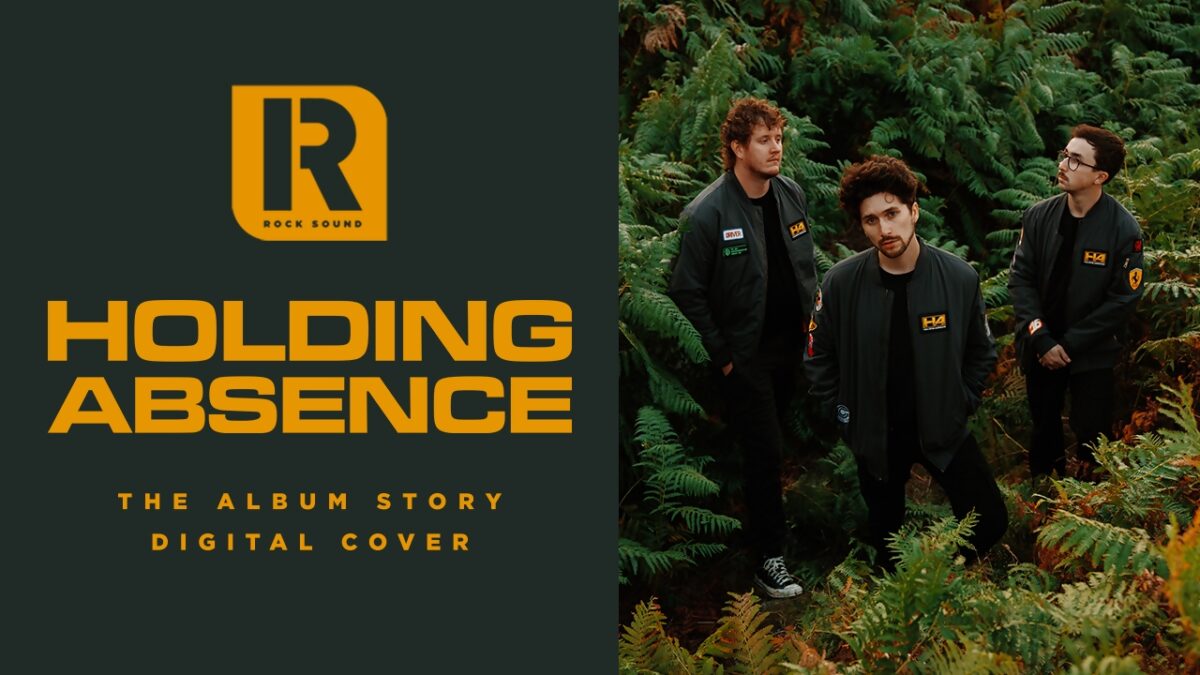
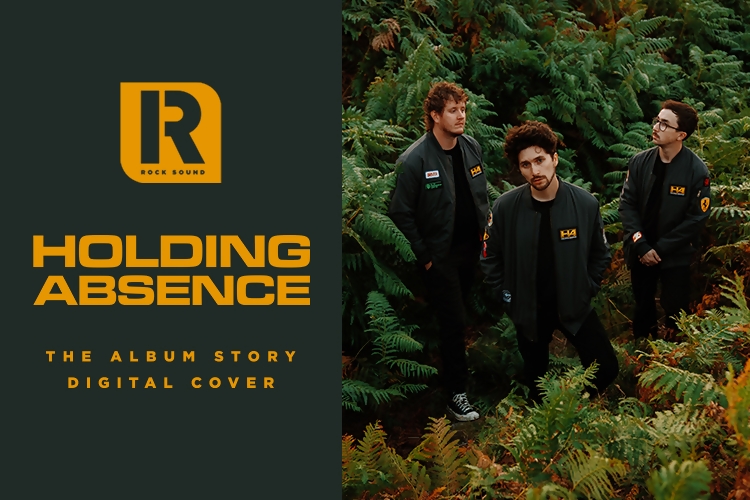
Read Holding Absence ’Modern Life Is Lonely’ | The Album Story below:
(Click ‘View Fullscreen’ for digital feature or scroll down for text only version)
TEXT ONLY:
“In the way that I view our other three albums as like old friends, I view this one like it’s a new friend to me. And making friendships in your 30s is tough.”
Few musicians would describe their output in such a thoughtful, cute and familial manner. But that’s because there aren’t many musicians like Lucas Woodland. But to describe where he feels Holding Absence are right now, both in musical terms and from a human perspective, summing things up like this is pretty spot on.
The last decade has seen Lucas pouring everything he has into the band’s discography, three albums that make up a trilogy that came to a close with 2023’s ‘The Noble Art of Self Destruction’. A means of exploring his place within the world as well as prod and probe at his own psyche through the form of caustic, emotional and thoughtful post-hardcore, when it came to considering what the next step for both him and the band was, it was a case of looking fully outwards for the first time in a long time.
And when you look outwards, you start to realise just how much the world that helped you fall in love with all of this just isn’t there anymore.
“I have always felt like my purpose as a musician was to connect and relate,” he muses. “I think about how I felt when I first saw the ‘Welcome To The Black Parade’ video on TV, and I feel like I’m trying to capture that in a portal constantly, but relatability and connection are not infinite. We will run out of things to connect to people over.
“We also live in a hyper-niche subculture and space. I have a very lonely job, and I feel a deep kinship with people who do what I do because I know how lonely it is for me, and I’m sure it’s lonely for them. But when planning the next step, I want to make sure I’m still paying attention to how everyone feels. Because I think that solitary journey is self-perpetuating, when you really need to look at the bigger picture.”
And it is within that where ‘Modern Life Is Lonely’ finds its heart. As much an analysis of the way that technology is influencing and infiltrating culture, and the detrimental effects that it is having on us as a society, as a look at what it means to know how much more powerful we are when we think of each other within something bigger than us, it is a beautiful, bold and boundless piece of modern rock music. One that feels as timely as it already does timeless.
THE ARTWORK & TITLE
In the same way that Lucas wanted to be mindful of making sure that he has whatever everyone is going through at the forefront of his mind rather than just his own experiences this time around, he also wanted to make sure that, more than anything, he wasn’t out of touch. And a big part of that is understanding how easy it is to feel like you are out here on your own island, like nobody else is going through the same things as you. Except the thing that bonds us together is the fact that we are all feeling that way. What we can all relate to is our separation.
That’s why ‘Modern Life Is Lonely’ feels like an apt title for this cocktail of feelings, but it is also a marker for realising how important it is to step outside of what you may think is a comfort zone.
In that regard, that is where the album’s artwork comes in. Playing into the juxtaposition between man and machine that weaves its way through the record, it depicts Y4-BB0, the band’s new mascot, reaching out towards stunning cherry blossom and picturesque blue sky. Though never actually able to pick those petals, because the image is on a gigantic LED screen, for Lucas, it is an image that he hopes serves as a reminder of the things that we are in control of within the way that life is these days.
“We joke about this a lot, but this album really is a real ‘touch grass’ odyssey,” he smiles. “And we know what is beautiful in life, because it’s very obvious. It’s that human connection. It’s nature. It’s love. It’s positivity. It’s all these things. But we are now always separated by this other thing.
“Life has changed, but humanity hasn’t. Beauty and unity; those things are exactly the same. It’s just now we have a barrier between us and it. And if you feel alone, it’s because you can’t smell the roses. After all, they are on a screen. But I want this to be a reminder of how important it is to break away. To embrace humanity in every form.”
It’s only when such a sentiment is presented before you that you realise just how far so much of what it means has drifted from the modern psyche. That we are more bothered about taking photos of the sunset instead of reaping its ancient benefits for ourselves. But as long as art, such as what the band have produced here, continues to apply the right sort of pressure that allows us to pivot back to what matters, then half the battle is won.
For Lucas, a lot of that comes from looking at how the bands that he grew up with were able to adapt and find him again in his adult life. In remoulding what Holding Absence represents and prodding and poking at these sorts of subjects will allow those who thought they had left them behind to discover that they still speak for them.
“I do think Holding Absence could die as a young person’s band,” he admits. “But I want to weather the storm; I really hope that, like the way that Thrice and Bring Me The Horizon and Biffy Clyro have been there for me as an adult, we get to speak to people on almost like a different level now. I’m older now, and if you’re older now too, then I hope that we can be there for you still.”
THE SOUND
When categorising the band’s discography, Lucas views the band’s previous three albums as pre-Internet and ‘Modern Life Is Lonely’ as post-Internet. On the surface, that does seem like an incredibly online way to look at things for a band that thrives on filling out venues and seeing the whites of their fan’s eyes over living in Discords and gobbling up discourse. But from a musical standpoint, it makes a whole lot of sense.
Lucas prides himself on keeping his ear to the ground of what the youth of today are excited about, and before now, there was never really a chance to integrate his findings into his day job. But with a clean slate of sorts and the potential to go in whatever direction he saw fit, he has been able to reconfigure expectations of who and what Holding Absence should be.
“I think timelessness and legacy and consistency and longevity are all things that are absolutely at the forefront of my mind,” he explains. “But I feel like we’re very high on the idea that because something was already timeless, we should replicate it just because it would probably stay timeless. But now, it’s more about believing in stuff that is without any proven track record and just knowing when something feels like it can last forever.”
“I look at some of the albums and songs that have inspired this album, ‘Nurture’ by Porter Robinson and Ninajirachi’s ‘I Love My Computer’, that are full of these modern sounds, and I don’t think that they are any less timeless than bands like The Jesus and Mary Chain or Slowdive. I know what I think will be cool in 30 years from now, rather than what was cool 30 years ago, and I think the bravery to integrate that into our music was the most fun part about this album.”
And you can hear that fun in abundance throughout the album’s sensational tracklisting. There is still room for plenty of grit between the glitter, such as during the cataclysmic conclusion of the title track, and plenty of post-hardcore thrills and chills are still present, especially coursing through the choruses of ‘Heaven’ and ‘Reflection’. Yet it is in the understated expansion of sounds and scope that filter into the band’s emotional output that sticks out the most.
There are glimmers of hyperpop coursing through the synth lines that bolster ‘Re-Animate’ and ‘Whisper Of A Dream’, whilst the album’s delicate interludes – the acoustic-led ‘Shells Like Us’ and woozy ‘Lullaby’ – are heavily influenced by the phenomenon of lo-fi music, less study-ready and more tear-stained.
For the band to shift their focus in such a way feels even braver, considering how the sound Holding Absence have helped develop is at the peak of popularity right now. Yet, for Lucas, that is even more reason to push away and do what feels right for them rather than wait and hope that people find them. And when you throw in the continued rise and baffling popularity of AI-generated bands, particularly the ones that he is aware have used his output as a reference point, it gives him even more of a push to not sit still.
“I have school friends messaging me, being like, ‘Dude, check out this band. This guy sounds like you’, and I’m like, “It literally is me because I’ve been scalped by this AI’,” he laughs, but with a concerned sternness. “I’ve accidentally influenced culture in a very weird way, and it doesn’t feel like a compliment. It’s gross as hell, but strangely, I am happy to be a martyr. And as we’re reaching the end of the decade, I think we’re all pushing away from that sound now because it’s become so good. There are so many copycats in this scene now, and AI has made that concept an infinite roof.
“That’s why I am more excited about seeing how the genre and the space that we and Dayseeker and Bad Omens and The Plot In You occupy is going to change. I think bands like us will only put songs out now when we unanimously deem them to be pedigree. I can’t wait to see how high that ceiling goes. We’re in that lovely space in our career where we can afford to take risks on things.”
THE LYRICS
“I challenge you to watch a more intelligent movie than Interstellar, but I challenge you to watch a more human movie than Interstellar.”
It’s in this reference to one of cinema’s most devastating accomplishments that the juxtaposition of where ‘Modern Life Is Lonely’ sits from an emotional standpoint becomes clear. The thoughts and feelings that Lucas has laser-focused on here are not new by any means; that’s even true within their expression in other parts of the band’s discography, but the manner in which he is approaching them is what makes all the difference. Analysing things with a bit more knowledge but no less heart, he hopes to open people’s eyes and minds with his words in a way that they haven’t been opened before.
“I’m just trying to make sure that we’re turning everything up a little bit, while still trying to keep people in the circle and not alienate anyone,” he explains. “But human emotion is the whole point of this whole thing. And I’ve got this constant yearning to sing about things that are more than life and more than the universe. Things that are bigger than us.”
Such intent is most prominent on closing track ‘Kyoto Snow’. On the surface, a heartfelt love song, it also speaks to how wondrous the world is, with the sentiments unfurling in both Japan in the winter and Canada in the Summer throughout the verses. The world isn’t big enough for this love story, basically. Throw in the refrain of “I will find you and love you in every timeline” being spoken in English, Welsh, French and Japanese, and you have the physical manifestation of intelligence and emotion in motion.
Though considering how insular and personal so much of what Lucas has said previously in the band’s music is, you would be amiss for him wanting to expand in such a way. He has seen what his words have done for others, but he has also seen what human possibility is capable of. And to compare the way that he saw himself back then to how he sees himself now is to understand that pulling apart your insides in pursuit of art is not always the healthiest way to sustain your future. But saying that, life is an ongoing struggle, and the person you were yesterday still exists within you. You just have to learn how to balance who you were with who you are.
“So, ‘Penance’ was the first song I ever wrote for Holding Absence, and this may be TMI, but it was literally a suicide note that I’d written which I paraphrased,” he admits candidly. “God, the sentences that I omitted from that poem, but I truly felt so insignificant at that point in my life. But now I have a life that I’m proud of, and I’ve worked hard to enjoy. That’s not to say that I really do still get my dark days, and I don’t know that I’m not the person who beats me in the end. I’m well aware of the sort of demons that haunt me. But I owe it to myself not to try and harvest that into art unhealthily.”
THE COLLABORATORS
Another key aspect in not letting how things used to be dictate how they approach things now came in the form of who the band chose to work with from a production standpoint. And though they started the process once again with Dan Weller, it was the decision to shift to working with Daniel Braunstein, a name that has shaped the face of modern heavy music in a manner which will be felt for years to come, where things were able to kick into gear in the manner that they wanted.
“Working with him was transformative,” Lucas beams. “I believe that it would have been an amazing album if we worked with Dan Weller again, but I just knew that it had to be violently different, as much as it could be. And working with Braunstein, we did a lot of production stuff that I’d never thought of before, but he also has a real reverence for emotion, and I think that was why it worked so well.”
From tracking guitars at least 40bpm slower than they usually would as a means of keeping each chord as clean as possible (“The most hyperpop thing you could do in alt-rock” Lucas laughs), to stating that the band owe it to themselves to write a lyric better than it already was, the full spectrum of what it means to craft music was brought to the forefront in a way that was as inspiring as it was vital.
“He was really critical and open-minded in all the right ways,” Lucas continues. “We’re the first British band he’s ever worked with, and probably the lightest band he’s ever worked with in many ways, too. And the whole experience made me realise that music is more about how you express yourself rather than what techniques you use to form that expression. I just can’t wait to do it again.”
THE FUTURE
In taking hold of the reins in a way that suits them rather than relying on what has already come to pass to carry them, Holding Absence have set themselves up for a tomorrow that feels brighter and more exciting than ever before. Though that hasn’t come without work, ‘Modern Life Is Lonely’ already feels like all of it is paying off.
But beyond the ambitious timelessness that exists within the music, for Lucas, the main takeaway from this process is the lack of fear in the face of impermanence that he now feels. There are guarantees in this life, but there are so many things that we have control over. We are the ones who can forge connections, break boundaries and dive into the unknown, and we should utilise our chance to indulge in all of that whilst we are still here.
The world may be changing faster than we can compute, but that doesn’t mean we should ever give up on it. And we should never give up on ourselves either. Because even when all of this ends, we still get to be stardust, after all.
“It’s not about being scared of death. It’s about being scared of living a life that isn’t worth remembering,” Lucas remarks in closing. “That’s my fear, and I think you can sort of smell it in all our music. But death is always marching, you know? Permanence is the goal, but impermanence is almost definite.
“So, within that, this becomes about what we do while we’re here, and not why we should be scared to not be here.”
Source link
