Alternative Rock
Guillotine ‘A Lesser Key’ | Track By Track
Oct
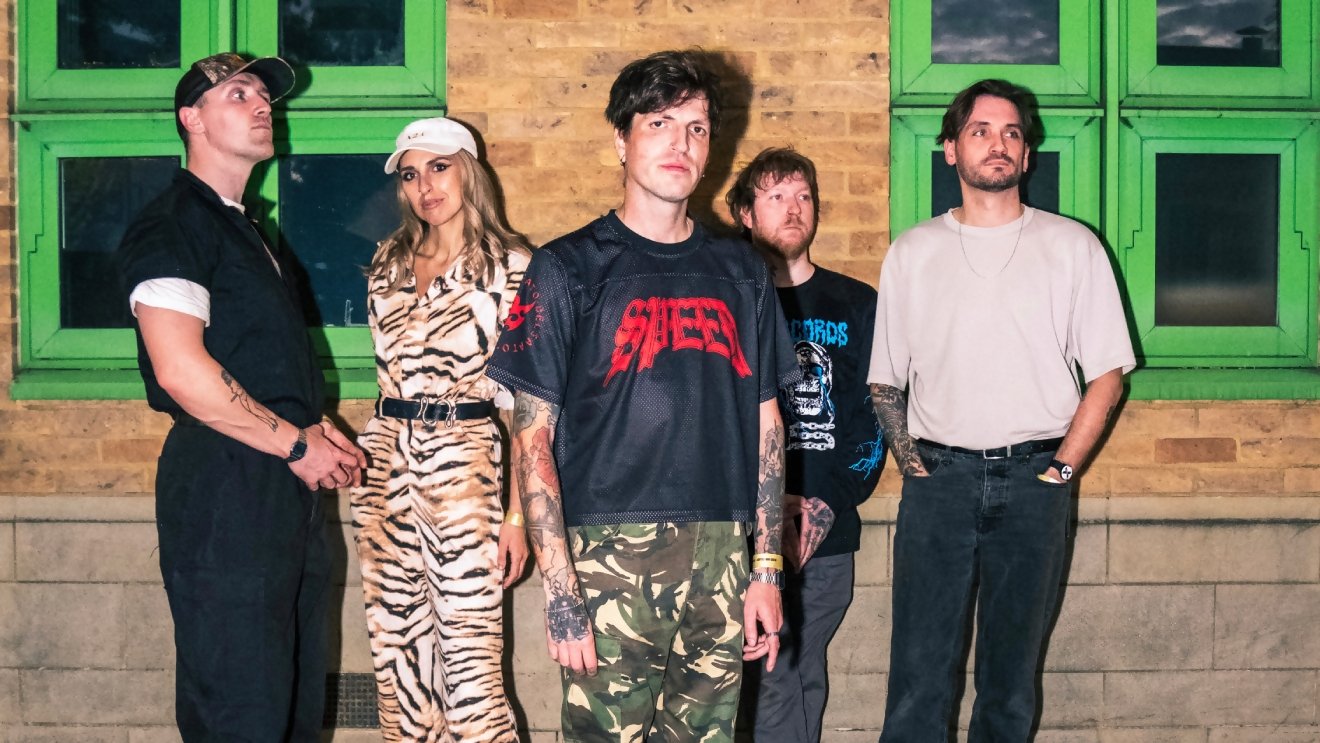
Guillotine guide us through the films, books, games and musical worlds that helped carve out their beautifully considered and utterly boundless new record.
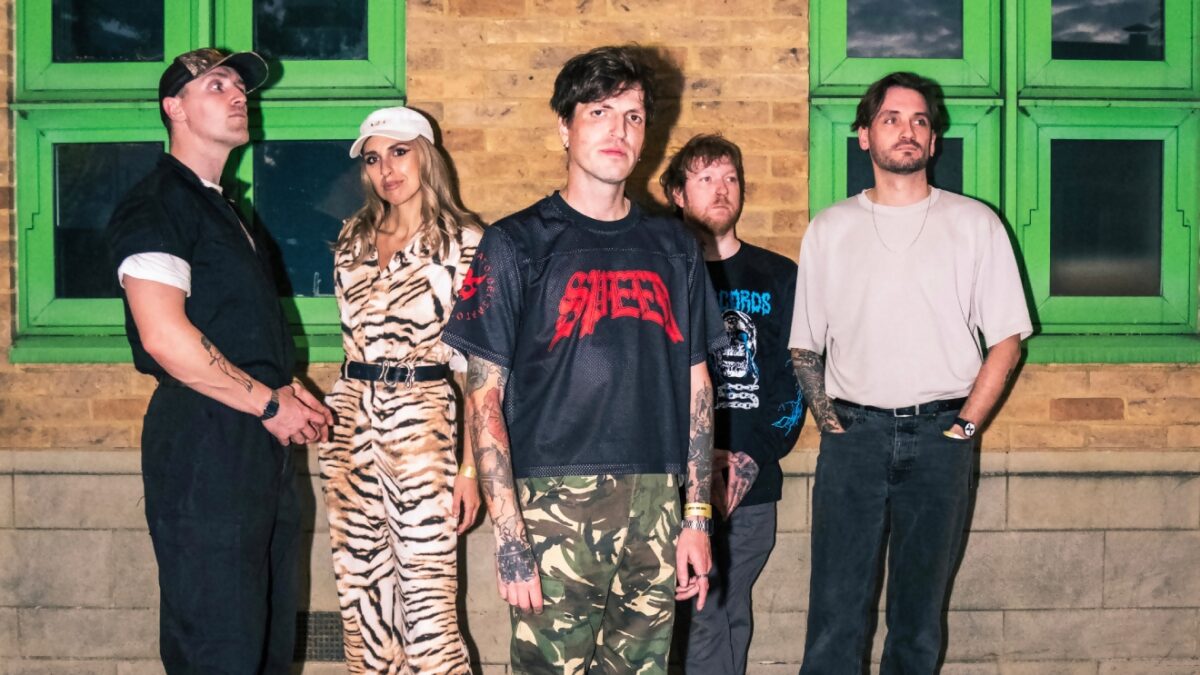
After a few years away, A Lesser Key feels like the record Guillotine always needed to make. Time gave us the space to grow as writers, musicians and people, and when we came back, there was a renewed sense of purpose. Nothing on this record feels forced. Each song arrived naturally, and together they became something bigger than we’d originally imagined.
A lot of the world surrounding ‘A Lesser Key’ was shaped by the things we were watching, reading, playing and listening to while writing it. Horror films, psychological thrillers, literature and games all found their way into the record, not necessarily through their stories, but through the feelings they left behind. We were drawn to the things that sit just beyond our understanding: grief, inherited trauma, fractured memories, the instability of relationships and the uneasy feeling that something isn’t quite right, even when you can’t explain why.
There’s also a thread running through the album that exists beyond the songs themselves. It opens with the sound of a tape machine coming to life, and from that point onwards, the recording slowly begins to deteriorate. Clipping, distortion and glitches creep into the mix, while the stereo image gradually narrows, creating an increasingly claustrophobic atmosphere. Inspired by the language of found-footage horror, the idea was to make the record feel like a document of something slowly falling apart. It’s a subtle detail that might not reveal itself on a first listen, but it mirrors the album’s descent into obsession, paranoia and fractured reality.
Down The Well
As the first song we wrote for the record, ‘Down the Well’ became the natural starting point for everything that followed. The initial inspiration came from the film 1922, based on the Stephen King novella. It wasn’t necessarily the events of the story that stayed with us, but its atmosphere: that creeping sense of impending doom, the feeling that something has already gone wrong and that there’s no real way back from it.
Lyrically, the song explores the point at which your grip on reality begins to slip and your relationships start to unravel around you. There’s a paranoia to that feeling, where you can no longer tell the difference between what’s real and what’s imagined. We wanted the music to establish that world before the record had really begun, drawing on the slow builds and subtle textures of post-rock to create something immersive rather than immediately giving everything away.
In many ways, Down the Well became the blueprint for the album: an invitation into the world we were living in while writing A Lesser Key, and the beginning of a descent into something much harder to escape.
Haunted
We wanted ‘Haunted’ to feel like a statement of intent, both for the record and the themes that would run through it. At the time, we were watching a lot of Ari Aster’s films, particularly Hereditary, which really resonated with our understanding of what it means to be haunted.
It’s not necessarily the house or the object that’s cursed, but the people themselves and the relationships they carry with them. The things we inherit from one another, the wounds we pass on, and the ways our own behaviour can become part of someone else’s suffering. That idea became central to the song, but also to the album as a whole.
At its heart, Haunted is about love and the vulnerability that comes with it. Real connection asks you to let someone in, and that can be terrifying. We kept coming back to the idea that we should be mindful of the energy we allow into our lives, but equally aware of what we give back to the world. Be wary when you love. Sometimes the things that haunt us most aren’t behind us at all; they’re the things we continue to carry forward.
Does It Make You Feel
‘Does It Make You Feel’ exists somewhere between certainty and doubt. It’s about faith in its broadest sense: the decision to throw yourself into something you don’t fully understand, to take a leap into the unknown without knowing whether there’s anything waiting to catch you.
Musically, we were listening to a lot of the later Thrice records and were particularly drawn to the contrast between dynamics, the way a song can move between restraint and intensity without losing its emotional centre. We wanted that tension to reflect the questions at the heart of the track.
The song also explores regret, redemption and the weight our words carry, particularly when it comes to the impact we have on other people. Obsession can disguise itself as love, but wanting something desperately doesn’t necessarily mean we understand it, or ourselves. The outro brings those ideas together: it asks questions without offering easy answers, gradually becoming more direct and assured even as the uncertainty remains. It’s about finding the courage to move forward without needing to understand everything first.
Gouge
The initial idea for ‘Gouge’ came from P.T., the playable teaser created by Hideo Kojima and Guillermo del Toro. There was something about the dread and anxiety it created that felt unlike anything else we’d encountered in a game. Its endless loops, its sense of inescapability and the way familiar surroundings become deeply unsettling all stayed with us long after we’d stopped playing.
That feeling fed into the song’s exploration of inherited pain: the things that follow us through life, whether we understand where they came from or not. Childhood leaves its marks, and the past has a way of resurfacing in places we’d thought were safe. There’s a particular kind of horror in realising that something you’ve spent years trying to escape has been with you all along.
We were interested in the idea of inherited sin, the endless loops of grief and the weight that accumulates when difficult things are left unresolved. You can bury those feelings, outrun them or convince yourself they’ve disappeared, but they don’t necessarily go away. Sometimes the things we refuse to confront become the things that define us.
The Fifth Gate
We wanted ‘The Fifth Gate’ to feel less like a conventional song and more like a space within the record — a point where the deterioration of self becomes impossible to ignore. Mark Danielewski’s House of Leaves was a major reference here, particularly its ability to turn the idea of a home into something unfamiliar and unstable. A place that should offer comfort becomes something you can’t quite understand, and the harder you try to rationalise it, the further you seem to lose your footing.
Confusion and grief sit at the forefront of the track. We wanted to create a feeling rather than explain one, taking musical inspiration from Godspeed You! Black Emperor and the way repetition, atmosphere and gradual shifts in texture can create a sense of unease. The song loops and restarts, leaving you second-guessing things you thought you knew, while layers of background noise gradually enter the mix and the stereo image tightens around you. It’s designed to feel increasingly claustrophobic, as though the walls are closing in.
The title draws on the mythology of the seven gates of hell, in which the fifth gate represents a point beyond which no one returns. We liked the finality of that idea, but also the ambiguity of what crossing that threshold actually means. By this point in the album, the recording itself is beginning to unravel, and the distinction between the world of the record and the world it describes becomes harder to hold onto. The dissonance is intentional. Some things can’t be rationalised into making sense, no matter how desperately we try.
Half As Bright
We’ve never been particularly subtle about our love of David Lynch, but Half as Bright is probably the clearest expression of that influence on the record. We were watching Twin Peaks: Fire Walk with Me and talking about the strange relationship between truth and fiction, and how the things that seem most surreal can sometimes reveal something more honest about the world than reality itself.
What interested us was the coexistence of light and darkness within the same person: the real and the surreal, the things we show the world and the things we keep hidden. Memory plays a big part in that, too. As we get older, the past can take on a warmth and clarity it never really possessed, while the present feels uncertain and the future becomes harder to imagine.
The song became a pivot point within the record, where things are no longer quite what they seemed. It’s about recognising how easily we can become trapped in our own recollections, searching for something that may never have existed in the way we remember it. We kept returning to the idea that we’re living inside a dream, and that the line between what we believe and what’s actually there is often far thinner than we’d like to think.
At A Loss
We always knew we wanted to bookend the record with songs that felt like a conversation between each other: the then and the now, the beginning and the end. We fell in love with Paul Thomas Anderson’s Phantom Thread when we first saw it. There’s something fascinating about the way it explores love as a complicated, sometimes uncomfortable exchange, rather than the reassuring thing we might want it to be. Relationships contain unspoken agreements, difficult truths and feelings that aren’t always easy to acknowledge. Silence can communicate as much as words, and some of the most intimate parts of a relationship are the ones we struggle to articulate.
That felt like the right place to bring the record to a close. If Down the Well opens the door to a world of uncertainty, ‘At a Loss’ leaves us with the understanding that the different voices, memories and stories we’ve been following are all part of the same whole. A kind of unified dissonance: contradictory feelings existing alongside one another, without necessarily cancelling each other out.
Ultimately, it’s a song about grief, remembrance and the pain of losing someone you love, but also about gratitude for the time you shared and the mark that person leaves behind. We didn’t want the record to end with anger or despair. We wanted it to arrive somewhere closer to acceptance, with the understanding that love doesn’t disappear simply because someone is no longer there.
‘A Lesser Key‘ feels like both an ending and a beginning. These songs have lived with us for a long time, and finally being able to share them in full feels like closing one chapter while opening another. Many of them have already taken on lives of their own on stage, evolving as this lineup has continued to play and reinterpret them. The album captures a particular moment in their lives, but the songs are still changing, still finding new meanings as we do.
We’re incredibly proud of this record. Every film, book, game and musical influence helped us find a way into its world, but ultimately A Lesser Key became something of its own: a record about the things we inherit, the things we carry, and the things we eventually have to confront. We hope people experience it as it was intended from start to finish, letting the connections reveal themselves along the way.
Source link
