
Pop/Hip Hop/R&B
10 Best James Brown Songs of All Time
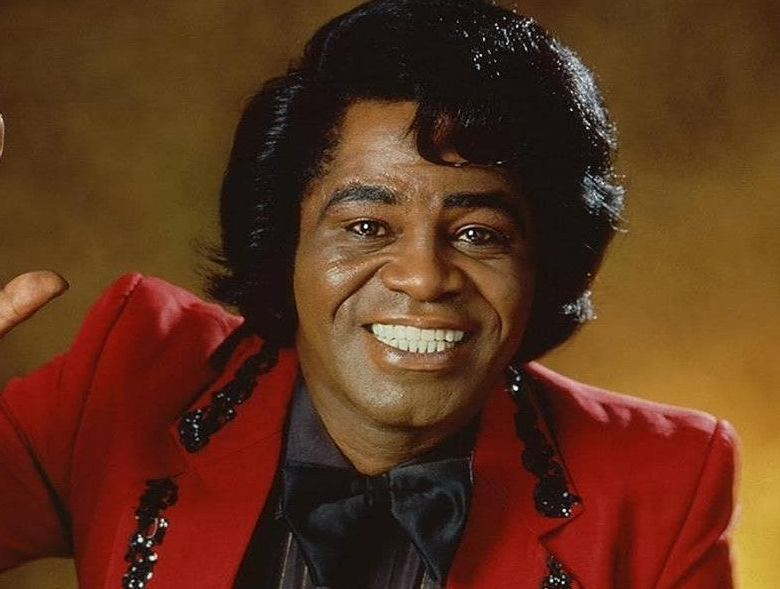
Aug
Few performers brought more electricity to popular music than James Brown. With explosive vocals, relentless rhythm, razor sharp bandleading, and a stage presence that seemed to defy exhaustion, Brown became one of the most influential figures in soul, funk, and R&B. His music transformed rhythm itself into the main event, pushing drums, bass, horns, and guitar into tightly locked grooves that would later shape funk, hip hop, disco, and modern dance music. Whether he was shouting about pride, heartbreak, determination, or pure movement, Brown delivered every performance with unmistakable urgency. The most popular James Brown songs reveal an artist whose voice, rhythmic innovations, and commanding personality permanently changed the sound of American music and earned him the enduring title of the Godfather of Soul.
1. I Got You (I Feel Good)
I Got You (I Feel Good) may be the purest distillation of James Brown’s musical personality ever captured on record. Released in 1965 with The Famous Flames, the song begins with one of the most recognizable vocal exclamations in popular music before Brown plunges directly into a compact explosion of rhythm, brass, guitar, and unrestrained joy. There is almost no introduction because none is necessary. Brown announces his emotional state immediately, and the band responds as though every instrument has been waiting for his command.
The brilliance of the recording lies in its economy. The horn riff is sharp and memorable, the rhythm section remains tightly disciplined, and Brown’s vocal alternates between singing, shouting, and rhythmic punctuation. His voice does not simply float above the musicians. It becomes another part of the groove. Every grunt and cry lands with the precision of a drum hit, demonstrating the approach that would eventually make him one of the principal architects of funk.
Lyrically, the song is almost radically uncomplicated. Brown feels good because he has found love, and he repeats that happiness with absolute conviction. In another performance, such simplicity might become repetitive. Brown turns repetition into momentum. Each return to the central phrase sounds more physical, as though joy itself is increasing through movement.
The famous saxophone break adds another burst of excitement before Brown and the band return to the central groove. Nothing is wasted. The recording lasts only a few minutes, but within that brief space it establishes a complete musical world built around rhythm and emotional immediacy.
I Got You (I Feel Good) became Brown’s highest charting pop single in the United States and eventually one of the recordings most widely associated with him. It appears constantly in films, television, advertising, celebrations, and sporting events because the opening alone can change the energy of a room. More importantly, the song captures what James Brown understood better than almost anyone: rhythm could communicate before the listener had time to analyze anything. The beat hits, Brown screams, and the body understands the message instantly.
2. It’s a Man’s Man’s Man’s World
It’s a Man’s Man’s Man’s World reveals a radically different side of James Brown from the explosive performer heard on his hardest funk recordings. Released in 1966 and credited to Brown and Betty Newsome, the song is a dramatic soul ballad built around orchestral grandeur, blues feeling, and one of the most emotionally intense vocals of Brown’s career. Instead of commanding dancers to move, he stands almost completely exposed at the center of the arrangement.
The lyric begins by listing inventions and achievements traditionally associated with men, including cars, trains, electricity, and other symbols of industrial progress. Yet the entire argument turns on the refrain. None of those accomplishments mean very much without women. That contrast gives the song a complicated emotional character, combining masculine pride with dependence, loneliness, and recognition.
Brown’s performance is extraordinary because he refuses to sing the melody neatly. He bends phrases, stretches words, cries out, and occasionally sounds as though emotion is forcing him beyond the boundaries of the written composition. Strings surround him with cinematic weight while horns and rhythm section provide carefully measured support. The arrangement by Sammy Lowe gives the recording grandeur, but Brown’s voice supplies the drama.
His gospel background is especially audible here. The performance resembles a testimony in which each repetition raises the emotional stakes. Brown does not merely state that the world would be nothing without women. By the final passages, he sounds devastated by the realization. The slight roughness and instability in his delivery make the recording feel human rather than polished.
It’s a Man’s Man’s Man’s World became one of Brown’s defining ballads and a song he repeatedly revisited in concert. Live performances could stretch the composition dramatically as he improvised, testified, and pushed his voice into increasingly intense territory.
The recording remains essential because it proves that James Brown’s greatness was never limited to rhythm. He could command stillness just as effectively as movement. Where his funk records make listeners respond physically, this performance demands emotional attention. It is romantic, conflicted, theatrical, vulnerable, and unmistakably Brown.
3. Papa’s Got a Brand New Bag
Papa’s Got a Brand New Bag represents one of the crucial turning points in the development of funk. Released in 1965, the recording finds James Brown beginning to reorganize popular rhythm around a concept that would transform his music and eventually influence enormous portions of soul, funk, disco, hip hop, and modern dance music. Melody remains important, but the real subject of the record is groove.
The lyric describes an older man who has discovered contemporary dances and is suddenly behaving with youthful enthusiasm. Brown mentions dance crazes and celebrates Papa’s unexpected transformation with obvious amusement. Yet the words are almost secondary to the rhythmic architecture underneath them.
Brown had begun insisting that every instrument in his band function partly as percussion. Guitar, bass, horns, drums, and voice all contribute short rhythmic figures that interlock rather than simply accompanying a conventional melody. The horns strike with remarkable precision while guitar scratches through the arrangement and the rhythm section emphasizes a powerful forward pulse. Brown’s own vocal becomes another rhythmic device, full of shouts and clipped phrases.
This approach was revolutionary because it changed the hierarchy inside a popular song. Instead of harmony carrying the composition while drums merely supported it, rhythm could become the organizing principle. Brown would push this idea much further on later recordings, but Papa’s Got a Brand New Bag is one of the moments when the transformation becomes unmistakable.
The performance also captures Brown’s extraordinary skill as a bandleader. His musicians sound incredibly tight because the music depends on precision. A horn stab arriving even slightly late would weaken the groove. Brown expected his ensembles to function almost like a single rhythmic organism, and the discipline is audible throughout the recording.
Papa’s Got a Brand New Bag became a major hit and earned Brown his first Grammy Award. Its greater significance, however, lies in what came afterward. Musicians recognized that Brown was discovering a new way to construct rhythm based music. Funk was not invented in one instant, but this recording belongs among its foundational documents. Papa may have acquired a new bag, but James Brown had discovered an entirely new musical language.
4. Get Up (I Feel Like Being a) Sex Machine
Get Up (I Feel Like Being a) Sex Machine is James Brown funk reduced to its essential ingredients: rhythm, repetition, vocal commands, disciplined musicianship, and irresistible physical movement. Recorded in 1970 with a young band that included Bootsy Collins and Catfish Collins, the song captures Brown entering a new phase after major changes within his ensemble. Instead of weakening him, that transition produced one of the hardest grooves of his career.
The recording is built around interaction. Brown calls out instructions, Bobby Byrd responds, and the musicians lock into a pattern that seems capable of continuing indefinitely. Conventional verse and chorus structure becomes far less important than maintaining the groove. Brown repeatedly asks whether the band can take the music to the bridge, turning an ordinary structural instruction into one of the most famous moments in funk.
Bootsy Collins’s bass contributes enormous personality while Catfish Collins’s guitar adds sharp rhythmic figures. The drums remain disciplined and spacious, leaving room for every instrumental accent to register. Brown understood that funk did not require everyone to play constantly. What mattered was where each sound landed.
His voice is part singer, part percussionist, and part conductor. Brown shouts, grunts, counts, encourages, and gives instructions directly within the recording. Instead of hiding the process of directing the band, he makes leadership part of the performance itself. That sense of musicians creating the groove together in real time gives the track remarkable vitality.
The title and lyric celebrate physical confidence and movement, but the song’s deeper importance lies in its rhythmic design. Generations of funk, hip hop, and dance musicians studied recordings like this because they revealed how repetition could become hypnotic rather than monotonous.
Sex Machine became one of Brown’s signature concert numbers and a perfect representation of his stage identity. Audiences did not merely listen to James Brown. They responded to commands, chants, and rhythmic cues as active participants.
Few recordings better demonstrate why Brown earned his reputation as one of popular music’s greatest bandleaders. He turns a groove into an event, a rehearsal instruction into a hook, and a handful of rhythmic ideas into one of funk’s permanent monuments.
5. Say It Loud, I’m Black and I’m Proud
Say It Loud, I’m Black and I’m Proud became one of James Brown’s most culturally significant recordings because it transformed racial pride into an unforgettable communal chant. Released in 1968 during a period of profound social and political upheaval in the United States, the song gave direct musical expression to a growing movement toward Black pride, self determination, dignity, and cultural confidence.
Brown had already become one of the most prominent Black entertainers in America, but this recording moved beyond entertainment into an explicit statement of identity. The title itself functions as both command and response. Brown calls out the first phrase and a group of children answers with the declaration of pride, creating a chorus designed not simply to be heard but to be repeated by listeners.
The musical construction is equally important. Guitar, bass, drums, horns, and vocal accents operate within a tightly organized groove. Brown’s developing funk language gives the political message physical force. He understood that an anthem did not need to sound solemn. Pride could be expressed through movement, rhythm, and collective participation.
The lyric addresses discrimination, economic inequality, and the demand for opportunity while rejecting the idea that Black identity should be treated as something requiring apology. Brown emphasizes the desire to work and participate fully while insisting on dignity. The language is direct because subtlety would have weakened the purpose.
The recording became enormously influential even though Brown’s relationship with politics and activism could be complicated. He was an artist whose personal views did not always fit neatly into simple categories. Yet Say It Loud became larger than any single political position. The refrain entered American cultural vocabulary and inspired countless listeners during a crucial historical moment.
Musically, it also demonstrates Brown’s extraordinary ability to make social commentary inseparable from groove. The message never interrupts the rhythm. The rhythm delivers the message.
Decades later, Say It Loud, I’m Black and I’m Proud remains one of the essential recordings in the history of Black popular music. It is funk, protest, affirmation, and community participation compressed into a powerful performance that still sounds defiant, celebratory, and completely alive.
6. Please, Please, Please
Please, Please, Please was the recording that first introduced James Brown’s extraordinary emotional intensity to a wide audience. Released in 1956 by James Brown and The Famous Flames, the song is built around remarkably few words, yet Brown turns that simplicity into a dramatic performance of romantic desperation. The repeated plea becomes less like a conventional lyric and more like an emotional ritual.
The story behind the song is inseparable from Brown’s earliest development as a performer. Rather than depending on elaborate verses, he discovered how repetition could increase emotional force. Each return to the central word carries a slightly different inflection. Brown begs, cries, stretches syllables, and pushes his voice until the listener begins focusing not on the literal vocabulary but on the feeling underneath it.
That approach came directly from gospel traditions, where repetition can intensify testimony and transform a simple phrase through delivery. Brown adapted those instincts to secular soul music with extraordinary effectiveness. His voice sounds rough, youthful, and almost painfully exposed.
The song became even more legendary through live performance. Brown developed an elaborate stage routine in which he appeared emotionally and physically exhausted near the end of the number. A member of his entourage would approach with a cape, place it over Brown’s shoulders, and attempt to lead him away. Brown would then throw off the cape and return to the microphone for another desperate burst of singing. The routine turned heartbreak into theater and became one of the most famous traditions in soul performance.
His appearance performing Please, Please, Please during the 1964 TAMI Show remains especially celebrated. Brown’s explosive stage presence helped make the performance a benchmark for live popular music, demonstrating the competitive intensity with which he approached every audience.
The recording itself predates the funk innovations that would later redefine Brown’s legacy, but all the essential qualities are already present: repetition, command, emotional extremity, rhythmic instinct, and an almost physical relationship with the audience.
Please, Please, Please is where the James Brown legend truly begins. Before the famous grooves and revolutionary rhythms, there was a young singer repeating one word until it sounded like his entire life depended upon being heard.
7. Cold Sweat
Cold Sweat is one of the recordings scholars and musicians repeatedly return to when tracing the emergence of funk as a distinct musical language. Released in 1967 and credited to James Brown and Alfred Ellis, the track takes ideas Brown had been developing for years and pushes them into a radically rhythm centered form. Harmony becomes increasingly static, melody becomes secondary, and almost every element exists to strengthen the groove.
The song is built around an extraordinarily tight instrumental pattern. Guitar provides clipped rhythmic figures, horns strike with percussive precision, bass reinforces the pulse, and Clyde Stubblefield’s drumming creates one of the great rhythmic performances in Brown’s catalog. Stubblefield does not merely keep time. His accents and syncopations become fundamental components of the composition.
Brown famously emphasized the importance of the first beat of each measure, an approach often described through his concept of hitting on the one. Cold Sweat demonstrates how powerful that idea could become. The musicians repeatedly return to a shared rhythmic center, giving the groove a sense of weight even when individual parts dance around it.
Brown’s vocal fits into this architecture perfectly. He uses short phrases, cries, grunts, and repeated lines rather than relying on a flowing conventional melody. His voice becomes part of the rhythm section. The result is music that feels almost impossible to experience passively.
The instrumental break is particularly important because Stubblefield’s drums receive unusual prominence. Brown’s later recordings would contribute some of the most sampled rhythms in hip hop history, and the rhythmic innovations heard here helped create the foundation for that future.
Lyrically, Cold Sweat concerns the overwhelming physical effect of attraction, but words are not really the main event. Brown is interested in what desire feels like rhythmically. The groove communicates nervous excitement more effectively than any detailed narrative could.
The song may sound natural today because decades of funk, disco, hip hop, and dance music absorbed its ideas. In 1967, however, its stripped rhythmic focus was startling. Cold Sweat is one of the moments when James Brown stopped merely making extraordinary soul records and began changing the basic grammar of popular rhythm.
8. The Payback
The Payback is James Brown at his darkest and most hypnotic, stretching funk into a simmering revenge narrative that feels simultaneously controlled and dangerous. Released in 1973 as the title track of a major album, the song abandons the bright excitement associated with some earlier Brown hits and settles into a menacing groove built around resentment, betrayal, and patience.
The narrator has been wronged and wants repayment, but Brown does not rush toward confrontation. That restraint is what makes the performance so effective. He sounds as though he has had plenty of time to think about what happened. Guitar, bass, drums, and atmospheric instrumental textures establish a deep pocket while Brown speaks, sings, growls, and comments from inside it.
The guitar work is especially important. Repeated figures slide through the arrangement with a slightly sinister character, while bass and drums refuse to overcomplicate the foundation. Brown had long understood that a groove becomes more powerful when musicians resist unnecessary movement. Every sound in The Payback seems placed for maximum tension.
His vocal combines wounded pride with calculated confidence. Brown is angry, but he never sounds out of control. He savors phrases, repeats accusations, and allows silence between statements to become part of the drama. The result resembles a conversation in which everyone else has gone quiet because the speaker clearly has unfinished business.
The song became one of the most influential pieces in Brown’s later funk catalog, particularly through sampling. Hip hop producers discovered enormous possibilities inside its drums, bass, guitar, and vocal fragments. Brown’s music already treated short rhythmic ideas as modular pieces, making it especially compatible with the sampling practices that emerged years later.
The Payback demonstrates how far his funk language had evolved from the compact singles of the mid 1960s. Brown no longer needed to compress everything into a few minutes. He could allow a groove to unfold patiently, trusting repetition and texture to create drama.
The result is not merely a song about revenge. It is revenge translated into rhythm. The bass broods, the guitar stalks, Brown threatens without shouting constantly, and the entire performance feels like consequences approaching one deliberate step at a time.
9. Living in America
Living in America gave James Brown one of the most dramatic commercial revivals of his career. Released in 1985 and prominently featured in Rocky IV, the song introduced the Godfather of Soul to a younger generation through an enormous production filled with synthesizers, electronic drums, horns, backing voices, guitar, and unmistakable Brown vocal energy.
By the mid 1980s, mainstream popular music sounded very different from the stripped funk Brown had pioneered. Electronic technology dominated radio, music videos had become essential, and younger performers were drawing from musical ideas Brown had helped invent decades earlier. Rather than retreating into nostalgia, Living in America places him directly inside that contemporary sonic environment.
The lyric celebrates movement across the United States, mentioning cities, highways, radio, travel, work, and the restless scale of American life. Brown approaches the song with the excitement of a master showman rather than a detached observer. His voice cuts through the dense production with familiar shouts and commands, proving that no amount of synthesizer polish could erase his personality.
The connection with Rocky IV strengthened the song’s larger than life character. Brown performs it during the elaborate entrance of boxer Apollo Creed, surrounded by theatrical spectacle and patriotic imagery. The scene fits Brown naturally because his concerts had always treated entrances, costumes, movement, and audience response as essential parts of music.
The song became one of his biggest later hits and earned Brown a Grammy Award. It also reminded mainstream audiences that many of the rhythmic ideas dominating contemporary pop had roots in innovations he developed years earlier.
Some listeners naturally associate James Brown most strongly with the raw sound of Cold Sweat or Sex Machine, but Living in America captures another essential quality: adaptability. Brown understood show business as well as rhythm, and he knew how to make his presence felt within a changing musical landscape.
The result is bold, theatrical, polished, and unapologetically enormous. After decades of influence, James Brown was not merely being honored as a legend. With Living in America, he returned to the center of popular culture sounding completely unmistakable.
10. Get Up Offa That Thing
Get Up Offa That Thing is James Brown turning physical movement into a form of medicine. Released in 1976, the song arrives with almost no patience for hesitation. Brown commands listeners to get up, move, dance, and release pressure, while his band surrounds those instructions with one of the most exuberant grooves of his later 1970s period.
The central idea could hardly be simpler, yet simplicity is precisely what gives the track such force. Brown had spent years perfecting music in which rhythm carried as much meaning as lyrics. Here, the command to move does not require detailed explanation because the band demonstrates the solution immediately. Bass, drums, guitar, horns, and vocal accents create a pulse designed to pull the body into participation.
Brown sounds particularly animated. He shouts instructions, laughs, improvises, and uses his voice almost like a percussion instrument. There is a wonderful sense that he is responding directly to the musicians rather than merely performing a predetermined vocal. That spontaneity was one of his great illusions as a bandleader. The music feels wild while remaining extremely disciplined underneath.
The song arrived at a challenging point in Brown’s career. Funk had expanded dramatically, and artists inspired by his innovations were creating their own increasingly elaborate versions of the style. Disco was also becoming dominant. Brown responded not by abandoning his identity but by reaffirming the qualities that made him unique: command, rhythm, repetition, and physical energy.
The title itself became a perfect summary of the James Brown concert philosophy. Audiences were never supposed to sit politely and observe. Brown demanded response. He called, the crowd answered, the band hit the groove, and the entire room became part of the performance.
Get Up Offa That Thing remains an enduring dance favorite because the record sounds genuinely therapeutic. Brown treats movement as release from tension, frustration, and emotional pressure. The prescription is direct: stop sitting still and let rhythm do its work.
That message captures something fundamental about James Brown’s legacy. His music could address politics, pride, romance, heartbreak, and social change, but beneath nearly everything was a belief in rhythm as a physical force. Get Up Offa That Thing delivers that philosophy with joy, authority, and enough funk to make ignoring the command extremely difficult.

Edward Tomlin is a frequent contributor to Singers Room. Since 2005, Singersroom has been the voice of R&B around the world. Connect with us via social media below.
Source link
