
Alternative Rock
The Plot In You On Creative Freedom, Defying Expectations & Completing The Volume Series
Jul
Now almost two decades into the game, unpredictability has become a defining characteristic of The Plot In You.
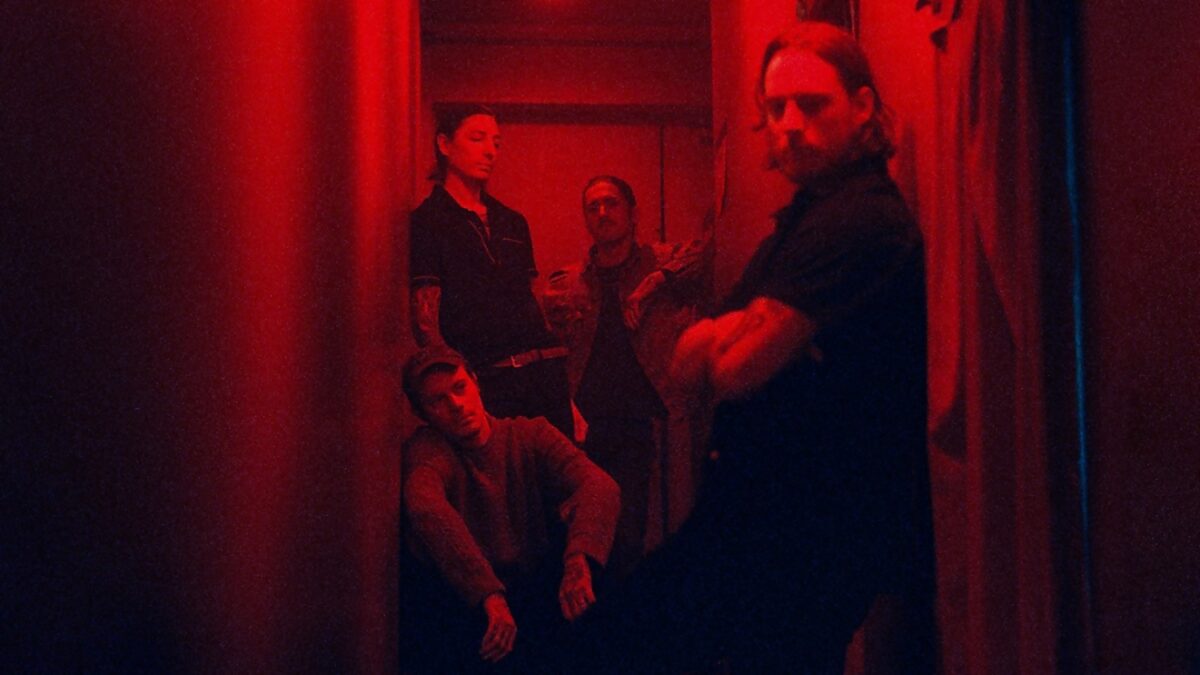
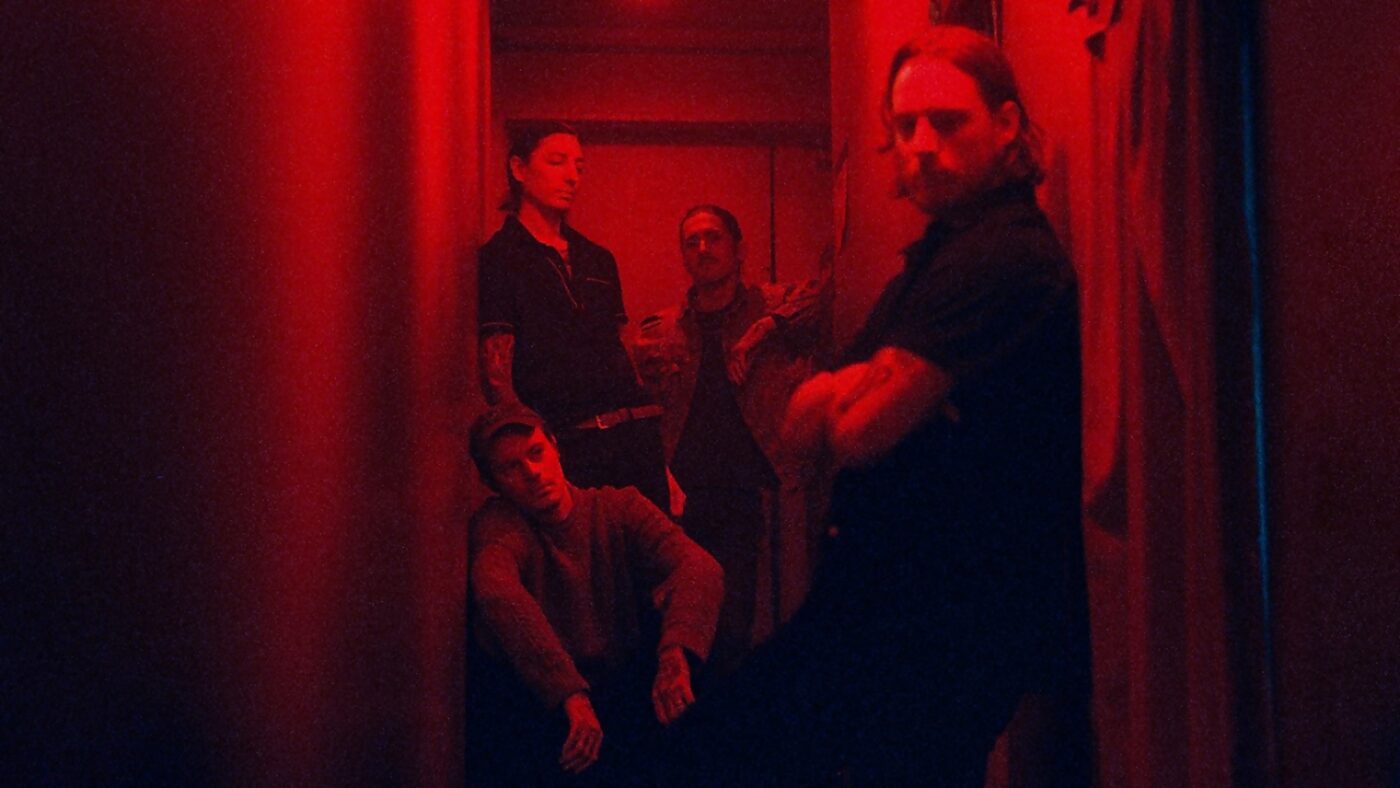
Since the Ohio heavyweights emerged with their visceral, heart-wrenching debut concept album ‘First Born’ in 2011, they’ve made no secret of their penchant for going against the grain. Continually expanding their sonic boundaries with each new release, their next move has always been impossible to foresee, seamlessly switching between fist-clenching metalcore chugs, atmospheric euphoria, and towering rock melodies.
Binding everything together with the open-hearted, emotionally raw sensibilities of vocalist Landon Tewers, it’s an approach that has asserted no one song can offer a complete picture of what they’re capable of, and that’s precisely why the band’s latest project feels so vital.
Beginning with the release of ‘Divide’ back in October 2022, The Plot In You have spent almost four years gradually unveiling a series of three-track volumes. Written in fragments between relentless touring commitments and released whenever they were ready, those 12 songs have now been brought together to form the band’s self-titled album.
Moving between the sheer destructive force of ‘Forgotten’ and ‘Don’t Look Away’, the exposed, fragile beauty of ‘All That I Can Give’ and ‘Silence’, and the shapeshifting final statement of ‘Carved’, it captures The Plot In You at their most creatively liberated, revealing the extraordinary breadth of Landon’s vision.
With the full collection now out in the world, Rock Sound caught up with Landon to talk about the freedom of abandoning traditional deadlines, discovering the subliminal connections between these songs, and why he’s finally forcing himself to stop thinking about what comes next.
ROCK SOUND: This project has unfolded across almost four years. Now that all four volumes exist together, what does it feel like to finally stand back and see the entire era as one complete body of work?
LANDON TEWERS: It’s really cool. It’s been a four-year process, and I just wrote whenever I felt like writing. There was no pressure and no time constraints, so that alone was such an awesome experience. I got to do it when I felt like doing it, rather than working under any kind of pressure.
I listened through the whole thing as one for the first time about a week ago. It was nostalgic and cathartic going back and listening to it as one thing. I feel really proud and excited that it’s finished. I can take a break now and not have to think about writing songs for a while, but I’m really proud and stoked that it turned out the way that it did.
RS: You chose to release the songs in three-track instalments rather than disappearing for several years and returning with a traditional album. What initially attracted you to that format?
LANDON: I have been advocating to try this for many years, just because we tour so much. Honestly, I don’t get many windows to sit for a couple of months and write a whole album.
I pitched the idea and said, ‘What if we just did a couple of EPs and treated every song like a single?’ Nobody seemed that excited about the idea, but I was like, ‘Please, I would love to give this a shot.’ Luckily, it worked out really well.
Having tonnes of time and space between releases, and getting to play brand-new songs on every tour, was the coolest thing ever. Usually, you put an album out and then you’re playing those songs for two or three years. You start getting sick of them, and they start feeling worn out.
With the way we did this, on every tour we were getting to try new things and different orders within the setlist, constantly seeing what was working from a live perspective. I don’t know whether we’ll be able to do this forever, or what the next thing will look like, but for this era it was exactly what we needed to do.
RS: Knowing that every song would receive the attention usually given to a single, were you more ruthless about what made the final cut?
LANDON: Totally. I felt like I was in competition with myself on every release, trying to one-up the last thing. I don’t know whether I accomplished that, but it was definitely a mindful thing.
Knowing that every song was going to be treated like a single, I had the perspective that it all needed to be absolute quality. There couldn’t be any filler or bullshit. Everything needed to hit hard, and everything needed to have a really good video too.
I love the guy who does our music videos. He puts so much thought and effort into his craft, so with every song I was picturing it as a miniature movie. I was really trying to do the best I could.
RS: The individual EPs weren’t necessarily intended to be cohesive. When you listened to everything together, were you surprised by how naturally the songs fitted alongside one another?
LANDON: Yeah, I was. When I listened to it all together, it occurred to me that it actually does work as a body of work. There was no intention behind that, though. Every song was totally its own thing.
The fact that it came together and most of it meshes well was a happy accident. None of it was made to be cohesive at all. Every song was treated as its own separate thing, so I was stoked that it all melded together in the end.
RS: The collection moves between some of the most savage music you’ve made and songs that are much more melodic, atmospheric and exposed. Did this format make it easier to follow each of those individual instincts?
LANDON: The whole goal for me was experimenting. I wanted to push myself to try as many different things as possible. Everything was so spaced out that I was literally living through different eras of my life while writing it, and I think that shines through pretty clearly across this body of work.
I tried to go into every writing session with a fresh mentality though. Whatever was naturally coming out, I wanted to let it happen and not force anything. I think I’ll take that with me moving forward too. I don’t ever want to sit down at the desk and say, ‘I need to write this kind of song.’ I want to sit down and let it flow. The whole thing was an incredible learning experience.
RS: There really is a little bit of everything within these songs, but it goes without saying that you can’t please everyone. There are those fans who want The Plot In You to remain purely heavy, while others connect more deeply with the melodic material. Does that divide affect you at all?
LANDON: It doesn’t bother me. I’m very aware that we almost have two separate fanbases. There are people who legitimately only like the heavy stuff, and that’s totally fine because we’ll probably always have that element of our band. Then there are other people who don’t mess with the heavy stuff at all. They want the melodies and the big rock songs.
At this point, our core fanbase is pretty cool with the fact that they never really know what to expect. It’s a gamble, and I feel like that makes us even more intriguing. There’s always that big question mark at the end of everything.
We like doing both, and I feel like we’ve harnessed skills in both sounds. It’s fun to keep people on their toes. I love writing all different types of music and having the creative freedom to try anything. Even if someone doesn’t like a certain thing, they can wait, because they’ll probably get what they want within two or three songs.
RS: Lyrically, several of these songs look outwards at society, empathy, disconnection and the ways people treat one another. What was going through your head during this period?
LANDON: A lot of the songs were written post-COVID, where everything was just crazy. People were at each other’s throats over everything, and nobody could agree on anything. There has been so much war and devastation in our era, so there are a lot of meditations on that.
It’s my view of society, how human beings treat each other, how awful things are, and how we become numb to everything around us. A song like ‘Don’t Look Away’ is all about becoming numb to the evil and darkness. Most of it is observational, but I hope that towards the end there are little glimpses of hope sprinkled throughout. I didn’t want it to be entirely doom and gloom. Even with songs like ‘You Get One’, there are glimpses of the idea that maybe there is hope after all.
I’m not super good at writing positive music. That has never been my strong suit, but I’m trying to get better at it. Through all the pain and everything life puts you through, it’s still worth pushing through and trying to see the best in people and the best in life.
RS: ‘Silence’ feels like one of the most vulnerable and hopeful moments in the collection. After so much anger and volatility, was it important to leave room for something that reaches towards recovery?
LANDON: That song is one of my favourites from this whole body of work. I love playing it live too, because it has a different impact to any of the other songs.
It was very important to me to have that one on the record. I was coming close to the end of this whole thing, and I was like, ‘This has all been so depressing and negative. There needs to be at least one somewhat hopeful anthem sprinkled in here.’
It still has a sombre feel, but there are glimpses of positivity. It was one of the most important songs for me to write, and I think I wrote it at the perfect time. I was living through a period where things were beginning to feel more peaceful and everything was coming together. I couldn’t sit there and write another sad song. I needed to lighten the mood a little.
RS: From a musical perspective it’s also a particularly unique one. How did it actually come together?
LANDON: It was the first song that I wrote in the room I’m in right now. I had just moved into a new place, and the studio was nothing like it looks now. I was so excited to have a workspace again because I had been in this weird limbo of not having anywhere to work during the move.
I had been writing all these verse-chorus structured songs, and I decided that I needed to write something where nothing repeated. Every moment and every piece of the song needed to be completely different from the last. It had to evolve as it went.
It took me a week or two to write, and every day I was slowly adding to it and building it. The whole song is like a giant crescendo. By the end, I realised that it needed to be a more hopeful song because it had that feeling to it.
Even with the lyrics, I would chip away at it whenever I was feeling inspired. It was a very gradual process, which is rare for me. Usually, the instrumental comes quickly, and I’ll have it done within a couple of days, but this was a unique writing experience.
RS: You’ve also been able to play these songs throughout the process, rather than waiting for the completed album. What did seeing those live reactions give you?
LANDON: It would be dishonest to say that it didn’t have some kind of impact. We were putting these songs out while touring all the time, so we got to try them live and see what worked. It was almost like a cheat code.
Usually, you have to sit on songs for a year or two before you get to play them live, and we’d never experienced anything like this. It made our live show more engaging and fun than ever because we were constantly getting to try new material.
Luckily, pretty much everything worked. In the past, whenever we put new stuff out, it would sometimes take a year or two before people latched onto it. You would have this awkward era of playing new songs where nobody moved or cared because they were still listening and figuring them out.
With this, things were catching on almost immediately. People were looking forward to the new material more than anything else. When we put out ‘Forgotten’, there was such an immediate reaction to it. Thankfully, it’s still doing really well, and people are really connecting with it. This whole experience has been insane. I don’t think it could have gone any better from anyone’s perspective.
RS: After spending so long working without the deadlines of a traditional album cycle, could you imagine returning to the old model for the next project?
LANDON: It’s possible that we’ll do a traditional album next, but at this point in my life I’m trying hard not to think about the next step.
I haven’t had an actual break in a very long time, so I’m taking at least the rest of this year to live life and not think about anything like that. I have a bunch of other musical projects lined up, mainly with other people, but maybe early next year I’ll start having those thoughts about how to do the next thing. For right now, I’m resting.
RS: Has completing this series given you more confidence in what The Plot In You can do and the different ways this band can operate?
LANDON: Absolutely. I have to give all the credit to the fans and the people who support our music. I feel so grateful to everyone who has supported us throughout all of this. Without them, none of it would have been possible.
Knowing that I don’t have any boundaries when it comes to creativity is incredible. Even if some people don’t like certain things, what we’re doing is so vast. I feel grateful that people allow us to do whatever we want, and they’ll support us even if they don’t like one specific thing. It’s pretty beautiful.
Source link
