Classic Rock
Why Rick Wakeman Chose Yes Over David Bowie’s Band
Jul
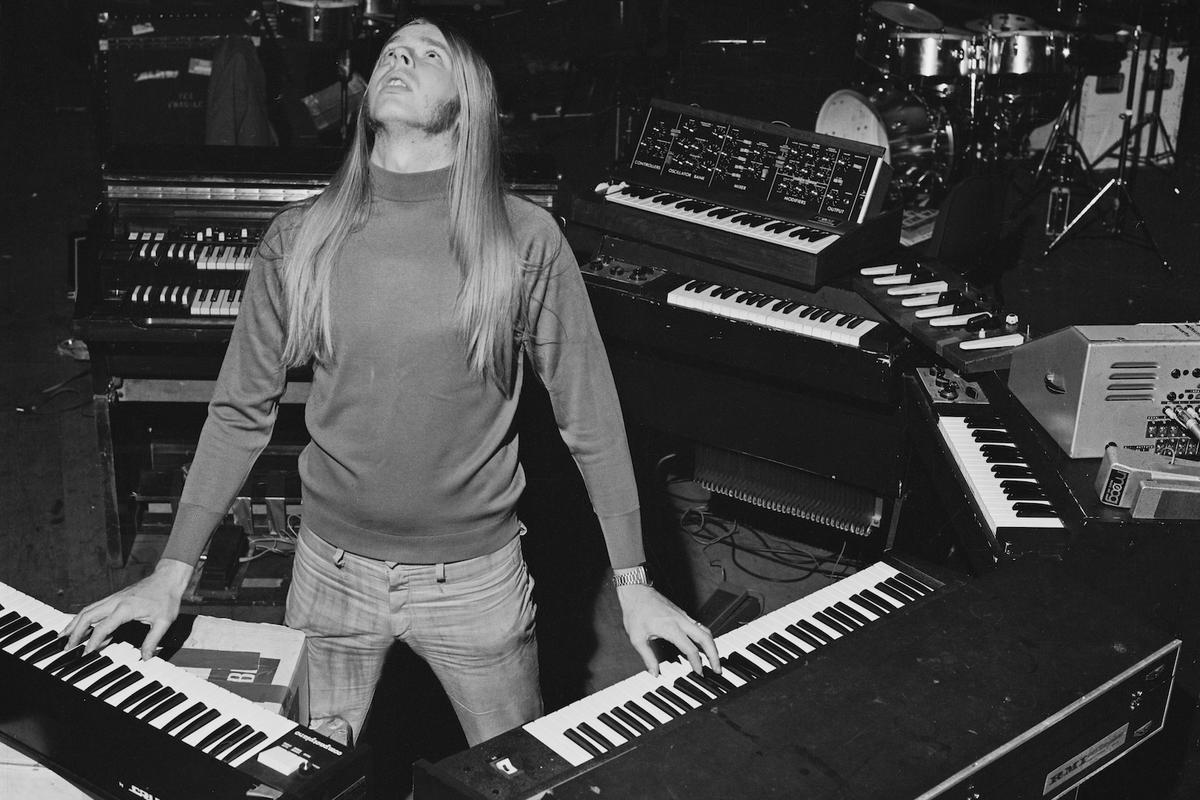
In July 1969, Rick Wakeman was just 20 years old, but he was already earning a reputation for himself as a highly talented session musician.
Wakeman was a Royal College of Music dropout – he’d tried starting a rock and jazz club there, to no avail, and he did not jive with the school’s general aversion to all things non-traditional. He was clearly meant for something else.
When Wakeman finally left school and started taking on more session work, he soon became known as someone who knew their way around a Mellotron. This electro-mechanical keyboard was then still coming into fashion. This is why, one day, he received a call from producer Tony Visconti.
READ MORE: The Best Song From Each David Bowie Album
“‘I’m at Trident Studios with [producer] Gus Dudgeon and David Bowie,'” Wakeman later recalled being told on the phone. “‘David desperately wants the Mellotron to go with the other strings, and nobody can keep the effing thing in tune.’ So I walked into Trident and met David for the first time. He said, ‘Gus and Tony say, for you, this is a piece of cake. Ever played a piece of cake before?'”
At that point, Bowie wasn’t the Bowie he would eventually become, commercially that is.
“It was before David was famous, so I wasn’t nervous about meeting him – it was just another bit of session work,” Wakeman explained to The Guardian in 2017. The track, titled “Space Oddity,” was done in less than half an hour. Released on July 11, 1969, to coincide with that year’s moon landing, the single went to No. 5 in the U.K., followed by reissues in later years that went even higher.
Listen to David Bowie’s ‘Space Oddity’
More Work With Bowie
Wakeman’s work on “Space Oddity” impressed Bowie so much that more meetings took place. About a year after that first session, Bowie asked Wakeman if he’d come to his house in Beckenham, Kent and play piano on some new songs.
“I nicknamed it Beckenham Palace because at the time I was living in a tiny little terraced house in West Harrow and his kitchen was bigger than my entire place,” Wakeman recalled.
“Things had really changed for him. He was a successful artist, and he had a young family. I sat at the piano while he played a load of songs to me on his battered old 12-string guitar. ‘Life on Mars?’ stuck out as being something very special. He wanted a piano solo; he wanted the album to be very piano-orientated. I was given complete freedom by him.”
“Life on Mars?” was another hit, and probably part of the reason Wakeman was then asked by Bowie if he’d like to join his Spiders From Mars band. Wildly enough, Wakeman was also asked to join Yes on the same day — Tony Kaye had left the group, and Wakeman had already participated in a handful of Yes rehearsals during the Fragile era.
Wakeman gave the offer serious thought. “It was like being asked to join Manchester United or Chelsea,” he told Classic Rock in 2024. This wasn’t a matter to take lightly; there were pros and cons to both.
Making the Decision
“I drove home, and I was trying to weigh it up because David was miles bigger than Yes were at the time,” he told Rolling Stone in 2019. “I thought, ‘What do I do? David is my biggest influence ever. I love playing his music. The only problem is if I’m playing his music all the time, there will be a ceiling with how much I can participate and contribute. There will be a top line, whereas with Yes, the band is growing. It has new ideas about how it wants to do music and I love the idea of that. I can grow more with them.”
Listen to David Bowie’s ‘Life on Mars?’
Ultimately, Wakeman went with Yes.
“I mean, back then, it didn’t seem like such a big deal. But looking back, it was fucking huge, really,” he reflected to Mojo. Fortunately, there were no hard feelings, and Bowie knew exactly where the keyboardist was coming from. “I phoned up David, and he was brilliant. He said, ‘Absolutely the right decision.'”
READ MORE: All 207 Yes Songs Ranked
In the end, Wakeman still felt good about the work he’d contributed to Bowie’s catalog.
“I heard later that he loved what I did on ‘Life on Mars?'” he relayed to The Guardian. “He said it made the track, but that’s not true; the song made the track. The man was a genius.”
Yes Albums Ranked Worst to Best
We’re counting down all of Yes’ studio albums.
Gallery Credit: Ryan Reed
