
Alternative Rock
Hammock ‘The Second Coming Was A Moonrise’
May
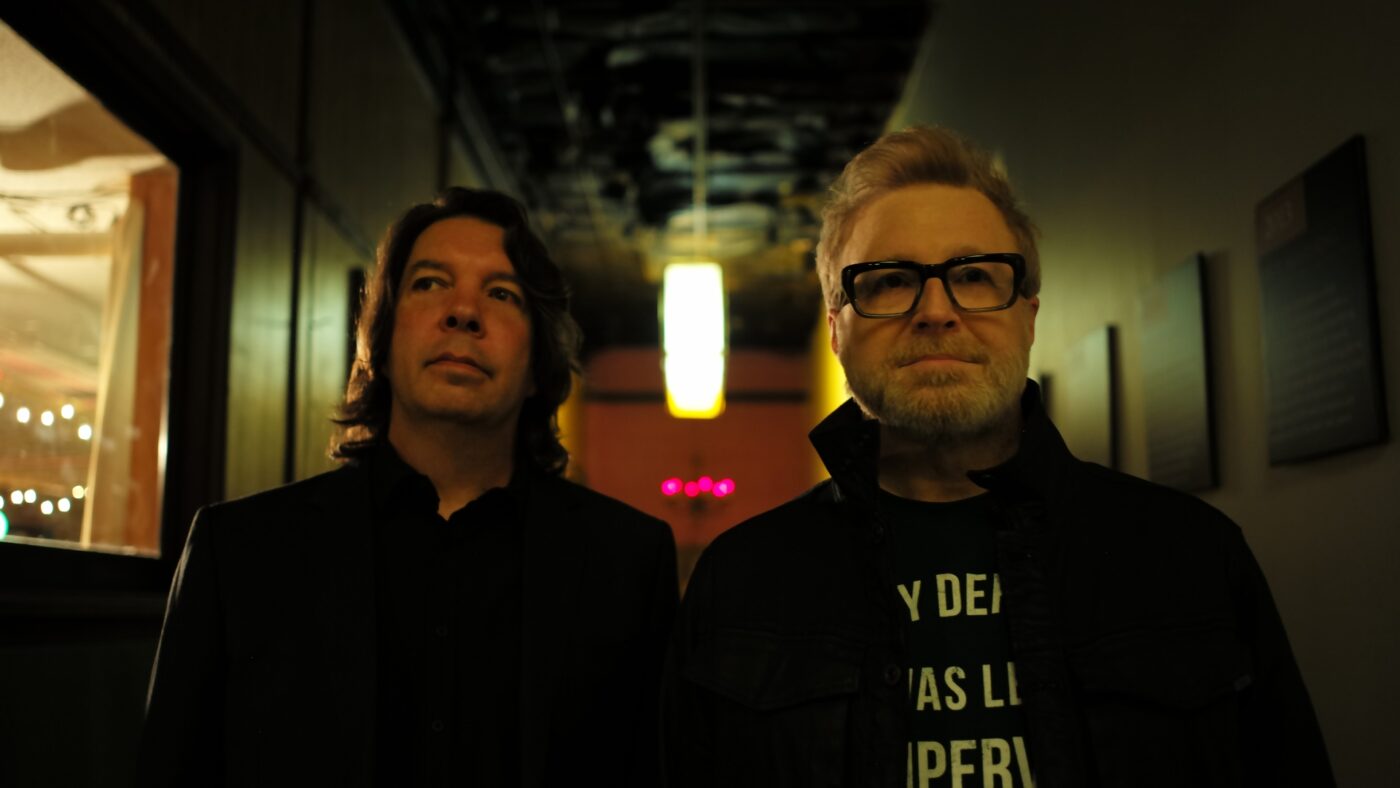
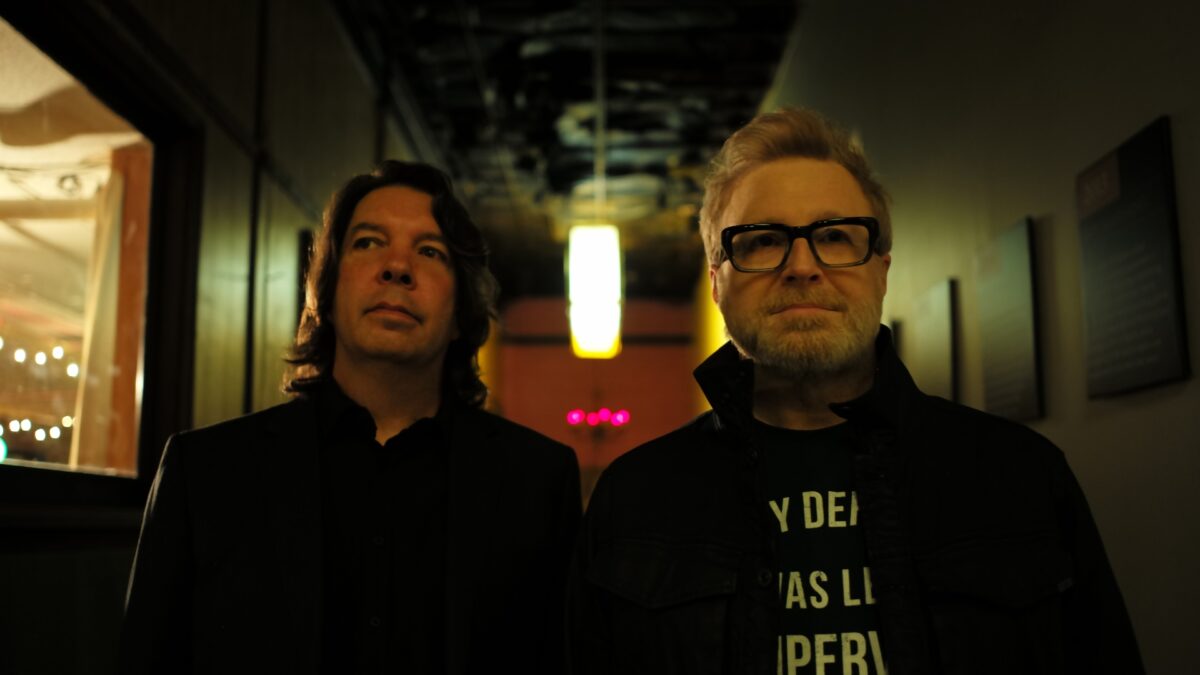
Hammock’s Andrew Thompson and Marc Byrd guide us through the immense depth and sonic exploration that has been poured into their beautiful, hopeful, grandiose new album.
Inbreaking
This track started with Andrew. It sounds like an opener. Like a siren song introducing the atmosphere of what’s to come. We added the industrial, NIN-sounding kick drum to let everyone know this record isn’t going to be another one of our beatless ambient/neoclassical albums. In the mixing process, Emery Dobyns, who mixed this album, ended up adding even more aggression to the drums. We asked Matthew Doty from the shoegaze band Deserta to add some synths on this one as well as throughout the whole record. He did a fantastic job, great sounds with parts that are complementary and unexpected. We can’t imagine the song without them now. The outro section was a reverse guitar idea we had created separately. When we were able to connect the two sections, we added more guitars to the outro. I guess the outro is a reminder we won’t be leaving behind our ambient roots. We love how sweet the word ‘Inbreaking’ sounds… but the moodiness and angst of the first section sounds more like a breaking and entering.
We Close Our Eyes So We Can See
An electric guitar combined with the Crystalizer/SoundToys plugin and a half dozen other guitar pedals is what makes up the core of this song. We usually resist using stock presets, but after some tweaking, the full Crystalizer effect just seemed to work. There are several layers of programmed/looped drums, but when the real drums kick in, it takes the track to another level. Jake Finch plays drums and percussion throughout this album. He brings such a great feel to everything he plays. Christine Byrd (Lumenette) and Andrew perform the vocals. Christine continues to surprise us with the way she comes up with her parts and layers her vocals. (She’s also married to Marc). Matthew Doty brings it home with some of our favourite synth parts on the entire record.
Marc: Andrew wrote the lyrics. I think it speaks to those uneasy moments when we experience a trauma, or type of trauma with the people we love. Love implies risk, so there’s always a good chance for some drama and/or trauma. I’m learning not to take life so personally. When things are difficult, it’s good to take some time to pause… to step back and close our eyes… Maybe afterwards, we’ll find a way to see the light we couldn’t see before?
The Unsetting Sun
The foundation of this song is a single finger-picked guitar in an open tuning. It’s raw, especially the first half of the song. We think it’s some of the best guitar work between the two of us on the entire album. The second half of the song morphs into a drone and then the rock drums enter into the scene. There’s a wah guitar that makes its presence known… The wah pedal is opening and closing with a tremolo moving across the stereo field. We were manually adjusting the speed of the tremolo while the guitar performance was being recorded. On our first album, ‘Kenotic’, we used a wah pedal as a frequency filter. So it’s been a while since we did something like that. The title comes from a 1908 spiritual/hymn called ‘Land of the Unsetting Sun’ written by William C. Martin.
Marc: I was raised a fundamentalist, with a healthy dose of Christian nationalism. My upbringing and the ways I’ve wrestled with it are a big part of this album. Like a sun that never sets, the past can seem like it’s always there. In a place of unending light, it can be difficult to rest and get a good night’s sleep. And when there’s unending sun, it’s easy to turn what could’ve been streams of living water into a desert. For better or worse, well-intentioned people who think they’ve found THE light can end up blind. Most of us don’t always see things the way they actually are… Instead, we see things the way WE are. How we see, and the way we see, will determine what we see. Fundamentalism is a naive certainty about how to see everything. It’s believing in a particular worldview as the only correct one. It’s a great way to live in a dysfunctional relationship with reality.
Like Sinking Stars
Maybe we started writing this piece after listening to ‘Charlotte Sometimes’ by The Cure? Musically, it’s the most post-punk song on the album. We programmed a very icy, mechanical drum loop and then composed the rest of the track around it. We tried replacing the programmed drums with real drums, but ended up going back to the more robotic approach. Andrew wrote most of the lyrics about the night his house and home studio were hit by a tornado. His wife, Laura, was asleep, and when Andrew tried to wake her up, she thought it was a train… but there’s no train running by their house. Then the walls and the roof started to shake. They made it to the basement with no time to spare. There’s some real PTSD left over from that night.
Marc: I think this relates with the theme of the album. There are things in this life that are difficult to accept… So difficult we would rather believe a train is passing by rather than the fact a tornado is about to hit our house. There’s been many things in my life where I wanted to believe what was happening wasn’t really happening or that what happened never really happened at all.
Sadness
This was the last song written for the album. We felt like the album might be missing something… We wanted a piece that sounded like a call back to our earlier days, without losing the newness of where we are today. There’s a lot of space and focus in this piece. Like the one-word title, it’s short and concise, but poignant and immediate. It also features Christine Byrd’s angelic vocals again. She really takes the song to another level.
The Second Coming Was A Moonrise
This song takes you on a trip. Originally, it was just a guitar piece with two sections, minus drums. But after Matt Kidd (Slow Meadow) created his string arrangement and recorded Aimee Norris on cello and Ellen Story on violin/viola, we decided to get Jake Finch to add some drums and percussion. Matthew Doty not only added synths to this one, but also some additional guitar. Chad Howat also added some additional keys. The middle section is a moment of post-rock drama. Then the out section gets quiet. It’s built around an improvised guitar performance inspired by a soundscape we dialed in after a long day… ambient bliss.
Marc: The title of this piece comes from an experience I had when I was younger. I was with a friend who was also raised a strict fundamentalist. We had taken some acid, and the trip was going well. Then we noticed there was a light behind the hills that seemed to be getting brighter. So, like any normal person, we concluded this was the beginning of the rapture… and/or the second coming of Christ. Jesus and his army were gonna be galloping across the sky on horses and we we’re gonna be left behind because we’re on drugs. So my friend dropped to his knees and began to pray. He kept saying, “Oh no. Oh, Jesus, please. Lord have mercy. Oh God no. Forgive me. etc.” I noticed there was a circular sliver of light rising behind the hills. So I tapped my friend on the head and told him it was just the moonrise and we were gonna be ok. Strong drugs combined with fundamentalism can make a rapture out of a moonrise. But maybe we can find a way to recover some of the innocence we had before the world made us cynical? Maybe a moonrise could seem like the second coming?
Chemicals Make You Small
We began tracking this during the ‘Love In the Void’ sessions and finally finished everything except mixing in May of 2025. Somehow we were able to get Wayne Coyne of The Flaming Lips and Steven Drozd, (formerly of The Flaming Lips), to sing, play and do some co-production work on it. It was January, 2024 when they began, so in the album artwork it says, “featuring The Flaming Lips” because at the time that was still true. The two of us, along with Emery Dobyns sing the entire song and Christine added some background vocals. But in the bridge section, Andrew had roughed in some lush vocal harmonies and added a lap steel doing dive bomb chords, which made the bridge section turn into this psychedelic, ‘Dark Side of the Moon’ moment. Jokingly, we said The Flaming Lips would sound great in this section. We knew Wayne had been liking some things on our Instagram. He had asked about a video of ours, and I think he invited us to come to an art exhibit in Oklahoma City. So we just decided to reach out to them. They ended up singing the whole song, and made it shorter, and then Steven added some string pads and keys. It was way more than what we had asked for. After listening to the final mix/master, Wayne sent this text to describe it: “Watching galaxies collide, while dreaming in a UFO-shaped church, getting ready to crash land onto a xanax ocean on Mars…” You can’t ask for a more Wayne response than that. We’re super grateful to them.
Everything You Love Is Buried In the Ground or Scattered Into Space
This was another piece we started while recording ‘Love In the Void’. Originally, it was supposed be a beatless, ambient guitar piece, but we decided to ask Matt Kidd (Slow Meadow) to create and record some strings. After the strings were added, just like the title track, we decided to get Jake Finch back on drums. Chad Howat actually ended up playing bass on this one. I think it’s the first time anyone other than us has played bass on one of our albums. The title can be taken as a commentary on impermanence/death in the existential sense, or it can be interpreted metaphorically as the death of a phase of life, or letting go of an addiction, old beliefs, or cultural and familial conditioning. Used in this way, what feels like dying might be the best thing that could happen. A new beginning after a difficult time of unknowing and letting go.
Deconstructing
This is a piece Andrew started. There’s such a haziness and a feeling of being enveloped by a sonic cloud. Even the drums are barely noticeable. There’s a nice distortion over the whole thing, and Christine’s vocals are amazing.
Marc: The title refers to the process of letting go of old ways of seeing and believing. For some, a deconstruction is a demolishing and an extinction of everything from the past. That’s not what it means to me. When I think of deconstructing, I think of transcending AND including. Transcend what was harmful, toxic and untrue, but include what is good, true and beautiful. This approach has helped me not be so bitter and cynical. It’s not my goal to just end up in another form of extremism, still trying to evangelize, except now I’m just on the opposite side of where I used to be. The lyrics speak of finding our way back… Back to an original sense of who we really are. It’s not necessarily a different light we find, maybe just a new way of seeing and experiencing it.
All the Pain You Can’t Explain
This was a fun piece to create and construct. Other than the middle section of ‘Gods Becoming Memories’ from ‘Love In the Void’, the ending of this song might be the heaviest thing Hammock’s ever done. It’s truly a collaborative effort. Matt Kidd (Slow Meadow) composed another gorgeous string arrangement, Aimee Norris on cello and Ellen Story on violin/viola, along with all the other players mentioned before. The acoustic guitar is a really nice addition.
Marc: I think it’s appropriate that the last title on the album ends with a question… In a space of not knowing, suggesting a lack of certainty. One of the memories I have from my upbringing is observing the way certain people would deal with suffering – the type of suffering that defies explanation. I learned, “What can I do?” or “Where can I be?” are better questions to ask, rather than, “Why did this happen?” or “What’s the purpose?” The latter questions are ones that look for meaning, which can lead to a type of paralysis through analysis. The former questions are more about being with the suffering. It’s better to suffer with those who are suffering, to be in solidarity with the suffering, rather than attempting to reason backwards to an ultimate reason or blame. As if there’s a black and white, mechanical cause and effect. Suffering isn’t meant to be dealt with from above, but from within. There’s a saying in a text from the early 1st or 2nd century found in the Letter to Barnabas. It says, “the human being is earth that suffers” (Barn 6:9). When we do this together, it can be beautiful. Still painful, but also beautiful and we’re big believers in the power of beauty.
Source link
