
Pop/Hip Hop/R&B
15 Best Opera Singers of All Time
Aug
Opera has produced some of the most extraordinary voices ever heard, singers capable of filling grand theaters with little more than breathtaking technique, emotional depth, and commanding stage presence. From soaring tenors and majestic baritones to luminous sopranos and powerful mezzo sopranos, the greatest opera stars have transformed demanding arias into unforgettable human experiences. Their performances bring stories of love, betrayal, sacrifice, tragedy, and triumph vividly to life, often without the aid of modern amplification. Across generations, these legendary vocalists have conquered the world’s greatest stages, recorded definitive interpretations, and inspired countless performers while proving that the power of the human voice can be truly astonishing.
1. Luciano Pavarotti
Luciano Pavarotti became the rare opera singer whose fame extended far beyond the opera house, introducing millions of listeners to the excitement and emotional power of the tenor voice. Born in Modena, Italy, Pavarotti developed a sound celebrated for its brightness, clarity, effortless projection, and unmistakable warmth. His greatest roles came largely from the Italian repertory, particularly the works of Puccini, Verdi, Donizetti, and Bellini. Among his signature performances was Che gelida manina from Puccini’s La bohème, an aria that allowed his radiant upper register and lyrical phrasing to shine. His interpretations of La donna è mobile from Rigoletto and Una furtiva lagrima from L’elisir d’amore were equally admired, combining technical assurance with an appealing sense of natural expression.
The performance most closely associated with Pavarotti is undoubtedly Nessun dorma from Puccini’s Turandot. The aria became an international phenomenon through Pavarotti’s performances and eventually reached audiences who had little previous familiarity with opera. His approach begins with controlled lyricism and gradually expands toward the tremendous final declaration of victory. What makes the performance memorable is not simply the climactic note, but the patience and musical intelligence leading toward it. Pavarotti could make an enormous voice sound welcoming rather than intimidating. His appearances with Plácido Domingo and José Carreras as the Three Tenors further expanded opera’s global audience, while concerts in enormous outdoor venues demonstrated his extraordinary popular appeal. Behind the celebrity was a serious operatic craftsman with exceptional breath control, diction, and an instinctive understanding of Italian melody. Pavarotti made virtuosity sound joyful, and that quality helped turn him into one of the most beloved classical singers in modern history.
2. Maria Callas
Maria Callas remains one of opera’s most fascinating figures because her greatness cannot be measured by vocal beauty alone. She possessed an immediately recognizable soprano and used it with extraordinary dramatic intelligence, transforming arias into psychological portraits rather than mere displays of technique. Callas became especially important in the revival of neglected bel canto operas, bringing renewed attention to works by Bellini, Donizetti, and Rossini while also achieving legendary status in Verdi and Puccini roles. Her performance of Casta Diva from Bellini’s Norma remains one of the defining documents of her artistry. The long melodic lines require remarkable breath control and concentration, but Callas goes beyond technical accomplishment, creating a feeling of ritual, authority, and emotional tension.
Her interpretation of Vissi d’arte from Puccini’s Tosca offers another extraordinary example. Tosca is questioning why a life devoted to love and art has led to suffering, and Callas makes every phrase feel inseparable from the character’s desperation. She was equally compelling as Violetta in Verdi’s La traviata, moving from the dazzling coloratura of Sempre libera to the heartbreaking vulnerability of the opera’s later scenes. Her performances in Lucia di Lammermoor, La sonnambula, Il trovatore, and Medea further demonstrated the breadth of her dramatic imagination. Callas approached singing as theater. Changes in vocal color, carefully shaped words, sudden dynamic contrasts, and even moments of deliberate harshness could serve the drama. That willingness to place emotional truth above conventional prettiness influenced generations of singers. Her career was relatively brief at its absolute peak, yet the recordings remain endlessly studied because every performance seems to contain a distinct dramatic point of view. Callas did not simply sing characters. She seemed to become them.
3. Plácido Domingo
Plácido Domingo built one of the most extensive careers in operatic history, becoming famous not only for the beauty of his voice but also for his extraordinary musical versatility. Born in Madrid and raised partly in Mexico, Domingo developed into a tenor capable of handling an unusually broad repertory. His performances ranged from lyrical Italian roles to demanding works by Verdi, Puccini, Wagner, and composers of French opera. One of his finest signature arias is E lucevan le stelle from Puccini’s Tosca. Sung by the condemned painter Cavaradossi as he remembers his beloved Tosca, the aria requires tenderness, despair, and dramatic intensity. Domingo’s darkly colored tenor gives the music a deeply human quality, building naturally toward the anguished final phrases.
His portrayal of Cavaradossi became one of many major roles associated with him. Domingo was also admired as Don José in Bizet’s Carmen, particularly in the emotionally charged Flower Song. His performances as Otello in Verdi’s Otello became central to his reputation, demanding both heroic vocal power and subtle psychological characterization. He also excelled in Aida, La forza del destino, Andrea Chénier, Samson et Dalila, and Die Walküre. Later in his career, Domingo explored baritone roles, an unusual transition that reflected both his musical curiosity and remarkable longevity. His international celebrity increased further through the Three Tenors concerts with Luciano Pavarotti and José Carreras, which brought operatic voices before audiences numbering in the millions. Domingo’s greatest strength has always been his dramatic involvement. Rather than treating an aria as an isolated vocal display, he tends to place it within the emotional life of the character. That commitment helped make him one of opera’s most recognizable and enduring stars.
4. Montserrat Caballé
Montserrat Caballé possessed one of the most luxurious soprano voices of the twentieth century, famous for its floating softness, extraordinary breath control, and seemingly effortless command of long melodic lines. Born in Barcelona, Caballé achieved international recognition through performances that combined technical refinement with an unmistakably individual sound. She became particularly celebrated in bel canto opera and the works of Verdi, though her repertory eventually grew to encompass an impressive range of styles. Her performance of O mio babbino caro from Puccini’s Gianni Schicchi beautifully illustrates her ability to make a familiar aria sound freshly expressive. Rather than relying on excessive volume, Caballé allows the melody to unfold with remarkable delicacy, shaping phrases with a softness that seems almost suspended in the air.
Among her greatest operatic achievements were performances in Bellini’s Norma, where the famous Casta Diva required exactly the kind of sustained line and delicate dynamic control she possessed in abundance. Her interpretations of Il pirata, Lucrezia Borgia, Roberto Devereux, and La traviata helped establish her as one of the outstanding singers of her generation. Caballé was particularly famous for her pianissimo singing, reducing the voice to an exquisite thread of sound while maintaining support and tonal focus. That ability created moments of extraordinary intimacy even in enormous opera houses. Outside traditional opera circles, she gained additional fame through her collaboration with Freddie Mercury on Barcelona. The partnership introduced her voice to millions of listeners who might never have encountered bel canto opera. Yet Caballé’s lasting importance rests on the extraordinary control and beauty heard throughout her classical recordings. Her singing could be majestic without becoming heavy and technically spectacular without sounding mechanical. She represented a style of vocal elegance in which the quietest phrase could command as much attention as the most brilliant high note.
5. Joan Sutherland
Joan Sutherland earned the affectionate title La Stupenda because audiences and critics were astonished by the sheer scale and flexibility of her soprano. The Australian singer became one of the leading figures in the twentieth century revival of bel canto opera, mastering music filled with elaborate ornamentation, rapid runs, trills, enormous leaps, and demanding high notes. Her breakthrough as Lucia in Donizetti’s Lucia di Lammermoor established her international reputation. The famous mad scene became one of Sutherland’s great showcases, requiring dazzling technique while portraying a character descending into psychological collapse. Sutherland’s vocal security allowed her to negotiate the intricate writing with an ease that few singers could approach.
Her performance of Sempre libera from Verdi’s La traviata demonstrates why her technique caused such excitement. The aria is filled with quick passages and exposed high notes, yet Sutherland maintains a remarkable sense of freedom throughout the music. She was also renowned for Norma, La sonnambula, I puritani, Semiramide, La fille du régiment, and numerous works by Donizetti. Her husband, conductor Richard Bonynge, played an important role in exploring forgotten repertory with her, helping restore many works to international attention. Sutherland’s voice was unusually large for a singer capable of such agile coloratura, giving her performances both brilliance and amplitude. Her diction was sometimes debated, but the beauty and athleticism of the instrument were extraordinary. She could spin out long phrases, decorate repeated material with confidence, and rise into the upper register with thrilling ease. For listeners fascinated by the possibilities of the human voice, Sutherland remains irresistible. Her recordings capture a performer operating at a technical level that made some of opera’s most difficult music sound almost effortless.
6. Enrico Caruso
Enrico Caruso became opera’s first great recording superstar and helped demonstrate the enormous cultural potential of the gramophone. Born in Naples in 1873, Caruso developed a tenor voice celebrated for its warmth, emotional immediacy, and rich lower register. He achieved international fame at a time when recordings were still a technological novelty, yet his voice transferred to early recording equipment with remarkable effectiveness. His performance of Vesti la giubba from Leoncavallo’s Pagliacci became one of the most famous records of the early twentieth century. The aria occurs as the clown Canio prepares to perform despite discovering his wife’s betrayal, and Caruso conveys humiliation, jealousy, and heartbreak with tremendous directness.
Caruso’s repertory included many of the roles that would become central to the modern tenor tradition. He sang Celeste Aida from Verdi’s Aida, E lucevan le stelle from Puccini’s Tosca, and Una furtiva lagrima from Donizetti’s L’elisir d’amore. His performances in Rigoletto, La bohème, Cavalleria rusticana, and La Gioconda further established his reputation. He was also closely associated with Neapolitan songs, making recordings of pieces such as O sole mio that helped spread Italian vocal culture throughout the world. Early recording technology captures only a portion of what contemporary audiences reportedly heard in the theater, yet Caruso’s personality survives powerfully through those discs. His phrasing feels direct and spontaneous, while the dark bronze quality of his tenor distinguishes him from many later singers. More than a century after his greatest successes, Caruso remains a foundational figure because he connected the grand tradition of nineteenth century opera with the emerging age of recorded popular culture.
7. Birgit Nilsson
Birgit Nilsson possessed one of the most formidable dramatic soprano voices ever heard on an opera stage. The Swedish singer became synonymous with the heroic heroines of Richard Wagner and Richard Strauss, roles requiring enormous stamina, penetrating power, and the ability to project above some of the largest orchestras in the repertory. Nilsson’s voice had a brilliant metallic focus that could travel through thick orchestration without losing clarity. Her portrayal of Isolde in Wagner’s Tristan und Isolde became one of the defining achievements of her career. The concluding Liebestod demands sustained intensity as Isolde seems to transcend the physical world through love and death. Nilsson’s performance builds with extraordinary control, allowing the voice to ride above Wagner’s expanding orchestral waves.
She was equally celebrated as Brünnhilde in Wagner’s monumental Ring cycle. The role requires hours of singing across several operas, from the youthful warrior of Die Walküre to the overwhelming final scene of Götterdämmerung. Nilsson’s stamina and security made her an ideal interpreter. Her Turandot in Puccini’s Turandot was another legendary characterization, particularly in the commanding aria In questa reggia. She also excelled as Elektra and Salome in the operas of Richard Strauss, music requiring both psychological intensity and immense vocal resources. Nilsson’s reputation for power sometimes obscures the intelligence of her singing. She understood pacing exceptionally well, preserving vocal energy while shaping long dramatic arcs. Her clear diction and focused tone ensured that even enormous climaxes retained musical precision. Nilsson also possessed a famously witty personality, approaching the extraordinary demands of her profession with humor. Her recordings remain reference points for dramatic soprano singing because they reveal a voice capable of strength, endurance, brilliance, and remarkable control.
8. Renata Tebaldi
Renata Tebaldi was celebrated for a soprano of exceptional richness and beauty, particularly in the Italian operas of Puccini and Verdi. Arturo Toscanini famously associated her singing with the idea of an angelic voice, and listeners were captivated by the creamy tone and generous legato that defined her finest performances. Tebaldi did not build her reputation primarily on flashy coloratura or theatrical eccentricity. Her strength came from a magnificent natural instrument disciplined by classical technique and guided by sincere emotional expression. Her interpretation of O mio babbino caro from Puccini’s Gianni Schicchi reveals the glowing warmth of her sound, with each phrase shaped smoothly and allowed to bloom naturally.
Tebaldi became especially admired in Puccini roles. Her Mimì in La bohème possessed tenderness and vulnerability, while her Tosca combined lyrical beauty with dramatic strength. As Cio Cio San in Madama Butterfly, she brought dignity and emotional generosity to Un bel dì vedremo, one of the most famous soprano arias in the repertory. She was also magnificent as Liù in Turandot and Minnie in La fanciulla del West. Verdi supplied another major part of her repertory through operas such as Otello, Aida, La forza del destino, and Don Carlo. Tebaldi was frequently presented as the great rival of Maria Callas, particularly during the 1950s, although their artistic strengths were quite different. Callas was celebrated for dramatic transformation and unusual interpretive intensity, while Tebaldi represented sumptuous vocal beauty and traditional Italian line. That contrast helped fuel one of opera’s most famous public rivalries. Tebaldi’s finest recordings continue to enchant because the voice itself seems to glow, making even familiar melodies sound unusually generous and heartfelt.
9. Franco Corelli
Franco Corelli was one of the most thrilling dramatic tenors of the twentieth century, famous for a voice that combined heroic power with an unmistakable brilliance in the upper register. Born in Ancona, Italy, Corelli became a major star in demanding operas by Puccini, Verdi, Giordano, and other composers requiring both stamina and dramatic presence. His interpretation of Nessun dorma from Turandot remains a favorite among tenor enthusiasts. Corelli approaches Calaf’s declaration with extraordinary intensity, shaping the long phrases with muscular confidence before unleashing the ringing upper notes for which he became legendary.
Corelli’s Calaf was only one of many roles that suited his glamorous sound. He became celebrated as Cavaradossi in Tosca, especially in Recondita armonia and E lucevan le stelle. His performances in Andrea Chénier allowed him to combine lyrical tenderness with heroic force, while La forza del destino, Il trovatore, Carmen, and Roméo et Juliette demonstrated different aspects of his voice. Audiences were particularly fascinated by his high notes, which had the penetrating resonance Italians often describe as squillo. Yet Corelli could also sing with surprising softness, using delicate dynamics to contrast with his more explosive moments. His physical presence added to the excitement, making him one of the most charismatic leading men of his era. Corelli was known to experience severe stage nerves despite appearing almost fearless in performance, an intriguing contrast that makes his achievements even more remarkable. His career represents an especially glamorous period of opera, when enormous voices and vivid personalities dominated major stages. For listeners who seek visceral excitement from a tenor, Corelli remains one of the essential names.
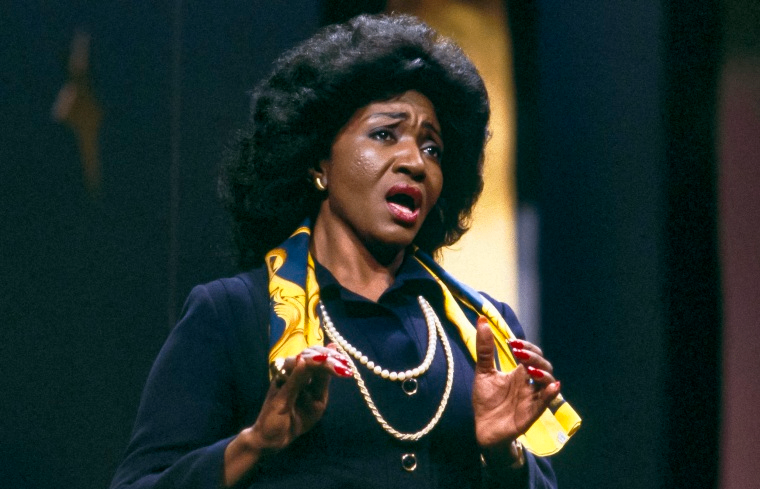
10. Leontyne Price
Leontyne Price brought one of the most sumptuous soprano voices in American operatic history to the world’s greatest stages. Her sound combined warmth, richness, power, and an unmistakably individual upper register, qualities that made her particularly celebrated in the operas of Giuseppe Verdi. Price also became an enormously important cultural figure as a Black American singer achieving international prominence during an era of profound racial inequality in the United States. Yet her lasting artistic stature rests above all on extraordinary musicianship. Her portrayal of Aida became one of her defining achievements, and O patria mia provides a magnificent example of her artistry. The aria demands long phrases, exquisite control, and a difficult ascent into the upper register, all while expressing Aida’s longing for her homeland.
Price’s relationship with Verdi extended far beyond Aida. She was admired in Il trovatore, Un ballo in maschera, La forza del destino, and Don Carlo, bringing a regal vocal presence to heroines requiring both lyrical beauty and dramatic authority. Puccini also suited her beautifully, particularly Tosca and Madama Butterfly. Her performances of Samuel Barber’s music held special significance because she created the role of Cleopatra in Antony and Cleopatra for the opening of the new Metropolitan Opera House at Lincoln Center. Price’s voice had an immediately recognizable velvet quality, especially in the middle register, while her high notes could blaze with remarkable intensity. Her phrasing remained elegant even during demanding climaxes. When she gave her farewell operatic performance as Aida at the Metropolitan Opera, the occasion became one of the celebrated emotional moments in modern opera history. Price represented technical excellence, dignity, and unmistakable individuality, leaving recordings that continue to inspire singers and listeners throughout the world.
11. Renée Fleming
Renée Fleming became one of the most widely recognized American sopranos of the modern era through a combination of luxurious tone, musical intelligence, and remarkable stylistic versatility. Her voice is especially admired for its creamy texture and ability to float long phrases with apparent ease. Fleming developed an unusually broad repertory, moving comfortably through Mozart, Richard Strauss, Dvořák, French opera, contemporary works, art songs, and selected Italian roles. Her interpretation of the Song to the Moon from Dvořák’s Rusalka became one of her signature performances. The aria is a nocturnal prayer in which Rusalka asks the moon to carry her love to a human prince. Fleming’s luminous tone and delicate control are ideally suited to the music’s dreamlike atmosphere.
Richard Strauss became another cornerstone of Fleming’s career. She excelled in Der Rosenkavalier, particularly as the Marschallin, a character whose reflections on love and passing time require maturity and emotional subtlety. Fleming was also acclaimed in Arabella and Capriccio, works whose long vocal lines reward her ability to shape language with elegance. Mozart roles such as the Countess in Le nozze di Figaro and Donna Anna in Don Giovanni displayed another aspect of her musicianship. French repertory including Massenet’s Thaïs allowed Fleming to emphasize sensuality and tonal color, especially in music associated with the character’s spiritual transformation. She has also championed newer compositions, helping opera remain connected to contemporary creative life. Fleming’s fame has extended beyond traditional opera audiences through major public appearances and collaborations in other musical genres. Yet her best operatic recordings retain an intimate quality. Rather than relying on sheer volume, she draws listeners through color, phrasing, and subtle changes of emphasis, making her one of the defining lyrical sopranos of her generation.
12. José Carreras
José Carreras became one of the most beloved tenors of his generation through a voice distinguished by warmth, youthful ardor, and exceptional emotional directness. Born in Barcelona, Carreras emerged as a major international opera star while still relatively young, becoming particularly admired in Italian and French repertory. His singing often possessed a vulnerable quality that made romantic and tragic heroes especially convincing. His performance of Granada, the famous song by Agustín Lara, became a concert favorite and demonstrates his ability to combine operatic technique with the spontaneity of popular song. Carreras brings tremendous rhythmic energy to the piece while allowing the climactic phrases to expand with full tenor brilliance.
Within the opera house, Carreras became closely associated with Puccini and Verdi. His Rodolfo in La bohème captured the youthful romance of Che gelida manina, while his Cavaradossi in Tosca allowed him to explore darker passion through E lucevan le stelle. He also achieved major success in La traviata, Un ballo in maschera, La forza del destino, Andrea Chénier, and Carmen. Carreras faced a profound personal and professional challenge when he was diagnosed with leukemia during the 1980s. His recovery and return to performance became an inspirational story, and he later devoted substantial energy to supporting leukemia research and treatment. His partnership with Luciano Pavarotti and Plácido Domingo in the Three Tenors concerts brought him before one of the largest audiences any opera singer has ever reached. Carreras did not possess the same vocal weight as some heroic tenors, but his singing could be extraordinarily touching. The sense of vulnerability in his tone allowed listeners to connect directly with characters facing love, loss, danger, and sacrifice.
13. Beverly Sills
Beverly Sills became one of America’s most beloved opera stars through a combination of brilliant coloratura technique, lively stage personality, and unusual ability to communicate with audiences beyond the traditional classical world. Born in Brooklyn, Sills developed into a soprano capable of singing some of opera’s most intricate music with remarkable agility. Her interpretation of Una voce poco fa from Rossini’s The Barber of Seville beautifully displays her strengths. Rosina initially seems sweet and obedient, but the aria quickly reveals her intelligence and determination. Sills brings humor and personality to the coloratura passages, making every decorative flourish feel connected to the character rather than inserted merely for display.
Sills became particularly important in demanding works by Donizetti and Bellini. Her performances in Donizetti’s three operas centered on Tudor queens displayed both brilliant technique and serious dramatic ability. She was acclaimed in Anna Bolena, Maria Stuarda, and Roberto Devereux, with the latter becoming especially closely associated with her career. She also sang Lucia di Lammermoor, La fille du régiment, Manon, and La traviata. Sills had an ability to make virtuosic music feel conversational. Rapid runs and high notes were impressive, but audiences also responded to her wit, warmth, and emotional transparency. She achieved much of her greatest fame through New York City Opera rather than relying entirely on the Metropolitan Opera, helping establish that company as a significant artistic force. After retiring from singing, Sills became an influential arts administrator and public advocate for opera. Her television appearances also helped make classical singing seem approachable to people unfamiliar with the art form. Sills remains memorable because virtuosity and personality were inseparable in her performances.
14. Kiri Te Kanawa
Kiri Te Kanawa became internationally famous for a soprano voice celebrated for its warmth, purity, and polished lyrical beauty. Born in New Zealand, she rose to prominence in the great opera houses of Europe and North America, becoming particularly admired in Mozart, Richard Strauss, and selected Italian and French repertory. Her performance of O mio babbino caro from Puccini’s Gianni Schicchi captures the qualities that made her voice instantly appealing. The melody is simple compared with many virtuoso arias, but sustaining its emotional freshness requires exceptional control. Te Kanawa allows the line to unfold naturally, giving the aria a glowing tenderness without excessive sentimentality.
Mozart played an especially significant role in her career. She became celebrated as the Countess in Le nozze di Figaro, where arias such as Porgi amor and Dove sono demand elegance, emotional restraint, and exceptionally smooth legato. Her Donna Elvira in Don Giovanni and Fiordiligi in Così fan tutte further demonstrated her affinity for Mozart’s vocal writing. Richard Strauss also suited her luxurious sound, particularly the Marschallin in Der Rosenkavalier and the title role of Arabella. Te Kanawa became familiar to an enormous international audience when she sang at the wedding of Prince Charles and Lady Diana Spencer in 1981, bringing her voice into homes throughout the world. Her repertory also included French songs, musical theater selections, and concert standards, revealing considerable stylistic breadth. Te Kanawa rarely relied on overt theatrical excess. Her appeal came from tonal beauty, poised phrasing, and an effortless sense of musical line. Those qualities made her one of the defining lyric sopranos of the late twentieth century.
15. Andrea Bocelli
Andrea Bocelli occupies a distinctive place between traditional opera and classical crossover, becoming one of the most commercially successful classically trained singers in modern music. Born in Tuscany, Bocelli developed a lyrical tenor voice that brought operatic vocal style to audiences far beyond the conventional opera house. His international breakthrough came through Con te partirò, a sweeping Italian ballad that became even more famous in its duet version with Sarah Brightman as Time to Say Goodbye. The song provides an ideal setting for Bocelli’s strengths, beginning with restrained tenderness before opening into a broad melody that allows his tenor to rise above the orchestration. Its extraordinary international popularity helped make Bocelli one of the most recognizable Italian singers in the world.
Bocelli has also recorded substantial operatic repertory. His albums and stage appearances have included music from Puccini’s La bohème, Tosca, and Turandot, as well as works by Verdi, Mascagni, Leoncavallo, and Massenet. Arias such as Che gelida manina, E lucevan le stelle, and Nessun dorma have allowed him to connect his popular audience with canonical opera. His recording of Ave Maria and interpretations of Italian songs such as Vivo per lei and Il mare calmo della sera further demonstrate his ability to move between classical tradition and accessible contemporary production. Bocelli’s collaborations with major popular artists have expanded that crossover identity even further. His appeal is rooted in emotional immediacy. Listeners respond to the gentle character of his voice and the sense of sincerity he brings to romantic melodies. While his career differs considerably from singers whose reputations were built almost entirely through staged opera, his contribution to popularizing operatic sound has been enormous. Bocelli has helped introduce classical vocal traditions to millions of listeners who might otherwise never have explored them.

Edward Tomlin is a frequent contributor to Singers Room. Since 2005, Singersroom has been the voice of R&B around the world. Connect with us via social media below.
Source link
