
Pop/Hip Hop/R&B
10 Best George Strait Songs of All Time
Sep
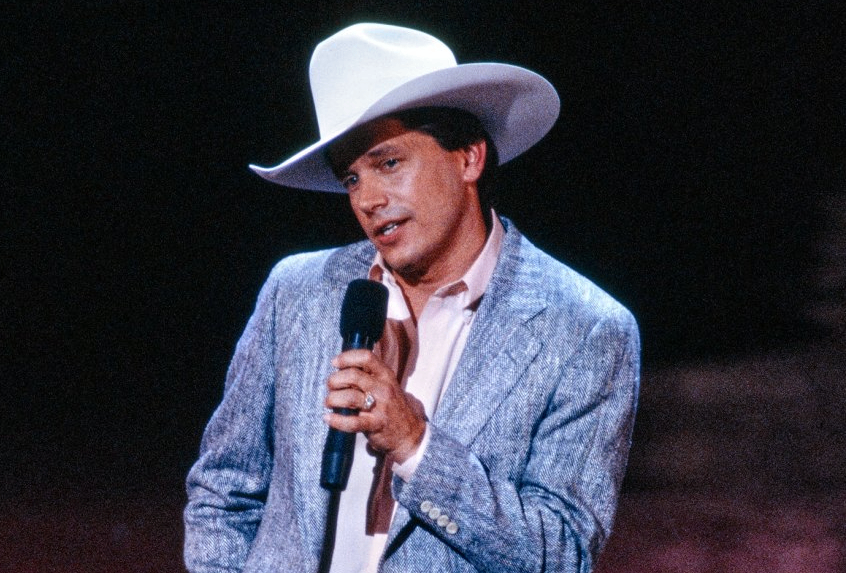
Few country artists have matched the consistency, elegance, and unmistakable traditional sound of George Strait. With his smooth baritone, understated delivery, and deep respect for honky tonk and Western swing, Strait built a career filled with songs that feel timeless rather than tied to one era. Classics such as “Amarillo by Morning,” “The Chair,” and “Check Yes or No” showcase his ability to turn simple stories into emotionally resonant performances without unnecessary drama. Whether singing about heartbreak, devotion, memory, or everyday life, Strait brings remarkable warmth and restraint to every lyric. His influence on modern country music is enormous, yet his sound has always remained refreshingly grounded. The most popular George Strait songs endure because they combine strong songwriting, graceful vocals, traditional musicianship, and an effortless sense of authenticity.
1. Amarillo by Morning
“Amarillo by Morning” is one of the recordings most closely associated with George Strait, a song that captures the dignity, loneliness, and determination of rodeo life without ever resorting to exaggerated drama. Originally written by Terry Stafford and Paul Fraser, the song found its definitive country interpretation when Strait recorded it for Strait from the Heart. His version strips the story to its emotional essentials, allowing fiddle, steel guitar, acoustic textures, and his calm baritone to carry a portrait of a man who has lost almost everything except the desire to keep going.
The opening fiddle immediately establishes the geography. It sounds spacious, windswept, and unmistakably Western, creating the sensation of highway miles passing before Strait even begins singing. His vocal is restrained, which makes the narrator’s circumstances feel more believable. He has been injured, lost money, watched a relationship disappear, and still intends to arrive in Amarillo ready for another rodeo. Strait never asks listeners to pity him. He simply tells the story.
That lack of self pity is central to the song’s power. The cowboy accepts instability as part of the life he has chosen. Rodeo offers no guarantee of money, comfort, or permanence, but it gives him identity. The final destination therefore means more than a city. Amarillo represents another chance to compete, survive, and remain connected to the world he understands.
“Amarillo by Morning” also demonstrates why Strait became such an important figure in traditional country music during the 1980s. His production never overwhelms the lyric. Fiddle and steel guitar are not decorative reminders of country tradition. They are essential emotional voices within the arrangement.
The recording remains timeless because its hero is not glamorous. He is tired, bruised, short on money, and still moving. Strait’s voice gives that perseverance extraordinary dignity. By the final lines, the listener understands that success is not measured by what the cowboy owns. It is measured by whether he is still willing to ride. Few country songs express resilience with such quiet precision.
2. Check Yes or No
“Check Yes or No” is one of George Strait’s warmest and most nostalgic songs, turning a childhood crush into a lifelong love story with the kind of simplicity that makes classic country storytelling feel effortless. Released in 1995, the song follows two people from elementary school into adulthood, using a handwritten note as the small object that connects their entire relationship.
The opening immediately places the listener inside childhood memory. A boy sits in school while a girl captures his attention, and the details are ordinary enough to feel universal. There are desks, playground moments, teasing classmates, and the nervous thrill of discovering that someone may actually like you. Then comes the note asking him to make a choice. The request could not be simpler, yet it becomes the foundation for decades of shared life.
George Strait’s vocal is ideally suited to the song because he never turns nostalgia into syrupy sentimentality. His baritone remains calm and conversational, allowing the story to generate its own emotion. The arrangement supports that approach with bright country instrumentation, steady rhythm, and melodic touches that create warmth without distracting from the narrative.
What gives “Check Yes or No” lasting appeal is the way the song collapses time. The adult couple remains emotionally connected to the children they once were. Marriage, years, responsibilities, and maturity have not erased the playful foundation of the relationship. The old question still matters because it reminds them that love began with courage simple enough to fit on a piece of paper.
The song also reflects one of Strait’s greatest strengths as an interpreter. He makes stories sound lived rather than performed. Even when he did not write the lyric himself, he had an extraordinary ability to inhabit a narrator naturally.
“Check Yes or No” remains beloved because it celebrates lasting love without pretending that romance must always be grand. Sometimes an entire life can begin with a folded note, a nervous question, and two small boxes waiting for an answer. Strait turns that childhood ritual into one of the most charming love stories in modern country music.
3. I Cross My Heart
“I Cross My Heart” is one of George Strait’s most enduring romantic ballads, a song built around devotion expressed with complete clarity. Featured prominently in Pure Country, the recording became inseparable from Strait’s image as a singer capable of communicating commitment without theatrical excess. The lyric promises loyalty, companionship, and emotional constancy, and Strait delivers those promises with the calm certainty that defines his finest love songs.
The arrangement is polished but beautifully restrained. Acoustic guitar, piano, steel guitar, strings, and soft rhythm provide a spacious setting around Strait’s voice. Nothing competes with the melody. The production gradually expands as the song develops, giving the chorus additional emotional lift without turning it into a dramatic power ballad.
Strait’s vocal performance is remarkable for how little he seems to force. His baritone remains steady, warm, and conversational. When he promises to give all he has, the line feels believable because he does not oversell it. The emotional authority comes from restraint.
The lyric works because it avoids complicated metaphors. Love is presented as an everyday commitment to remain present through both good and difficult moments. The title evokes the childhood gesture of making a promise and insisting upon its sincerity, giving the song an innocence that contrasts beautifully with the mature devotion described in the verses.
“I Cross My Heart” became a natural choice for weddings and anniversaries because its message is so direct. Couples do not need to reinterpret the lyric or remove ambiguity. The narrator knows exactly what he wants to offer and says it plainly.
The connection with Pure Country also gave the song a cinematic dimension, but its endurance goes far beyond the film. The melody and performance are strong enough to stand independently.
“I Cross My Heart” remains one of Strait’s defining love songs because it treats romance as something more durable than excitement. Passion matters, but commitment matters more. Strait sings like a man making a promise he fully intends to keep, and that quiet conviction gives the song its timeless emotional power.
4. The Chair
“The Chair” is one of the cleverest conversational songs in George Strait’s catalog, built around a pickup line that only reveals itself fully at the very end. Written by Hank Cochran and Dean Dillon, the song unfolds almost entirely as one side of a conversation between a man and a woman in a bar. Strait’s performance transforms that simple setup into a miniature drama filled with charm, timing, humor, and understated confidence.
The opening sounds completely natural. The narrator politely tells a woman that she may be sitting in his chair, then immediately softens the awkwardness by assuring her that it is not a serious problem. From there, the conversation gradually expands. He asks questions, offers a drink, comments on the music, and allows attraction to develop without sounding aggressive.
The brilliance lies in the structure. Each line seems casual, but the entire conversation is moving toward one revelation. At the end, the narrator admits that the chair was never actually his. The original complaint was simply a reason to start talking. That twist transforms everything that came before into a carefully executed act of flirtation.
Strait’s vocal is essential because the song depends upon believable timing. He never sounds like he is delivering a joke with a giant wink. Instead, he remains relaxed, slightly amused, and completely comfortable inside the conversation. That restraint makes the final reveal much more satisfying.
The arrangement supports him with traditional country instrumentation that remains unobtrusive. Steel guitar and rhythm section create a warm barroom atmosphere while leaving plenty of room for the words.
“The Chair” demonstrates how little a great country song sometimes needs. There is no dramatic heartbreak, no sweeping landscape, and no complicated backstory. Two strangers, one chair, and a conversation are enough.
The song remains a favorite because the storytelling is elegant. Every line moves naturally toward the punch line, yet the listener can enjoy the performance even after knowing exactly what is coming. George Strait makes flirtation sound effortless, and “The Chair” proves that charm often works best when delivered quietly.
5. Troubadour
“Troubadour” feels almost autobiographical when sung by George Strait, even though he did not write it. Released in 2008, the song reflects upon aging, memory, music, and the feeling that a person’s essential identity can remain unchanged even as time moves forward. By the time Strait recorded it, he had already spent decades as one of country music’s most consistent stars, making the lyric sound less like fiction and more like a reflection on his own journey.
The arrangement is gentle and spacious. Acoustic guitar, steel guitar, restrained drums, and warm supporting textures allow Strait’s voice to remain at the center. Nothing attempts to manufacture nostalgia. The performance trusts the lyric and the accumulated meaning of his career.
The narrator looks at himself as an older man while insisting that somewhere inside he remains the young musician who once chased songs, stages, and distant roads. The word troubadour becomes more than a description of occupation. It represents a way of moving through life, collecting stories and carrying them from one audience to another.
Strait’s delivery is especially moving because he never sounds frightened by aging. There is acceptance in the vocal. Youth has passed, but music remains. The experiences gathered over the years become part of the singer rather than evidence of something lost.
“Troubadour” also reflects Strait’s unusual relationship with celebrity. He became enormously famous without constantly reinventing his public image. His identity remained closely tied to singing, horses, Texas, and traditional country music. That consistency gives the song additional authenticity.
The lyric acknowledges that age changes appearance, but not necessarily spirit. A performer can look back at old photographs and recognize someone younger while still feeling connected to the same internal drive.
“Troubadour” remains one of Strait’s most powerful later recordings because it captures the dignity of staying true to a vocation. The song is not about refusing to grow older. It is about carrying the younger self forward. Strait sings as though every mile, stage, and song has become part of one continuous journey, making “Troubadour” feel like both personal reflection and universal meditation on identity.
6. Write This Down
“Write This Down” is one of George Strait’s most memorable romantic songs from the late 1990s, built around the idea that important feelings should be preserved before circumstances make them easy to forget. Written by Dana Hunt Black and Kent Robbins, the song combines direct language with a strong melodic hook, creating a message simple enough to remember after a single listen.
The narrator senses that a relationship may be reaching a dangerous point, so he asks the other person to write down one essential fact: his love is real. The request has urgency because spoken words can disappear. A written note can remain after an argument, separation, or moment of doubt.
Strait sings the lyric with his usual restraint. He does not sound desperate, even though the emotional stakes are high. That calmness suggests a man who knows exactly what he feels and wants the other person to remember it accurately. His baritone gives the repeated request warmth rather than pressure.
The arrangement uses traditional country elements within the polished production style of the period. Fiddle, steel guitar, acoustic textures, and a steady rhythm give the song brightness while keeping it firmly connected to Strait’s musical identity. The chorus is designed for immediate recall, which perfectly matches a lyric concerned with preserving memory.
“Write This Down” works especially well because the central image is ordinary. Almost everyone has written down something important to avoid forgetting it. Strait and the songwriters transform that everyday habit into a romantic gesture.
The song also reveals why Strait remained so successful across changing decades. He rarely chased fashionable production simply for the sake of sounding contemporary. Instead, he relied upon strong songs, clear melodies, and arrangements that respected his established style.
“Write This Down” remains one of his most beloved recordings because it understands that love sometimes needs repetition. People forget, doubt, and misinterpret. The narrator cannot control every future emotion, but he can leave behind one written reminder.
That simplicity makes the message powerful. When memory becomes uncertain, look at the note. George Strait turns that modest instruction into a lasting country love song.
7. Carrying Your Love With Me
“Carrying Your Love With Me” is one of George Strait’s finest songs about distance, turning separation into a testament to the emotional strength two people can carry across miles. Released in 1997, the track follows a narrator who travels with very little materially but possesses something far more important: the certainty that the person he loves remains emotionally present no matter where the road takes him.
The central image is wonderfully effective. A small bag holds the narrator’s physical belongings, but love requires no suitcase. It travels internally, providing comfort through bad weather, unfamiliar places, and lonely nights. That contrast between limited possessions and unlimited emotional connection gives the song its warmth.
Strait’s vocal is perfectly suited to the material. His delivery is steady and affectionate, never allowing longing to become melodramatic. He sounds like someone accustomed to travel who has discovered how to make separation manageable. The confidence in his voice suggests that distance may be difficult, but it does not threaten the relationship.
The production balances traditional country instrumentation with the smooth radio sound of the late 1990s. Steel guitar, fiddle, acoustic guitar, drums, and supporting textures create movement without losing intimacy. The rhythm has the feeling of highway travel, giving the song a subtle sense of forward motion.
“Carrying Your Love With Me” resonates strongly with people whose work or circumstances keep them away from home. Truck drivers, touring musicians, military families, traveling workers, and couples separated by geography can all recognize the emotional situation.
The song also reflects Strait’s extraordinary skill at making uncomplicated sentiments sound completely sincere. In lesser hands, the central metaphor might feel overly sentimental. Strait’s restraint prevents that. He never pushes the listener toward emotion. He simply inhabits the feeling.
“Carrying Your Love With Me” remains one of his most enduring romantic recordings because it treats love as a source of stability rather than excitement alone. Roads change, weather turns, and locations come and go. The relationship becomes the constant element.
That idea is deeply country in spirit. Home is not always a building or a town. Sometimes it is the person you continue carrying inside you wherever the road leads.
8. Love Without End, Amen
“Love Without End, Amen” is one of George Strait’s most emotionally generous songs, exploring the idea that unconditional love can pass from one generation to another and ultimately connect family experience with spiritual grace. Written by Aaron Barker, the song unfolds through several stages of a man’s life, allowing one lesson about fatherhood to acquire deeper meaning each time it returns.
The first part centers on a child who expects punishment after getting into trouble. Instead, his father explains something that will remain with him for years. A father’s love does not disappear because a child makes a mistake. That message becomes the emotional foundation of the song.
Later, the narrator becomes a father himself and understands the lesson from the opposite side. What once sounded like reassurance now becomes something he personally feels toward his own child. The repetition creates a beautiful sense of continuity, as though love is being handed down like family knowledge.
The final spiritual turn expands the idea again. The narrator imagines standing before God and discovering that divine love operates according to the same principle of grace. The connection between earthly fatherhood and spiritual forgiveness gives the song its extraordinary emotional reach.
Strait sings every section with restraint. He never treats the material as a sermon. His baritone remains warm and conversational, allowing the story to reveal its meaning gradually. Traditional country instrumentation supports him quietly, leaving space for the lyric.
“Love Without End, Amen” became one of Strait’s most beloved family songs because the message feels inclusive and personal. Parents recognize the desire to love children beyond their mistakes, while adult children recognize the comfort of remembering a parent’s steady affection.
The song also demonstrates the power of narrative progression in country music. Each verse adds another stage of life, and every return of the central phrase becomes more meaningful because the listener now understands it differently.
“Love Without End, Amen” endures because it offers a vision of love that is patient rather than conditional. People fail, children disappoint parents, adults make mistakes, and life becomes complicated. Strait’s performance insists that genuine love can remain present through all of it.
9. All My Ex’s Live in Texas
“All My Ex’s Live in Texas” is one of George Strait’s most entertaining songs, combining Western swing, clever geography, romantic disaster, and dry humor into a performance that sounds effortless from beginning to end. Released in 1987, the song embraces the playful side of traditional country storytelling, presenting a narrator whose romantic history has become so complicated that leaving his home state appears to be the only practical solution.
The arrangement immediately creates a dance hall atmosphere. Fiddle, steel guitar, guitar, bass, and drums move with the easy swing associated with Texas country tradition. Strait’s vocal sits comfortably inside the rhythm, delivering each new name and location with a calmness that makes the increasingly ridiculous story even funnier.
The lyric works like a map of failed relationships. Different women are connected with different Texas towns, allowing place names to become part of the rhyme and humor. The narrator still loves Texas and remembers it fondly, but too many romantic mistakes have made returning dangerous.
Strait’s delivery is perfect because he never performs the comedy too aggressively. He sounds mildly amused by his own situation, almost as though he accepts that most of the trouble was probably his fault. That self awareness makes the character likable.
“All My Ex’s Live in Texas” also highlights Strait’s connection with Western swing, a tradition central to Texas music long before his own career began. The rhythm gives dancers something to move to while the lyric rewards anyone paying attention to the story.
The song became one of his most recognizable recordings because the chorus is nearly impossible to forget. The central phrase is clever enough to function as a joke and strong enough to become a genuine country hook.
What makes the recording endure is the balance between humor and musicianship. It could have become a novelty song, but the band plays with too much sophistication for that. The fiddle swings, the steel guitar glides, and Strait’s timing remains impeccable.
“All My Ex’s Live in Texas” is classic George Strait because it sounds relaxed while being carefully crafted. The narrator may have lost several relationships, but he gains one unforgettable story, and country music has always known how to make that trade worthwhile.
10. Ocean Front Property
“Ocean Front Property” is one of George Strait’s cleverest heartbreak songs, using an impossible piece of real estate to expose a lie the narrator cannot bring himself to admit directly. Written by Dean Dillon, Hank Cochran, and Royce Porter, the song turns denial into comedy while allowing genuine sadness to remain underneath the joke.
The narrator insists that losing his lover will not hurt him. He claims he will not miss her, will not think about her, and will be perfectly fine when she leaves. Then comes the central comparison. Anyone willing to believe those claims might as well believe he owns ocean front property in Arizona.
The joke works because the impossibility is obvious. Arizona has no ocean coastline, so the narrator’s supposed emotional indifference is exposed immediately. The more confidently he insists that he does not care, the clearer it becomes that he cares deeply.
George Strait’s vocal is essential to the song’s success. He sings with such calm sincerity that the irony becomes even sharper. There is no exaggerated comic delivery. Strait allows the words to reveal the contradiction naturally.
The arrangement is equally disciplined. Steel guitar, fiddle, rhythm section, and acoustic country textures create a traditional setting that feels perfectly suited to the lyric. The melody is bright enough to keep the song enjoyable even while the narrator is clearly experiencing heartbreak.
“Ocean Front Property” demonstrates one of country music’s great storytelling strengths: painful emotions can be communicated through humor without becoming less serious. In fact, the joke often makes the sadness more believable because people frequently hide hurt behind sarcasm.
The song also became another important recording in Strait’s long association with songwriter Dean Dillon, whose writing proved exceptionally compatible with Strait’s understated delivery. Dillon understood how to create narrators who reveal more than they intend to say.
“Ocean Front Property” remains a classic because the central metaphor is simple, visual, and unforgettable. The narrator wants everyone to believe he is fine, but his own words betray him. Strait does not need to cry or raise his voice. One impossible property listing tells us everything.

Edward Tomlin is a frequent contributor to Singers Room. Since 2005, Singersroom has been the voice of R&B around the world. Connect with us via social media below.
Source link
