
Pop/Hip Hop/R&B
10 Best Duran Duran Songs of All Time
Aug
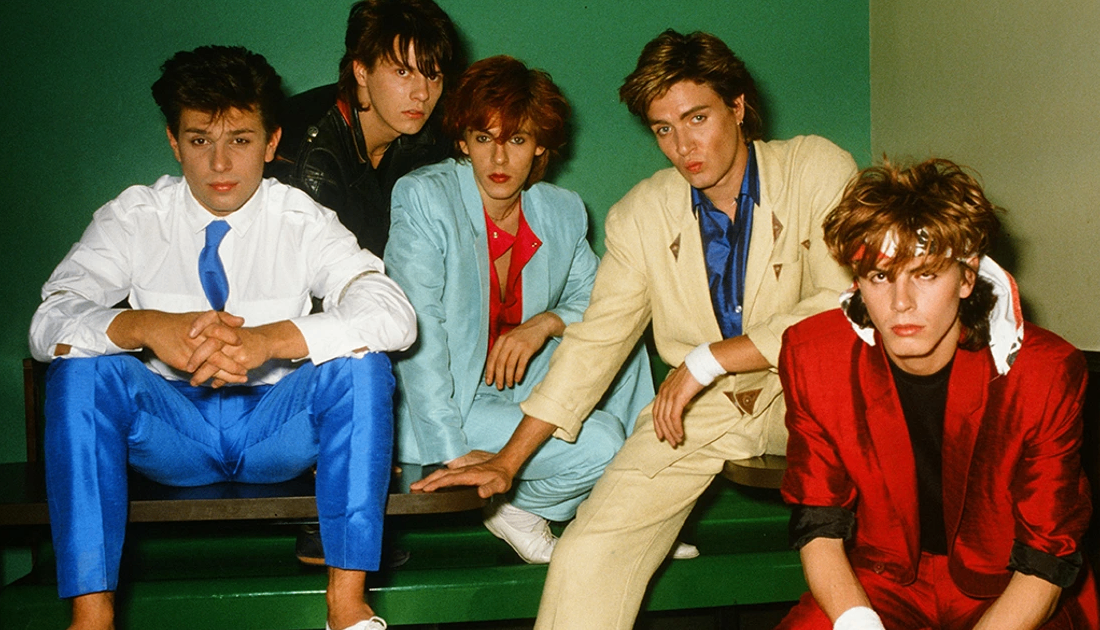
Few bands captured the glamour, energy, and futuristic edge of the 1980s quite like Duran Duran. Blending sleek new wave production with irresistible pop hooks, dance rhythms, adventurous keyboards, and stylish guitar work, the British group created a sound that became instantly recognizable around the world. Songs such as “Hungry Like the Wolf”, “Rio”, “The Reflex”, and “Ordinary World” reveal a band capable of delivering both exhilarating pop and surprisingly emotional songwriting. Their imaginative music videos helped define the early MTV era, while Simon Le Bon’s distinctive vocals gave every recording unmistakable personality. Decades later, Duran Duran’s greatest songs still sound vibrant, sophisticated, and remarkably fresh, proving that their influence extends far beyond nostalgia into the very foundations of modern pop music.
1. Hungry Like the Wolf
“Hungry Like the Wolf” is the song that helped turn Duran Duran from a rising British new wave act into an international pop phenomenon. Released on the 1982 album Rio, the recording captures virtually everything that made the band exciting during its early peak. There is John Taylor’s relentlessly melodic bass, Roger Taylor’s crisp drumming, Andy Taylor’s sharp guitar, Nick Rhodes’s atmospheric keyboards, and Simon Le Bon’s dramatic vocal presence. Rather than allowing any single element to dominate, the arrangement creates a constant sense of movement that makes the song feel as urgent now as it did when it first appeared.
The rhythm section deserves particular attention. John Taylor approaches bass as a major melodic voice rather than simple accompaniment, filling the track with nimble movement while Roger Taylor maintains an energetic pulse underneath him. Andy Taylor adds flashes of guitar that give the polished production enough rock muscle, while Rhodes surrounds the band with synthesizer colors that make the recording sound sleek without becoming cold. Le Bon enters this musical landscape with one of his most charismatic performances, singing about pursuit and desire through imagery that feels almost cinematic.
The video became equally important to the song’s success. Filmed in Sri Lanka and directed by Russell Mulcahy, it transformed the band into glamorous adventurers at exactly the moment music television was becoming enormously influential. Duran Duran understood earlier than many of their contemporaries that a video could expand the world of a song rather than simply document musicians performing it. The exotic locations, frantic movement, and glamorous imagery gave American viewers an unforgettable introduction to the group.
Yet “Hungry Like the Wolf” has survived far beyond the era that produced it because the music itself is exceptionally well constructed. The chorus arrives with immediate force, the groove never becomes predictable, and Le Bon’s performance balances danger with playfulness. It remains one of the clearest demonstrations of Duran Duran’s ability to combine dance music, rock, electronic production, and irresistible pop songwriting into something completely their own.
2. Rio
“Rio” may be the purest expression of Duran Duran’s early musical identity. Released as the title track of their 1982 album, the song combines sophisticated musicianship with a bright sense of glamour that helped define the band’s image throughout the decade. From the opening moments, the recording feels alive with color. John Taylor’s bass twists around the rhythm with extraordinary confidence, Roger Taylor’s drums maintain a danceable pulse, Andy Taylor supplies sharp guitar accents, and Nick Rhodes uses keyboards to create a shimmering atmosphere around Simon Le Bon’s vocal.
Le Bon’s lyric presents Rio as a dazzling, almost mythical figure rather than simply an ordinary woman. She seems to belong simultaneously to beaches, television screens, dreams, and distant landscapes. That larger than life quality perfectly suited Duran Duran, a group whose music frequently blurred the boundaries between romance, fashion, cinema, travel, and fantasy. Simon sings with enough enthusiasm to make the character feel real even when the imagery becomes deliberately extravagant.
The instrumental performance is exceptionally rich. John Taylor’s bass line is one of the great examples of how adventurous bass playing could exist inside mainstream pop without interfering with the song’s accessibility. His notes continually dance around the beat, while Roger Taylor provides the firm rhythmic foundation that allows those details to flourish. The saxophone adds another burst of personality and helps give the recording a sophisticated party atmosphere.
The famous video, filmed around Antigua and directed by Russell Mulcahy, became one of the defining images of early music television. Yachts, tropical scenery, stylish clothes, and playful luxury reinforced the impression that Duran Duran existed inside a glamorous universe of their own.
None of that visual spectacle would matter if the song were not so strong. “Rio” succeeds because its melody, rhythm, musicianship, and personality are inseparable. It feels elegant without becoming restrained and energetic without becoming frantic. The recording remains one of the great pop achievements of the 1980s and perhaps the finest example of Duran Duran at their most colorful and confident.
3. Ordinary World
“Ordinary World” was the song that reminded an entirely new generation why Duran Duran mattered. Released in the early 1990s on the album commonly known as The Wedding Album, the track arrived when many observers regarded the group primarily as stars of an earlier era. Instead of attempting to recreate their youthful sound, Duran Duran returned with an emotionally mature ballad that ranks among the finest recordings of their career.
Simon Le Bon wrote the lyric from a deeply personal place, addressing loss and the difficult process of continuing after someone important is gone. His vocal performance is remarkably restrained. The younger Le Bon was famous for dramatic phrasing and romantic imagery, but here his voice carries the weight of experience. He sounds bewildered, vulnerable, and ultimately determined to survive. The idea of finding an ordinary world becomes a powerful metaphor for rebuilding life after grief has made familiar surroundings feel completely unfamiliar.
The arrangement is equally impressive. Warren Cuccurullo’s guitar work provides both atmosphere and emotional release, particularly as the song moves toward its soaring instrumental moments. Nick Rhodes uses keyboards with unusual subtlety, creating depth around the melody rather than overwhelming it with electronic decoration. John Taylor’s bass provides understated movement beneath the composition, allowing the song to expand gradually.
One of the most striking qualities of “Ordinary World” is how naturally it balances sadness and resilience. The narrator does not pretend that yesterday can be restored. Instead, he recognizes that survival requires finding meaning in whatever world remains. That perspective gives the song enormous emotional maturity.
The recording became a major international success and dramatically renewed interest in Duran Duran. More importantly, it demonstrated that the group had developed far beyond the visual excitement that initially made them famous. Beneath the fashion, videos, and glamorous mythology had always been serious musicians and songwriters. “Ordinary World” made that truth impossible to ignore.
4. Come Undone
“Come Undone” represents Duran Duran at their most sensual, atmospheric, and emotionally mysterious. Released in 1993 on The Wedding Album, the track followed the enormous resurgence created by “Ordinary World” while demonstrating that the band still possessed several different creative identities. Rather than building around an enormous rock arrangement, “Come Undone” moves through a hypnotic groove filled with electronic textures, guitar details, layered vocals, and a dreamlike sense of emotional instability.
Simon Le Bon’s performance is central to the atmosphere. He sings with unusual softness during much of the track, sounding fascinated and slightly overwhelmed by the emotional force he is describing. The lyric focuses on attraction so intense that personal composure begins to dissolve. Love is not presented as something neat or reassuring. It threatens to pull the narrator apart, making the title phrase both romantic and unsettling.
Warren Cuccurullo played an important role in creating the track’s distinctive musical environment. Guitar textures move through the production almost like pieces of atmosphere rather than conventional rock riffs. Nick Rhodes adds keyboards and electronic colors that deepen the dreamlike quality, while the rhythm maintains a steady pulse that makes the song quietly danceable. Tessa Niles contributes memorable supporting vocals, creating a beautiful contrast with Le Bon’s voice and expanding the emotional perspective of the chorus.
The production is remarkably spacious. Duran Duran resist the temptation to fill every moment, allowing individual sounds to emerge and disappear around the vocal. That restraint is one reason the recording has aged so well. Although it clearly belongs to the early 1990s, its atmosphere feels remarkably timeless.
“Come Undone” became one of the band’s most enduring songs because it appeals to listeners far beyond their original audience. It is romantic without becoming sentimental, electronic without becoming mechanical, and mysterious without becoming inaccessible. The recording demonstrates Duran Duran’s remarkable ability to reinvent their sound while preserving the emotional glamour that had always distinguished them.
5. Save a Prayer
“Save a Prayer” reveals the dreamier and more vulnerable side of Duran Duran. Released on Rio in 1982, the song slows the frantic energy associated with many of the band’s early hits and replaces it with an atmospheric arrangement built around Nick Rhodes’s memorable synthesizer pattern. The result is one of the most beautiful recordings in their catalog, a song that combines romantic uncertainty with a strangely serene musical landscape.
The keyboard figure is immediately recognizable. Rhodes creates a circular pattern that seems to shimmer in place, giving the song an almost hypnotic quality before Simon Le Bon’s voice enters. John Taylor’s bass adds gentle movement underneath, while Roger Taylor’s percussion keeps the recording flowing without disturbing its calm surface. Andy Taylor’s guitar appears with restraint, contributing texture rather than dominating the arrangement.
Le Bon’s lyric centers on a fleeting encounter and the complicated emotional territory surrounding desire. The narrator understands that the moment may not develop into a lasting relationship, yet he does not dismiss its significance. That ambiguity gives the song an unusual maturity. Instead of promising forever, it recognizes that even temporary connections can feel meaningful while they are happening.
Simon delivers the melody with a combination of warmth and mystery. His performance avoids excessive dramatics, allowing the repeated chorus to become increasingly powerful through atmosphere rather than sheer volume. The phrase about waiting until the following morning suggests that judgment, regret, or moral accounting can be postponed while two people remain inside the present moment.
The Russell Mulcahy directed video, filmed in Sri Lanka, gave the song an equally dreamlike visual identity. Temples, landscapes, water, and striking travel imagery expanded Duran Duran’s reputation as pioneers of cinematic music videos.
Yet “Save a Prayer” remains beloved primarily because of its emotional atmosphere. Few Duran Duran recordings sound so simultaneously romantic and melancholy. It captures the strange beauty of a moment that may disappear quickly, making the song one of the band’s most timeless performances.
6. The Reflex
“The Reflex” captures Duran Duran at the height of their global pop power. Originally appearing on the 1983 album Seven and the Ragged Tiger, the song became an even greater phenomenon after producer Nile Rodgers helped reshape it into the explosive single version that dominated radio and dance floors. The recording combines the band’s already sophisticated rhythmic instincts with adventurous studio manipulation, creating one of the most distinctive pop singles of the decade.
John Taylor’s bass provides much of the underlying movement, while Roger Taylor’s drums give the song a strong dance foundation. Nick Rhodes supplies bright electronic textures, Andy Taylor’s guitar adds flashes of rock energy, and Simon Le Bon delivers an intentionally enigmatic lyric filled with memorable phrases. The words resist straightforward interpretation, but that mystery becomes part of the attraction. Le Bon treats language almost rhythmically, allowing unusual images and sounds to become hooks in their own right.
Nile Rodgers’s contribution helped transform the track dramatically. Vocal samples, rhythmic edits, and production effects give the single an almost elastic quality. The famous vocal hook feels as though it is bouncing around the arrangement, while every chorus seems to arrive with greater energy. Rodgers understood dance music instinctively, and his approach emphasized the groove without sacrificing Duran Duran’s personality.
The video reinforced the song’s enormous popularity. Concert footage presents the group during the period when their audience reaction had reached extraordinary levels, while visual effects add the kind of spectacle viewers expected from Duran Duran. The image of an immense wave appearing to pour toward the crowd became particularly memorable.
“The Reflex” is a fascinating example of pop music functioning through sound, rhythm, charisma, and mystery all at once. The lyric does not need to provide a conventional narrative because the recording creates its own internal logic. Everything moves, flashes, repeats, and explodes at exactly the right moment. It remains one of Duran Duran’s most exciting singles and a perfect snapshot of a band operating with complete confidence.
7. A View to a Kill
“A View to a Kill” brought Duran Duran into the prestigious tradition of James Bond themes while allowing the band to sound completely like themselves. Released in 1985 for the film of the same name, the song was created with legendary Bond composer John Barry and became one of the most successful recordings associated with the franchise. Rather than imitating the orchestral ballads of earlier Bond films, Duran Duran fused Barry’s cinematic instincts with their own electronic rhythms, sharp guitars, and glamorous pop sensibility.
The opening immediately creates tension. Nick Rhodes’s keyboards and the dramatic orchestral elements suggest espionage and danger, while the rhythm section gives the track a powerful contemporary drive. John Taylor’s bass remains active beneath the arrangement, Roger Taylor provides forceful percussion, and Andy Taylor’s guitar gives the song a harder edge than many traditional film themes. The combination of orchestra and rock band feels surprisingly natural.
Simon Le Bon approaches the vocal with theatrical confidence. His lyric is filled with danger, secrecy, attraction, and fatal imagery, all perfect ingredients for the Bond universe. Rather than narrating the film directly, the words create an atmosphere of glamorous risk. Le Bon understands that a Bond song should sound seductive and threatening at the same time, and his performance moves comfortably between those qualities.
John Barry’s involvement adds an important layer of sophistication. His understanding of dramatic chord movement and orchestral tension gives the recording cinematic authority, while Duran Duran prevent it from sounding like an exercise in nostalgia. The result belongs firmly to the 1980s while still fitting naturally within the broader musical history of Bond.
The video pushes the concept even further, placing the members around the Eiffel Tower in playful espionage roles while connecting their imagery to the film’s action. It captures the band’s famous ability to combine music and visual storytelling.
“A View to a Kill” remains a landmark because it successfully joins two powerful identities. It sounds unmistakably like a James Bond theme and unmistakably like Duran Duran, an achievement that few soundtrack collaborations manage so completely.
8. Girls on Film
“Girls on Film” was one of the earliest recordings to establish Duran Duran’s combination of dance floor rhythm, sharp rock instrumentation, electronic sophistication, and provocative visual style. Released in 1981 on the band’s debut album, the track arrived before the international explosion of Rio, yet nearly all the ingredients of their classic sound were already firmly in place.
The rhythm section is immediately compelling. John Taylor’s bass is busy, funky, and exceptionally melodic, while Roger Taylor maintains a tight beat that gives the song strong club appeal. Andy Taylor’s guitar brings a harder attack, preventing the polished arrangement from drifting too far into pure electronic pop. Nick Rhodes fills the remaining space with synthesizer textures, while Simon Le Bon delivers the lyric with youthful swagger.
The song explores images connected with photography, fashion, performance, and the strange relationship between a camera and its subject. That theme proved remarkably appropriate for a band that would soon become one of the defining visual acts of the music video era. Duran Duran understood the seduction of images while also recognizing that the world behind the camera could be artificial, exploitative, and unsettling.
The video directed by Godley and Creme became notorious for its provocative content. Its imagery attracted controversy while also ensuring that people discussed the band. More importantly, it demonstrated Duran Duran’s early belief that visual presentation could be as ambitious as the music itself. They did not treat videos as advertisements added after a song was finished. They treated them as another creative dimension.
Musically, “Girls on Film” remains one of the band’s toughest early recordings. The bass and guitar have enough bite to satisfy rock listeners, while the rhythm and keyboards make it impossible to separate from the dance culture surrounding early new wave. Simon’s vocal brings all those elements together with a performance that sounds confident, restless, and slightly dangerous.
The song remains essential because it captures Duran Duran just before superstardom, already possessing the style, musicianship, ambition, and visual imagination that would soon make them one of the world’s biggest bands.
9. Notorious
“Notorious” marked a significant transformation for Duran Duran. Released in 1986 as the title track of their fourth studio album, the song arrived after major changes within the group and moved decisively toward funk influenced pop. Working with Nile Rodgers, the remaining core of Simon Le Bon, Nick Rhodes, and John Taylor created a leaner and more rhythm centered sound than the dense new wave arrangements that had defined their earlier success.
The opening guitar immediately announces the change. Rather than the dramatic rock textures associated with Andy Taylor, the track is built around a clipped funk pattern that leaves considerable space for bass, percussion, keyboards, and vocals. John Taylor responds with a groove that is both economical and deeply effective. Nick Rhodes uses electronic textures to sharpen the production, while Nile Rodgers brings the rhythmic precision that had already made him one of popular music’s most influential producers and guitarists.
Simon Le Bon delivers one of his coolest vocal performances. Instead of singing with the breathless romantic intensity of early hits such as “Hungry Like the Wolf”, he sounds controlled and confrontational. The repeated title becomes almost an accusation. His phrasing works closely with the rhythm, giving the vocal a clipped quality perfectly suited to the instrumental arrangement.
The song also represented Duran Duran refusing to remain trapped by their own image. By 1986, the visual culture and musical fashions that had helped propel them to enormous fame were changing quickly. Rather than repeating Rio, they embraced funk, soul, and more spacious production. That willingness to change became crucial to their longevity.
The video reflects the recording’s stripped back confidence, emphasizing movement, fashion, and performance rather than elaborate adventure narratives. Choreography and stark visual presentation give the band a more mature presence.
“Notorious” remains one of Duran Duran’s most infectious recordings because the groove is allowed to dominate. It proved that beneath the band’s glamorous reputation were musicians capable of understanding funk at a deep level, and it opened another important chapter in their continually evolving sound.
10. Is There Something I Should Know?
“Is There Something I Should Know?” captures Duran Duran during the exhilarating moment when their popularity was expanding at extraordinary speed. Released in 1983 as a standalone single before being added to later editions of their debut album, the song arrived after Rio had turned the group into international stars. Rather than slowing down, the band delivered another enormous chorus built around the combination of tension, romance, rhythm, and polished production that had become their specialty.
The opening vocal immediately demands attention. Simon Le Bon repeats an urgent request for information before the full arrangement settles into place, creating the feeling that the narrator has entered the song already anxious. His lyric describes uncertainty within a relationship, where signals seem contradictory and every gesture invites another question. The famous comparison involving nuclear war is exaggerated, witty, and perfectly characteristic of Le Bon’s taste for vivid language.
John Taylor’s bass gives the recording tremendous momentum. His playing is active without interfering with the vocal, while Roger Taylor’s drums maintain the sharp rhythmic discipline required by the arrangement. Andy Taylor adds guitar authority, and Nick Rhodes uses synthesizers to create the polished sheen that identified Duran Duran immediately on early 1980s radio.
The chorus demonstrates the band’s gift for turning emotional uncertainty into communal pop music. The narrator may be confused, but the melody is absolutely confident. Each repetition becomes more memorable, and the backing vocals intensify the sense that the unanswered question has taken over his thoughts.
The music video continued the band’s increasingly sophisticated visual approach, combining performance footage with symbolic images and rapid editing. By this stage Duran Duran had become masters at ensuring that their visual identity matched the scale of their songs.
“Is There Something I Should Know?” remains a classic because it distills early Duran Duran into a compact burst of pop ambition. The rhythm is muscular, the keyboards are bright, the guitar provides bite, and Simon Le Bon turns romantic confusion into a chorus impossible to forget. It captures a band at the precise moment when worldwide superstardom had become reality.

Edward Tomlin is a frequent contributor to Singers Room. Since 2005, Singersroom has been the voice of R&B around the world. Connect with us via social media below.
Source link
