
Pop/Hip Hop/R&B
10 Best Chuck Berry Songs of All Time
Aug
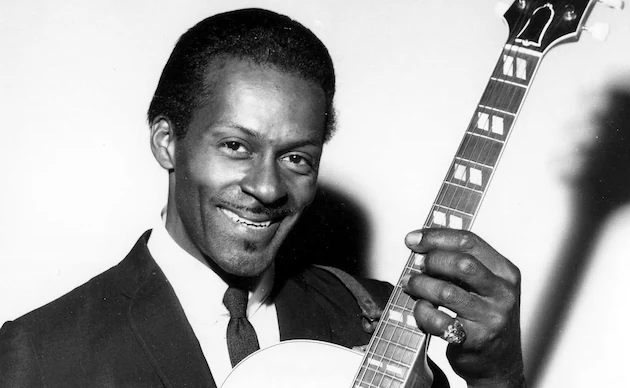
Few artists did more to shape the sound, attitude, and language of rock and roll than Chuck Berry. With his razor sharp guitar riffs, witty storytelling, and irresistible rhythm, Berry created a blueprint that generations of musicians would follow. Classics such as “Johnny B. Goode,” “Roll Over Beethoven,” and “Maybellene” captured the excitement of fast cars, teenage romance, dancing, and youthful rebellion with unmatched energy. His lyrics were vivid and conversational, while his guitar playing helped define what rock music could sound like. From electrifying dance numbers to clever character songs, Berry combined blues roots with youthful imagination, producing recordings that still feel alive decades later. His greatest songs remain essential foundations of rock and roll history.
1. Johnny B. Goode
“Johnny B. Goode” stands as the ultimate Chuck Berry song and one of the foundational recordings in the history of rock and roll. Released in 1958, the song compresses Berry’s greatest artistic strengths into less than three unforgettable minutes: a thrilling guitar introduction, an irresistible rhythmic drive, vivid storytelling, and a hero whose dreams are inseparable from the electric guitar. Johnny is a young musician from humble circumstances who possesses a natural gift so powerful that his family can already imagine his name appearing in lights. It is a story about talent, ambition, and the possibility of escaping ordinary limitations through music.
The opening guitar figure became one of the most influential sounds in popular music. Berry draws from rhythm and blues guitar traditions while shaping the phrases with an attack, clarity, and rhythmic excitement that countless rock players would imitate. The riff does more than introduce the song. It immediately creates the sensation that something exciting is about to happen. Once the rhythm section enters, the track moves with the forward momentum that became one of Berry’s trademarks.
The lyric is equally important. Berry understood teenage aspiration with unusual precision. Johnny does not become interesting because he is wealthy or sophisticated. He becomes interesting because he can play. The guitar provides identity, social recognition, and the possibility of a future beyond his immediate surroundings.
Berry’s vocal delivery combines storytelling with rhythmic wit. He fits words around the beat as naturally as his guitar phrases, making every line sound conversational while maintaining remarkable musical precision.
“Johnny B. Goode” remains immortal because it turned the dream of becoming a rock musician into rock music itself. Generations of guitarists heard Johnny’s story and recognized their own ambitions inside it. The riff became a rite of passage, the character became an archetype, and Chuck Berry created a song that seems to explain why people pick up electric guitars in the first place.
2. Roll Over Beethoven
“Roll Over Beethoven” is Chuck Berry’s exhilarating declaration that a new musical culture has arrived and refuses to behave quietly. Released in 1956, the song frames rock and roll as a force energetic enough to push aside older ideas about respectable music. Berry invokes Beethoven and Tchaikovsky not because he lacks respect for musical history, but because the contrast is funny, bold, and perfectly suited to a generation discovering the excitement of rhythm and blues, jukeboxes, electric guitars, and dancing.
The guitar introduction arrives with tremendous urgency. Berry’s tone is sharp and bright, while his phrasing contains the rhythmic accents that would become central to rock guitar vocabulary. The band follows with a driving beat that seems designed specifically to make sitting still impossible. Piano adds another layer of excitement, connecting Berry’s guitar centered sound to the boogie and rhythm and blues traditions that helped shape his musical language.
The lyric is essentially a celebration of physical response. The narrator hears music and immediately feels his temperature rising. The jukebox becomes almost overloaded by the force of the sound. Berry turns listening into movement, emphasizing that this new music is something experienced through the body as much as through the mind.
There is also humor throughout the performance. Berry never sounds solemn about the supposed conflict between classical tradition and rock and roll. His rebellion smiles while it kicks open the door.
“Roll Over Beethoven” remains one of Berry’s defining recordings because it captures rock and roll as an event rather than merely a genre. The guitar announces it, the rhythm drives it, and the lyric celebrates the cultural shift happening around him. Berry sounds as though he knows the musical world is changing and is delighted to be one of the people pushing it forward.
3. Maybellene
“Maybellene” was the breakthrough recording that announced Chuck Berry as an extraordinary new force in American music. Released in 1955 by Chess Records, the song fused rhythm and blues energy with country flavored storytelling and a frantic automobile chase, producing a sound that helped define the emerging language of rock and roll. From its opening moments, the performance feels restless. Berry does not simply describe speed. The entire record sounds as though it is moving too quickly to remain in one place.
The lyric follows a narrator pursuing Maybellene while jealousy, romance, mechanical trouble, and competitive driving collide. Cars were already important symbols of freedom in American popular culture, but Berry understood their special significance to young listeners. Automobiles meant independence, movement, romance, and escape from adult supervision. By putting a romantic dispute inside a road race, he created a story perfectly suited to the teenage world rock and roll was beginning to represent.
Berry’s guitar provides the necessary acceleration. His phrases cut through the rhythm with a sharpness that makes the instrument feel almost like another vehicle in the chase. The vocal moves rapidly as well, packing vivid details into compact lines without losing clarity.
The recording also demonstrates Berry’s remarkable gift for combining musical traditions that had often been marketed to separate audiences. Country rhythm and rhythm and blues drive coexist naturally because he hears the shared excitement inside both forms.
“Maybellene” remains essential because so much of what rock and roll would become is already present. There is electric guitar, youthful desire, fast cars, humor, storytelling, and an irresistible beat. Berry did not need an elaborate arrangement to create a revolution. He needed a guitar, a great rhythm section, and a story moving fast enough to make everyone want to follow.
4. Rock and Roll Music
“Rock and Roll Music” is Chuck Berry celebrating the very form he was helping to shape. Released in 1957, the song functions as both an anthem and a statement of musical preference. Berry’s narrator does not ask for complicated entertainment. He wants music with a strong backbeat, enough rhythm to inspire movement, and the unmistakable excitement that rock and roll had begun bringing to dance halls, radios, and jukeboxes across the country.
The performance is wonderfully economical. Berry’s guitar contributes rhythmic punctuation while piano dances around the vocal with boogie inspired energy. Bass and drums maintain the dependable pulse celebrated directly in the lyric. Everything about the arrangement supports the song’s argument. Rock and roll is effective because the rhythm feels good, and the recording proves the point while describing it.
Berry’s lyric also displays his sharp observational humor. He mentions different musical environments and styles only to return repeatedly to the form he prefers. The message is not that other traditions lack value. The narrator simply knows what makes him want to dance.
His vocal delivery is almost conversational, but Berry’s rhythmic placement is extremely sophisticated. He understands exactly where a phrase should land against the beat, allowing the words to swing without losing their storytelling clarity. That ability would influence generations of rock singers who learned that lyrics could be both narrative and intensely rhythmic.
The song later attracted famous interpretations from major artists, further demonstrating how universally adaptable Berry’s writing had become. Yet his original possesses a looseness and authority that remains difficult to equal.
“Rock and Roll Music” endures because Chuck Berry makes a persuasive case simply by playing the music he loves. There is no need for a lengthy explanation of what makes rock and roll powerful. The guitar, piano, drums, and voice demonstrate it immediately. By the end, the listener understands that the backbeat is not merely a technical feature. It is the heartbeat of an entire musical culture.
5. Sweet Little Sixteen
“Sweet Little Sixteen” is one of Chuck Berry’s sharpest portraits of teenage rock and roll culture, capturing the excitement that surrounded young fans as the music spread rapidly across the United States. Released in 1958, the song follows an enthusiastic young listener whose devotion to rock music transforms her appearance, behavior, and imagination. Berry understood that the new culture was not confined to musicians. Fans were helping create it through dancing, fashion, record collecting, and intense identification with performers.
The lyric travels through American cities with almost cinematic speed. Berry mentions different locations as though rock and roll excitement is moving across a national map. That geographic sweep makes the song feel larger than one teenager. She becomes representative of a whole generation discovering the same music in different towns at roughly the same moment.
Musically, the recording has the unmistakable Berry combination of guitar, piano, bass, drums, and a rhythm that alternates tension with release. His vocal phrases bounce against the beat while the instrumental accents give the song a playful sense of anticipation.
Berry was especially skilled at observing the details of teenage life from the outside while writing as though he understood it completely from within. Clothes, concerts, excitement, parental permission, and the desire to participate in the latest craze all become part of the narrative.
The song’s musical structure became influential far beyond Berry’s own catalog, another indication of how deeply his melodic and rhythmic ideas entered the broader language of popular music.
“Sweet Little Sixteen” remains a classic because it captures rock and roll becoming a social identity. The girl at the center does not merely enjoy a song. She belongs to a new culture. Berry turns that enthusiasm into a vivid national snapshot filled with rhythm, humor, and the contagious excitement of teenagers discovering music that seems created specifically for them.
6. School Day
“School Day” is one of Chuck Berry’s greatest demonstrations of his ability to transform ordinary teenage routine into rock and roll mythology. Released in 1957, the song follows a student through the familiar frustrations of the school day before finally reaching the liberating moment when classes end and the jukebox takes over. Berry recognized that rock music could become more powerful when it spoke directly about the daily experiences of young listeners rather than distant romantic fantasies.
The opening verses describe school with an almost documentary eye. The alarm, the classroom, the teacher, studying, and the pressure of getting through the day all appear in compact, memorable images. Berry does not exaggerate these experiences. Their familiarity is exactly what gives the song its power. Teenagers hearing the record could recognize their own lives immediately.
Then the atmosphere changes. Once school is finished, music becomes liberation. The jukebox, dancing, and the powerful backbeat create an alternative world where young people can temporarily escape schedules and authority. Berry’s famous celebration of rock and roll near the end turns that transition into an anthem.
The music follows the same emotional journey. Guitar, piano, bass, and drums move with increasing excitement, and Berry’s vocal becomes more energized as the school day gives way to evening freedom. The rhythm itself seems to loosen the moment responsibility disappears.
Berry’s genius lies in understanding that teenage rebellion does not always require dramatic confrontation. Sometimes it means simply waiting for the bell and heading somewhere music is playing.
“School Day” remains enduring because it gives ordinary youth experience the grandeur of an anthem. Berry turns classrooms, homework, bells, and jukeboxes into the landscape of early rock culture. By doing so, he helped establish one of the genre’s central ideas: young people’s everyday lives were important enough to deserve their own songs.
7. You Never Can Tell
“You Never Can Tell” is one of Chuck Berry’s most charming narrative songs, a compact story about young marriage, modest beginnings, domestic life, and the unpredictable ways happiness can develop. Released in 1964 and later included on St. Louis to Liverpool, the song follows a young couple as they build a life together from relatively little. Berry observes their progress with affection and humor rather than judgment, repeatedly reminding listeners that life can surprise anyone.
The arrangement has a distinctive rolling character driven heavily by piano. Instead of placing guitar at the absolute center of every moment, Berry allows the keyboard to help define the song’s personality. The rhythm has a light, dancing quality that gives the narrative a cheerful sense of motion.
The young couple gathers furniture, records, household possessions, and eventually a car, creating an entire domestic world through Berry’s economical details. His writing is almost cinematic. A handful of objects tell the listener what kind of life these people are building without requiring long explanations.
Berry also captures a generational tension. Older observers may doubt whether such young people can create a stable future, yet the couple continues surprising expectations. The recurring observation that one never can tell becomes both humorous and quietly generous.
The song experienced renewed cultural attention decades after its original release, proving how adaptable Berry’s storytelling remained. Its rhythm and playful narrative fit naturally wherever an atmosphere of vintage rock and roll excitement is needed.
“You Never Can Tell” endures because it celebrates the unpredictability of ordinary happiness. Berry does not give his characters wealth, fame, or extraordinary adventures. He gives them records, furniture, a car, and a shared life. Through those details, he creates one of rock and roll’s most affectionate portraits of young adulthood, proving that a good story can swing just as hard as a guitar riff.
8. No Particular Place to Go
“No Particular Place to Go” is one of Chuck Berry’s funniest automobile songs, turning a leisurely romantic drive into a wonderfully mundane comedy of frustration. Released in 1964, the song revisits musical ideas associated with his earlier work while placing them inside a completely different narrative. The narrator is driving with his girlfriend, enjoying the freedom of the road and the possibility of romance, only to discover that modern convenience can create its own ridiculous obstacles.
Berry begins with one of his favorite settings: the automobile. Cars in his songs often symbolize independence, speed, courtship, and youthful freedom. Here, however, the drive has no competitive urgency. The couple is simply enjoying being together with nowhere specific they need to arrive.
The story gradually becomes comic as the narrator tries to find privacy. The car that initially represents freedom eventually becomes the source of frustration when a stubborn seat belt interferes with the couple’s plans. Berry’s ability to build an entire song around such a small inconvenience demonstrates his tremendous storytelling instinct.
The music remains lively throughout. Guitar, piano, bass, and drums maintain a rolling groove that makes the situation feel playful rather than genuinely disastrous. Berry’s vocal has the relaxed confidence of a storyteller who knows exactly when the punch line will arrive.
What makes the song especially appealing is its recognition that memorable romantic moments often involve ordinary complications. Real life rarely behaves as smoothly as fantasy.
“No Particular Place to Go” remains beloved because Berry turns minor frustration into perfect rock and roll entertainment. The rhythm is infectious, the story is instantly understandable, and the humor never feels forced. A drive without a destination becomes a miniature adventure filled with desire, mechanical inconvenience, and the kind of everyday absurdity Berry could transform into an unforgettable song.
9. Memphis, Tennessee
“Memphis, Tennessee” reveals Chuck Berry as a master storyteller capable of creating emotional depth with remarkably economical language. At first, the song appears to be about a man trying to contact a woman named Marie through long distance information. Berry deliberately allows the listener to assume a romantic relationship. Only gradually does the full situation become clear, transforming what initially seems like a conventional story of separation into something considerably more touching.
The narrator asks the telephone operator for help reaching someone in Memphis. He provides small details about where she lives and why communication has been difficult. Berry delivers the story in an understated tone, allowing the information to accumulate naturally. The eventual revelation that Marie is his young daughter changes the emotional meaning of everything that came before it.
That narrative twist demonstrates Berry’s extraordinary control as a songwriter. He does not announce the surprise dramatically. Instead, he lets one carefully chosen detail reorganize the listener’s understanding of the entire song. What seemed like romantic longing becomes parental heartbreak and family separation.
Musically, the recording remains restrained compared with some of Berry’s most explosive rockers. Guitar, rhythm, and vocal storytelling work together without unnecessary decoration. The relative simplicity allows the lyric to remain central.
The song also shows how broad Berry’s subject matter could be. He is often remembered for teenagers, cars, dancing, and guitar heroes, but his best writing could move into more complicated adult emotions without losing clarity.
“Memphis, Tennessee” endures because Berry understands the power of withholding information. He trusts the listener to follow the story and discover its meaning gradually. By the final revelation, the narrator’s desire to make a telephone connection feels far more urgent than it did at the beginning. Berry turns a simple request for a phone number into one of rock and roll’s most beautifully constructed stories of separation and longing.
10. Carol
“Carol” is classic Chuck Berry courtship set to one of the most infectious rhythmic patterns in early rock and roll. Released in 1958, the song follows a narrator trying to persuade Carol to join him on the dance floor before someone else captures her attention. Berry turns a simple romantic invitation into a miniature drama filled with urgency, confidence, dancing, and the irresistible pull of music.
The guitar immediately gives the performance its identity. Berry’s sharp rhythm playing and signature lead phrases create momentum while piano, bass, and drums maintain the driving pulse underneath. Nothing in the arrangement is excessive. Each instrument contributes directly to the movement of the song, reinforcing the idea that standing still would be almost impossible.
The lyric places dancing at the center of courtship. The narrator does not offer grand promises or elaborate declarations of devotion. He wants Carol to move with him while the music is playing. In Berry’s world, rhythm becomes a social language. Dancing is conversation, flirtation, competition, and celebration at the same time.
His vocal delivery has a natural confidence that never becomes stiff. Berry sounds as though he is improvising a persuasive speech directly in front of Carol, adjusting each phrase to keep her attention. That conversational quality is one reason his songwriting felt so immediate to young audiences.
The song became another Berry composition eagerly embraced by later rock musicians, helping transmit his guitar vocabulary and songwriting approach into the next generation.
“Carol” remains a rock and roll favorite because its purpose is wonderfully uncomplicated. The guitar is playing, the room is moving, and the narrator wants one particular person beside him before the moment disappears. Berry captures the excitement of dancing as both romance and liberation, creating a performance that still feels capable of filling a dance floor many decades after it was recorded.

Edward Tomlin is a frequent contributor to Singers Room. Since 2005, Singersroom has been the voice of R&B around the world. Connect with us via social media below.
Source link
