
Pop/Hip Hop/R&B
10 Best Acdc Songs of All Time
Aug
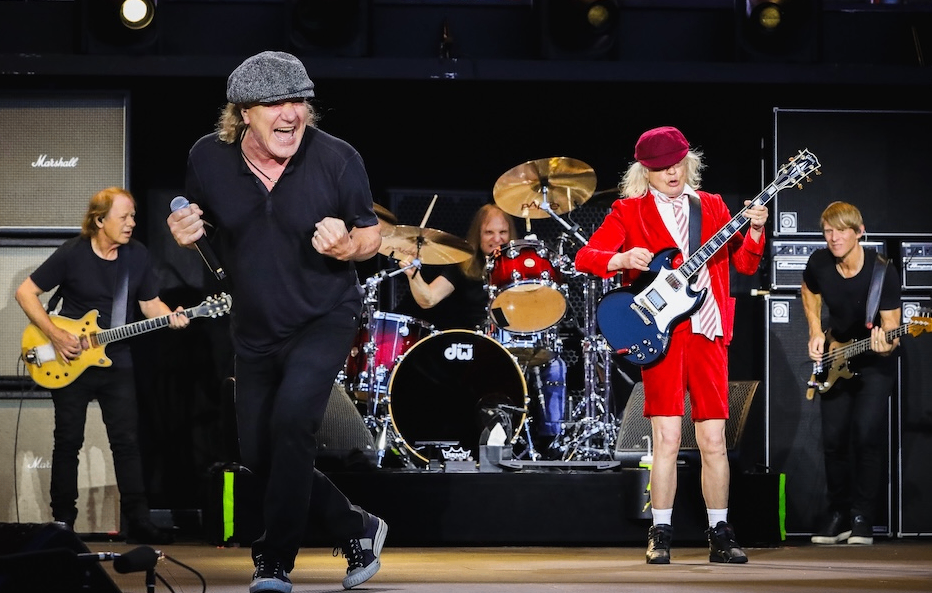
Few bands in rock history have delivered raw power, unforgettable riffs, and arena shaking energy quite like AC/DC. Built on the thunderous rhythm guitar of Malcolm Young, the electrifying lead work of Angus Young, and the unmistakable voices of Bon Scott and Brian Johnson, the Australian legends created a catalog packed with hard rock anthems that refuse to age. Songs such as “Back in Black”, “Highway to Hell”, “Thunderstruck”, and “You Shook Me All Night Long” showcase the band’s genius for combining simple, crushing riffs with enormous hooks and relentless momentum. Whether blasting from stadium speakers or a car stereo, AC/DC’s greatest songs remain instantly recognizable, fiercely energetic, and endlessly entertaining, securing their place among the most influential and beloved rock bands of all time.
1. Back in Black
“Back in Black” is more than one of AC/DC’s greatest songs. It is one of the defining riffs in the entire history of hard rock. Released in 1980 as the title track of Back in Black, the song arrived during an emotional and creative turning point for the band. Bon Scott had died earlier that year, leaving AC/DC facing an uncertain future. Brian Johnson stepped into the role of lead vocalist, and the resulting album became both a tribute to Scott’s spirit and a remarkably confident declaration that the band intended to continue.
The opening guitar riff demonstrates the genius of Angus and Malcolm Young. It is not technically complicated, yet every note lands with enormous authority. Malcolm’s rhythm guitar gives the track its unshakable foundation, while Angus adds sharp accents that make the riff instantly recognizable. Phil Rudd’s drumming is equally important. He avoids unnecessary flourishes and instead creates the steady, powerful pulse that allows the guitars to breathe.
Brian Johnson sounds completely at home. His rasp has a different character from Bon Scott’s, but that difference helped AC/DC move forward rather than imitate its past. Johnson attacks the chorus with a raw intensity that turns the title into a celebration of resilience. The lyric is filled with swagger, humor, and defiance, all qualities deeply associated with the band’s identity.
Producer Robert John Lange helped give the recording tremendous clarity. The guitars are huge without becoming muddy, the rhythm section remains sharply defined, and Johnson’s voice cuts through everything. That balance made the track equally effective on radio, through headphones, and inside enormous arenas.
“Back in Black” ultimately represents AC/DC’s greatest strength: making simple musical ideas feel monumental. The riff, groove, chorus, and attitude are immediately accessible, yet the recording never grows dull. It remains a master class in restraint, power, and hard rock songwriting, and generations of guitar players have discovered the thrill of rock music by attempting that legendary opening riff.
2. Highway to Hell
“Highway to Hell” is the ultimate Bon Scott era AC/DC anthem, a song that combines rebellious humor, enormous guitar chords, and one of the most memorable choruses in rock history. Released in 1979 as the title track of Highway to Hell, it represented a major international breakthrough for the Australian band and demonstrated how effectively AC/DC could transform its raw stage energy into a powerful studio recording.
Angus Young begins with a guitar figure that sounds effortless but contains everything essential to the group’s musical philosophy. The riff is direct, spacious, and rhythmically irresistible. Malcolm Young’s rhythm guitar strengthens every chord without crowding the arrangement, creating the huge guitar sound that became one of AC/DC’s signatures. Cliff Williams and Phil Rudd provide a disciplined rhythm section underneath, allowing the groove to remain simple enough for the song to hit with maximum force.
Bon Scott gives one of the defining performances of his career. His voice sounds mischievous, rough, amused, and completely confident. The title might suggest something sinister in another context, but Scott turns it into a celebration of life lived without apology. The song has often been associated with the exhausting realities of touring, where endless travel and constant performances could make life on the road feel like its own strange highway.
Producer Robert John Lange brought additional polish to AC/DC without removing the band’s toughness. The backing vocals are carefully arranged, the guitars sound massive, and every instrument occupies a clear place in the mix. That precision helped the song reach a wider audience while preserving the group’s fundamental character.
“Highway to Hell” has become one of those songs that requires only a few seconds for recognition. The opening guitar alone can transform the atmosphere of a room. Bon Scott’s charismatic delivery gives it permanent personality, while the Young brothers provide a riff that feels almost elemental. It remains one of hard rock’s great statements of freedom, attitude, and unapologetic volume.
3. Thunderstruck
“Thunderstruck” proved that AC/DC could create one of its most iconic songs nearly two decades after the band’s formation. Released in 1990 on The Razors Edge, the track introduced a new generation to the group’s relentless combination of memorable guitar ideas, massive choruses, and pure physical energy. Its opening guitar figure is among Angus Young’s most instantly identifiable performances, building suspense before the full band arrives with devastating force.
The introduction is remarkable because Angus creates excitement before traditional chords even enter. The repeated notes sound almost mechanical in their precision, gradually joined by shouted vocals that increase the anticipation. When Malcolm Young, Cliff Williams, and Chris Slade finally enter, the track suddenly expands into arena sized rock. The shift is simple but enormously effective.
Brian Johnson gives the song exactly the vocal performance it needs. His rasp sounds fierce enough to compete with the guitars, yet his phrasing remains rhythmic and controlled. The repeated title becomes almost a battle cry. Rather than telling a detailed narrative, the lyric is built around excitement, speed, attraction, and the sensation of being overwhelmed by something powerful.
The arrangement demonstrates AC/DC’s understanding of musical tension. The band does not reveal everything immediately. The long introduction allows listeners to anticipate the explosion, making the eventual entrance of the rhythm section far more satisfying. Once the groove arrives, Malcolm’s rhythm guitar keeps the song grounded while Angus adds lead flourishes around it.
“Thunderstruck” became especially powerful in concert. The opening notes create instant recognition, allowing an audience to respond before the first full verse even begins. Over time the song has become a staple of sporting events, films, advertisements, and any setting that requires a sudden increase in adrenaline.
Its lasting success confirms that AC/DC never needed to reinvent its fundamental musical language to remain relevant. The band simply continued finding new riffs within that language. “Thunderstruck” is one of the finest examples, combining suspense, precision, raw energy, and an unforgettable Angus Young guitar figure into a hard rock anthem of enormous scale.
4. You Shook Me All Night Long
“You Shook Me All Night Long” is one of AC/DC’s most accessible songs without sacrificing any of the band’s trademark guitar power. Released on Back in Black in 1980, the track became one of Brian Johnson’s first great signature performances with the group and eventually grew into one of the most recognizable rock songs ever played on radio. Its combination of a melodic guitar introduction, suggestive humor, tight rhythm, and an enormous chorus demonstrates AC/DC’s extraordinary ability to make hard rock feel immediate and universal.
The guitar work is deceptively clever. Angus Young opens with a bright figure that immediately distinguishes the song from darker tracks on the album. Malcolm Young then supplies the rhythmic foundation, using carefully placed chords rather than constant distortion. Cliff Williams locks into the groove with Phil Rudd, whose drumming once again proves that simplicity can generate tremendous power when the timing is right.
Brian Johnson attacks the verses with confidence and humor. The lyric is filled with exaggerated romantic and physical imagery, but Johnson delivers it with enough charm to keep the song playful. His voice rises into the chorus with remarkable force, and the backing vocals create the kind of communal hook that feels designed for thousands of people to sing together.
One reason the recording has endured is its balance. It is heavy enough to satisfy rock audiences, but melodic enough to reach listeners who might never explore the band’s harder material. Producer Robert John Lange emphasizes that balance by giving every instrument remarkable clarity. The guitars sound large, yet there is plenty of space in the recording.
“You Shook Me All Night Long” became a permanent part of AC/DC’s concert repertoire and remains one of the songs most closely associated with classic rock culture. Weddings, parties, sports arenas, bars, and radio stations have all embraced it. Beneath that popularity lies exceptional craftsmanship. The riff is memorable, the rhythm is disciplined, and the chorus arrives exactly when it should. AC/DC makes the entire performance sound effortless, which is often the clearest sign of genuine mastery.
5. Hells Bells
“Hells Bells” is one of the most dramatic openings to any album in hard rock history. The first song on AC/DC’s 1980 masterpiece Back in Black begins not with guitar but with the solemn tolling of a huge bell. Those deliberate strikes create an atmosphere of mourning and anticipation before Angus Young’s guitar enters with a dark, spacious riff. Considering the album followed the death of former singer Bon Scott, the opening carries an emotional gravity that extends far beyond ordinary rock theatrics.
Angus’s main guitar figure is brilliant because of what it leaves out. Notes are allowed to ring into open space while Malcolm Young’s rhythm guitar gradually strengthens the arrangement. Phil Rudd enters with characteristic discipline, never rushing the tempo. Cliff Williams adds a solid bass foundation, and the entire band builds tension rather than exploding immediately.
Brian Johnson’s entrance introduces another level of intensity. His voice sounds ominous and commanding, perfectly suited to lyrics filled with storms, heat, danger, and supernatural imagery. This was one of the tracks that demonstrated Johnson could successfully inhabit AC/DC’s dark sense of humor while bringing his own vocal identity to the band.
The song works partly because it refuses to hurry. Many hard rock groups might have turned the central riff into a faster performance, but AC/DC understands that heaviness often comes from space. Every drum hit, guitar chord, and vocal phrase has room to make an impact. The result feels enormous without becoming cluttered.
Onstage, “Hells Bells” became one of AC/DC’s great theatrical moments. The sight of a giant bell above the stage perfectly complements a song that already sounds ceremonial. Yet the spectacle would mean little without the quality of the composition underneath it.
“Hells Bells” remains a striking example of AC/DC’s ability to create atmosphere using remarkably economical musical tools. A bell, a carefully constructed riff, a steady groove, and Brian Johnson’s piercing voice are enough to produce one of the most ominous and unforgettable recordings in the band’s catalog.
6. T.N.T.
“T.N.T.” captures the youthful swagger of early AC/DC in its purest form. Originally released during the band’s rise in the middle of the 1970s, the song helped establish the personality that would eventually carry AC/DC from Australian clubs to stadiums around the world. The musical formula is deliberately simple, yet every element has been designed for maximum audience participation. A stomping rhythm, an instantly memorable chant, Angus Young’s guitar, and Bon Scott’s charismatic voice combine to create a song that seems almost impossible not to join.
The opening vocal chant is one of the great crowd participation devices in rock. Before the song develops any complicated musical idea, listeners are already invited into the performance. Phil Rudd’s steady drums and the Young brothers’ guitars create a rhythm that feels closer to a march than a conventional fast rock groove. That simplicity gives the track its physical character.
Bon Scott is magnificent throughout. His delivery embodies the rebellious humor that made him such an important frontman. He presents himself as dangerous, unpredictable, and explosive, but there is an obvious wink behind the bravado. Scott understood that rock and roll mythology becomes more entertaining when the performer is clearly enjoying the exaggeration.
Angus Young’s lead guitar reinforces that personality. His playing has bite and energy, but he never overloads the song. Malcolm Young’s rhythm guitar remains essential, giving every section a firm foundation and helping the track maintain its relentless stomp.
The title itself is perfectly chosen. T.N.T. suggests explosive power, which is exactly what AC/DC wanted the music to represent. The repeated letters become a chant that can be understood by audiences regardless of language, helping explain why the song became such a durable concert favorite.
“T.N.T.” may come from an earlier and rougher period of the band’s development, but it contains the blueprint for decades of AC/DC music. There is attitude without pretension, power without unnecessary complexity, and a chorus built specifically for a room full of people to shout together. That direct connection with an audience remains one of AC/DC’s greatest strengths.
7. Dirty Deeds Done Dirt Cheap
“Dirty Deeds Done Dirt Cheap” is one of the finest examples of Bon Scott’s ability to transform a simple rock song into a miniature piece of mischievous theater. Released during AC/DC’s early years, the track presents Scott as a shadowy problem solver willing to handle unpleasant situations for a suspiciously affordable price. The concept is ridiculous, sinister, funny, and unforgettable, which makes it perfectly suited to the band’s rebellious personality.
The guitar riff is classic AC/DC. Malcolm and Angus Young avoid unnecessary complexity, instead building the song around a blunt rhythmic figure that leaves enough space for Scott’s storytelling. Phil Rudd’s drumming provides a steady pulse, while the bass strengthens the groove without calling attention away from the vocal. The entire band understands that the lyric is the star during the verses.
Scott delivers the words like a man advertising questionable services from a back room. His voice contains humor in nearly every phrase. He shifts between menace and amusement so naturally that listeners are never entirely sure how seriously to take the character. That ambiguity is essential. The song sounds dangerous, but it is also clearly having fun with its own outrageous premise.
The chorus is built for immediate recognition. The title is repeated with such confidence that it becomes more than a lyric. It becomes a slogan. The backing vocals and pounding rhythm help turn the phrase into something audiences can shout together, a quality that made the song enormously effective in concert.
Another reason “Dirty Deeds Done Dirt Cheap” endures is the economy of the arrangement. AC/DC never confuses heaviness with overcrowding. The guitars hit hard because there is room around them, and Scott’s voice remains clear enough for every joke and threat to register.
The recording represents early AC/DC at its most entertaining. It combines blues influenced hard rock, cartoon danger, streetwise humor, and a brilliantly memorable hook. Bon Scott’s personality dominates the performance, yet every musician contributes exactly what the song requires. The result is a timeless piece of rebellious rock and roll that still sounds wonderfully disreputable.
8. Shoot to Thrill
“Shoot to Thrill” demonstrates how much momentum AC/DC can generate from a groove that initially seems almost effortless. Released on Back in Black in 1980, the song became one of the album’s most enduring tracks despite competing with an extraordinary collection of classics. Over time it developed into a major concert favorite and gained additional visibility through its association with the Iron Man films, where its enormous guitar sound proved perfectly suited to larger than life action.
The opening riff immediately establishes confidence. Angus Young plays with sharp precision, while Malcolm Young’s rhythm guitar creates the sturdy foundation that gives the music its weight. Phil Rudd settles into a groove that never needs unnecessary decoration, and Cliff Williams locks closely to the drums. This disciplined rhythm section gives Angus enormous freedom to move around the song.
Brian Johnson delivers the lyric with the kind of reckless enthusiasm that defined his earliest work with AC/DC. His voice sounds abrasive in exactly the right way, turning every phrase into a burst of attitude. The song is filled with swagger, danger, and exaggerated bravado, but the performance remains playful enough to avoid taking itself too seriously.
One of the recording’s greatest moments comes when the arrangement pulls back before rebuilding. AC/DC has always understood dynamics better than its reputation for straightforward rock might suggest. By reducing the intensity temporarily, the band makes the eventual return of the full guitars sound even more powerful.
Angus’s lead work is exciting without disrupting the groove. His solos sound spontaneous, but every phrase contributes to the song’s forward movement. Malcolm remains the anchor, reinforcing why his rhythm guitar playing was so essential to the band’s sound.
“Shoot to Thrill” captures AC/DC in peak form. It is not dependent on studio tricks or elaborate songwriting structures. Its power comes from musicians listening closely to one another and understanding exactly when to push and when to leave space. The result is a hard rock performance with remarkable physical momentum, making it one of the most exhilarating songs in the band’s vast catalog.
9. Whole Lotta Rosie
“Whole Lotta Rosie” is AC/DC at its rawest, funniest, and most ferociously energetic. Released on Let There Be Rock in 1977, the song became one of the defining performances of the Bon Scott era and eventually one of the band’s most enduring concert standards. Built around a towering guitar riff and Scott’s outrageous storytelling, it captures the blues based foundation of AC/DC before the polished production of later albums expanded the group’s international audience.
The riff is immediately commanding. Angus Young and Malcolm Young create a guitar attack that feels both heavy and loose, preserving the barroom spirit that ran through much of the band’s early music. The rhythm section drives relentlessly underneath them, giving Bon Scott enough space to tell his larger than life story.
Scott’s performance is central to everything. His lyric describes an unforgettable encounter with Rosie, a woman presented through exaggerated physical imagery and tremendous enthusiasm. Modern listeners may hear the words differently from audiences in the 1970s, but Scott’s delivery is unmistakably celebratory. He sounds impressed rather than embarrassed, turning Rosie into a character whose presence overwhelms the narrator.
The chorus is wonderfully direct. Once the title arrives, there is little need for further explanation. The guitars surge, the vocal becomes more forceful, and the entire song seems designed to produce a physical audience reaction. That quality made it ideal for the stage.
Live performances elevated “Whole Lotta Rosie” into AC/DC mythology. Angus could extend his guitar work while the crowd shouted along, and the band eventually incorporated enormous Rosie imagery into its concerts. What began as an earthy rock song became a complete piece of arena theater.
The recording also showcases Angus Young’s early lead style beautifully. His solos are fast, bluesy, aggressive, and full of personality. He sounds less concerned with technical perfection than with generating excitement, which is exactly what the song demands.
“Whole Lotta Rosie” remains essential because it captures the dangerous fun of early AC/DC. The guitars are loud, Bon Scott is completely uninhibited, and the rhythm never lets up. It is hard rock stripped to its most physical and entertaining essentials.
10. For Those About to Rock (We Salute You)
“For Those About to Rock (We Salute You)” is AC/DC’s grand salute to the audience that made the band’s extraordinary career possible. Released as the title track of the 1981 album For Those About to Rock We Salute You, the song followed the enormous success of Back in Black and gave the group another monumental arena anthem. Rather than attempting to match the speed of some earlier favorites, AC/DC builds the track deliberately, allowing its sense of scale to increase until the famous cannons arrive.
The opening guitar has a ceremonial quality. Angus and Malcolm Young create a riff that feels heavy but spacious, while Phil Rudd and Cliff Williams establish a deliberate rhythm underneath. Brian Johnson enters with a commanding vocal, addressing listeners almost like a master of ceremonies standing before an enormous gathering.
The title was inspired by the traditional salute associated with gladiators, but AC/DC redirects the phrase toward rock audiences. The people preparing for battle are now musicians and fans preparing for another loud night of guitars, drums, sweat, and communal excitement. That idea perfectly suits a band whose relationship with its audience has always been central to its identity.
The arrangement becomes increasingly dramatic as the song progresses. Angus adds lead guitar lines around Malcolm’s steady rhythm, Johnson pushes his voice harder, and the drums gradually intensify. Then the cannons appear. Their blasts are not merely a studio novelty. They function almost like another percussion instrument, punctuating the final section with enormous physical force.
Those cannons eventually became one of AC/DC’s most famous concert traditions. When audiences hear the song late in a performance, they know the spectacle that is coming. The combination of flashing lights, guitar solos, cannon fire, and Johnson’s vocal makes the number feel like a ceremonial finale.
“For Those About to Rock” is ultimately a celebration of the relationship between band and listener. AC/DC rarely presents itself as distant or intellectual. Its music is built around direct connection, and this song makes that philosophy explicit. The band salutes everyone willing to turn up the volume, raise a fist, and participate in the glorious noise.

Edward Tomlin is a frequent contributor to Singers Room. Since 2005, Singersroom has been the voice of R&B around the world. Connect with us via social media below.
Source link
