
Alternative Rock
Home Front On New Album ‘Watch It Die’
Nov
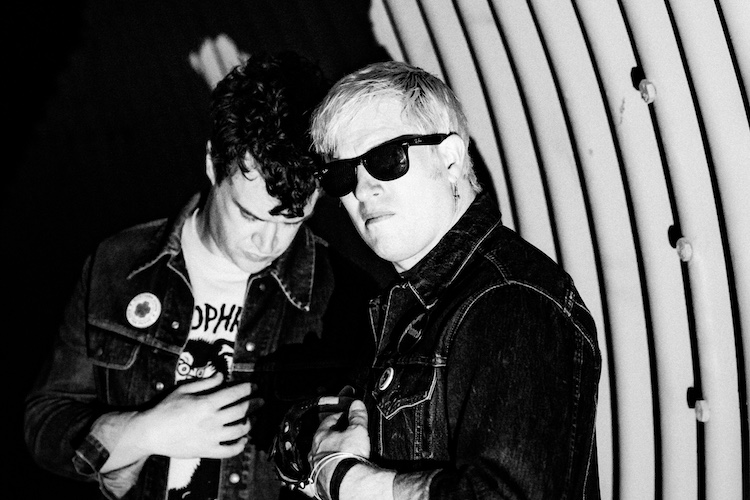
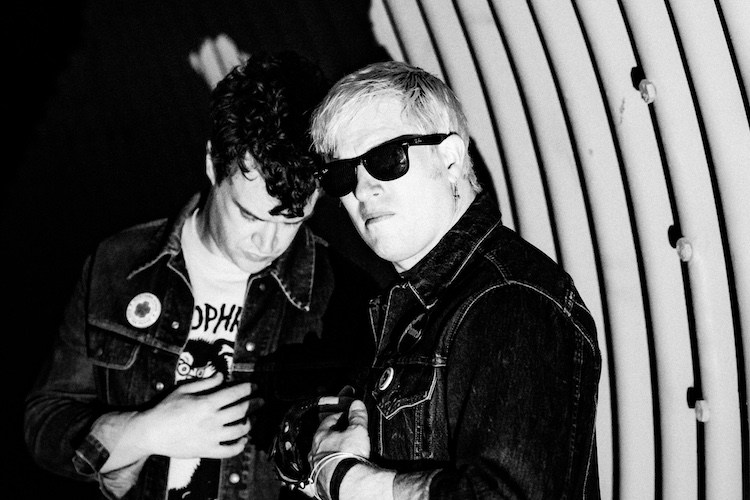
In times of darkness, we need bands like Home Front to break through and shine a light.
From the streets of Edmonton to the world, Graeme McKinnon and Clint Frazier have spent the last five years developing their own brand of luscious noise, combining the rawness of punk, the integrity of hardcore and the beauty of new wave, which has shown them just how many others out there have been craving the same comfort as them.
And with new album ‘Watch It Die’, they have taken the ante up another level. Gorgeously uplifting and stunningly brash, it is a record that speaks to leaving what has been behind, letting what is to come sit far ahead and instead utilising the strength and solace that we have in the here and now. Of building community, nurturing passion, and doing what we can to make today wonderful, even when it is a challenge.
To find out more about this ethos and what effect it has had on the band internally and externally, Rock Sound sat down with Graeme and peeled back the layers on one of 2025’s most riotously pure releases.
Rock Sound: When it comes to ‘Watch It Die’, how much of the record did you know you wanted to bring to life and how much of it has come from seeing how the chips have fallen over the past couple of years, both musically and emotionally?
Graeme: “Some of the stuff on this record occurred unintentionally. Still, then there’s a lot that was done very intentionally. There’s stuff where we just stumble upon sounds, and we think that it would be super cool if it were this kind of song as a result, which means that it happens pretty organically.
“In the same way that we didn’t set out to make this record have a brighter mood, either. It’s really easy with all of the immediacy of doom every time you open your phone or turn on your TV or even leave your house. You see people living hard, you know? But when that is the case, that’s when I get slapped across the face with giving myself a little bit of perspective. If I’m feeling depressed or angry, it would be a disservice not to take stock of where I am in life and what that has afforded me in terms of a way to cope with all of that stuff. There’s heat in my house, there’s food in our fridge, I have a lovely partner, and we get to do things together. I understand that I am coming from a place of privilege in what I can do.
“For me, that has played a big part in the introspection of these songs. We’re going to drown in the mud if we continue to tear each other down, so why can’t we adopt a mentality of being above the things that are pulling our community apart? Right wing and so-called left wing, that shit is all bullshit to me. That’s a smokescreen to make us forget that billionaires are using us, you know?
“So, on this record, every song had its own journey. But when it is all said and done, and you look at the collection and see a lot of the ideas that were going through it, that’s when I started to see that maybe we need to let the old world die. We have to do this to be able to progress and go into something new. And we don’t know if there will be a better future or not, but among ourselves, we have to zoom in on the scope and focus on what we can control. If you have friends who are struggling, reach out to them. That’s an easy place to start.”
RS: It’s also about that intersection between what is happening out on the streets and what is happening within art. Because the two have always gone hand in hand, but it’s very much a case of allowing both to influence each other, both in your actions and your output.
Graeme: “If you look back to your parents and when they were growing up, the tracks were laid down for them from the get-go. You go to school, and after school, you get a job. That job turns into a career, and you work for a certain number of years before retiring. However, with us, as the next generation arrived, that became even more challenging. How do you afford a house? Then you see the generation going on right now, and it’s just thinking about how their future is going to be when everything seems insurmountable. When you then zoom in on the worlds of punk and hardcore, you’re up against this wall. This thing that is keeping everything dark. But then, when you see that you can branch out to like-minded people, just like I did when I was a young, dumb punk, you realise that you can make the world feel like a tighter community.”
RS: The thing about Home Front is that it feels like a band that belongs out there. It’s the sound of standing on the street with those people, feeling the cold on your face, and knowing that you’re alive, yet not alone. How do you feel that you have harnessed that more now compared to at the band’s inception half a decade ago?
Graeme: “It’s funny because at the start of the decade, when we started the band, nothing was going on. Because it was the pandemic. The world was literally shut down, and the band that I was in previously took a massive hiatus so that everybody could attend to their personal journeys with family and taking the time to get their houses in order. I think I latched onto a lot of personal stuff that came with the isolation of that situation. I got into running, fitness, and taking care of myself because I didn’t have to worry about all the other things. For my mental health and body, it was one thing, but for my spirit, it was more about still needing to create something. And I feel like Clint was in the same boat. It was hugely therapeutic for us to discover this other thing we could do every day.
“That was built out of a world that was very small. But with ‘Watch It Die’, we have now been touring as a band. The scope is expanding, the world is growing, and the sound is growing in proportion. We know what works and what doesn’t. Both of our previous albums were released before we had even played a show, so we didn’t know what they would sound like when we performed them live. We now do know what works for us live. And when you’re making a tune now, you can actually picture what it will sound and feel like as a band. That gave us a lot of freedom because it was new. Before, it was like boot camp, and we had our 15 minutes. Now we have so much more.”
RS: You speak of playing live, and it’s amazing to be at a place where you are following the album’s release with two massive shows at The Palladium in Los Angeles with the legendary Cock Sparrer. How does it feel to be part of such a moment for the genre?
Graeme: “To me, it blows my mind. I never in a million years thought that people would take to our band in the way they have, nor did I think that these things would happen either. The UK new wave is also a huge part of our sound. Bands like A Flock Of Seagulls and Depeche Mode, and New Order. But then there are a lot of people on the more aggressive side, a lot of skinheads that I know, who are also into it. I didn’t realise how much it was a thing, but then when you start playing, you start to see all the punks, skinheads, and goths coming together. It’s absolutely awesome. The thing is that it all comes from raw emotion. I can get the same feeling from a beautiful song by Depeche Mode as I can from ‘Break Down The Walls’ by Youth Of Today. This is just hitting me perfectly. It speaks to the fact that all of this is the music of therapy. There’s a touch of where everybody is from that affects their sound as well. Be it New York, Stoke-on-Trent, Ireland, or Canada. It’s a feeling that we all seek out. We’ve played in LA twice, and you wonder how exactly what we do is going to go over, but then the next moment, you have 20 people stage diving at the same time.”
RS: The possibility of finding those sorts of escapes is there, ready and waiting for you; you have to do that bit of work for yourself sometimes. The same energy that inspired all of those bands in the ’80s and ’90s didn’t just go away. But also, if you can’t find it, it’s up to you to do it for yourself.
Graeme: “Isn’t that the secret for all of us? Finding the code that we need to enjoy our lives? Punk to me is a living organism. It’s constantly growing and mutating, and the secret of my life has been discovering shit that sticks. You’re on your phone, scrolling through these 15-second clips that are garbage, and you get to the end, wondering, ‘What did I just consume?’ But through that, you can put on a full album and take time to take it in, and those are the codes that reveal themselves. That reveals something you can latch onto. And if that’s the case, don’t you want to see what’s new and happening out there? When I was growing up in the 90s, I remember oi! and street punk being huge, but also it was pretty bad. There were a lot of pretty shitty bands that I loved, and I go back to them, and it’s not the same. But you can appreciate it in a way. Then you see the bands now and see the life that they are blowing into those things, and it is just fucking awesome. And being around those bands and growing up together, that’s the sort of community that I am talking about on this record. This is the secret.”
RS: And what you have done with that is offer someone else a life-changing moment. The chance to discover something that they feel a part of. It’s dramatic, but it’s happened to all of us with the art we uncover at some point in our lives. But for you, within all of this, how has having Home Front as that thing for you affected your life away from the band?
Graeme: “When you think about it, there’s a lot of uncertainty with how all of this shit goes. The artistic side of things in my life has potential that could develop into something significant down the line. It’s something that allows me to dream. But I don’t want to grind down what we do to achieve that because of the therapy side of things that this allows, too. It’s a good question, because when I’m not doing this stuff, what am I doing? When I was younger, I felt like I didn’t have much of a personality outside of music. I would goof around and have fun, but that was my identity. But then, as you get older and start to experience having a great relationship, you think about how you can integrate the two worlds together. I’m incredibly fortunate that my partner, Kate, has been by my side throughout Home Front. She documents a lot of the material, accompanies us on tour, and is with us all the time. And that gives a lot of life to the band, too. It’s a whole new way of travelling that I didn’t have back in the day.
“So the way to answer this is that it is constantly developing in my mind. There’s a lot of that uncertainty and fear, but then there is also a lot of joy to be found. I’m very fortunate to be in a band with no punishers. Everyone is cool, and I look forward to seeing them all the time. That shit rules. Then you’re at the show, and I have a different relationship with everyone there singularly. It’s fun to get to hang out in that way, and I feel that’s a great way of bringing the two worlds together as one.
“It’s all about asking yourself, ‘What is the intent?’ If you’re in this to make money and get rich, that’s fine. But it is also missing the point. Because the richness that you get from making music and the experiences it provides will stick with you for life.”
Source link
