
Alternative Rock
Good Kid ‘Can We Hang Out Sometime?’
Mar
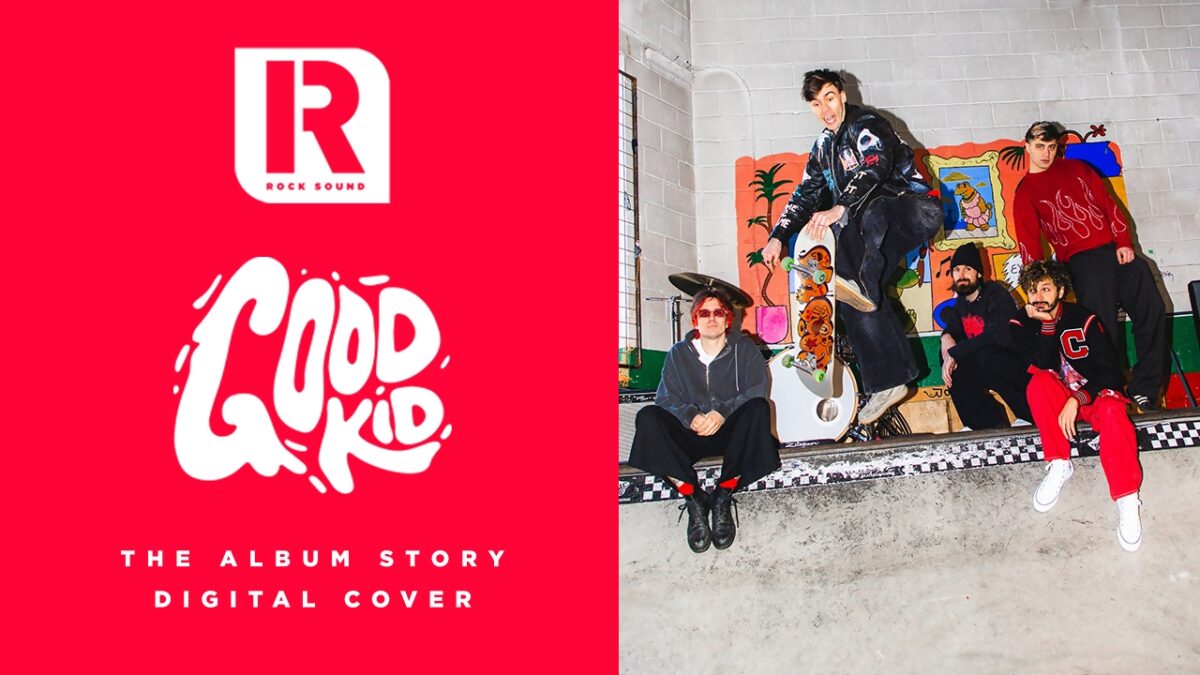
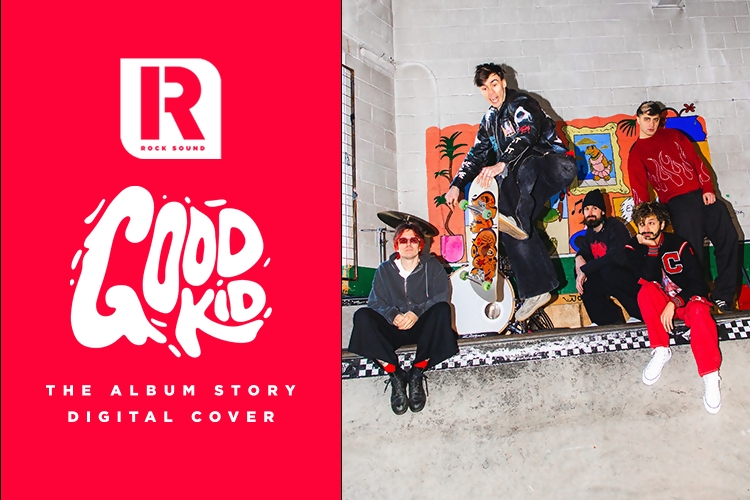
Read Good Kid, ‘Can We Hang Out Sometime?’ | The Album Story below:
(Click ‘View Fullscreen’ for digital feature or scroll down for text only version)
TEXT ONLY:
For a band whose entire identity has been shaped by connection, it feels fitting that Good Kid’s long-awaited debut album is rooted in the simple act of asking for it.
Not in some grand, poetic, world-stopping way either. Just in the kind of sentence that can sit in your drafts for an hour before you finally work up the courage to hit send. The kind of message that sounds casual on the surface but carries so much weight in its five simple words.
‘Can we hang out sometime?’
For years, the Toronto band have been building towards a moment like this. A group formed by five computer science students and longtime friends, over the last few years the buzz around Good Kid has become impossible to ignore. Sitting on over 700 million streams before their debut album has even arrived, their growth has been fuelled by their commitment to authenticity, ensuring every single person who hits play on their music instantly feels a part of something bigger.
Recorded with Grammy-winning producer John Congleton in Los Angeles while the city was being ravaged by the 2025 wildfires, ‘Can We Hang Out Sometime?’ is the band’s most cohesive and emotionally expansive release yet. Created whilst trapped inside the studio, refreshing their feeds for emergency alerts from their Airbnb and watching huge plumes of smoke gather overhead, it’s a record about friendship, loneliness, love and connection, created within deeply uncertain times.
A debut album that pushes Good Kid into countless new directions whilst still sounding unmistakably their own, ultimately, it’s the perfect example of what music should be about. It’s the story of five friends in a room, doing what they love – and treasuring every single minute of it.
THE SOUND
Historically, Good Kid have been an EP band partly by necessity. Far from the most prolific songwriters, their four self-titled EPs have served as snapshots of a particular time, bringing together whatever ideas they were currently working on into neat collections. Eight years since the arrival of their first EP, it’s a format that became comfortable for the band, but this time, they wanted to understand what it meant to write with a bigger picture in mind.
“The album came together very quickly,” guitarist David Wood recalls.
“As artists, we wanted to create something meaningful. We were in LA for about three weeks, and when we got to the studio, we were under a tremendous amount of pressure.”
“I think we collectively lost a few years of life due to the pressure of what was going on around us with the wildfires too,” he continues.
“It was unbelievably stressful, but it had a tremendously positive impact on the album because of the unique environment it put us in. We were able to go through the whole process from start to finish without any reason to leave.”
In fact, guitarist Jacob Tsafatinos is quick to point out that finding themselves in the middle of such a disaster played a large part in the album actually getting finished. With the air quality so bad that stepping outside their Airbnb was no longer an option, and with nothing to occupy their time except making music and playing board games, it was then that the band finally ticked off the tasks that they had been procrastinating.
“One thing I love about Good Kid is that no matter what happens, we write music for ourselves. If I bring a song to the band, it’s because I think it’s cool, and I think my friends will think it’s cool. I’m only ever trying to impress the band,” Jacob nods.
“It’s part of the charm of being an independent band,” David adds.
“We get to continue writing the music that we like to write and that’s really true to ourselves. The pressure we were feeling in the studio did translate to a slightly darker roster of songs though, and that’s why we have songs like ‘Eastside’ and ‘Rift’ on there.”
With those two tracks coming as the distortion-heavy opening one-two punch of ‘Can We Hang Out Sometime?’, having a full album’s worth of tracks to play around with gave the band the opportunity to try more new things beyond their signature J-rock and pop-punk blend.
It’s how they finally found a place for the vibrant buzz of ‘Tornado’ – a track born from a demo that had been kicking around the rehearsal space for half a decade – and similar moments of texture and experimentation are sprinkled all through the tracklist, guided by the expert vision of producer John Congleton. That being said, there are still plenty of the unapologetically fun, high tempo love songs we’ve come to expect from Good Kid.
“We wanted to make sure that there was a good balance. We wanted to do things differently, but we didn’t want to suddenly create a grunge album,” David laughs.
“One of the reasons we worked with John Congleton as a producer was because he created a lot of sounds that we would not ever be able to recreate. Even he would not be able to recreate the effects that we were able to get in his studio.”
“On a Good Kid album, though, there also needs to be those songs that are just about big energy and hopeless romance. That’s what we were able to do with ‘Coffee’ and ‘Cicada’. We’re trying to evolve our sound and grow as musicians, but there have to be those Good Kid songs that you want to dance to.”
THE LYRICS
If there is one word that keeps surfacing in our conversation around ‘Can We Hang Out Sometime?’, it’s connection. What binds all of these songs is the desire for closeness, the fear of losing it, the inability to communicate it, and the hope that somehow it can always be repaired.
“The thing that ties it all together is the importance of friendship and the different types of relationships that you can find yourself in,” David says.
“Because we don’t have one singular songwriter, lyrically our songs are more reflective of reality,” Jacob adds.
“You end up with songs that represent a range of emotions and feelings. There are angry songs like ‘Eastside’ and ‘Rift’, but we’re not angry all the time. Like most people, we’ll have a shitty experience and be furious about it, but then we move on. We wrote these songs over a period of time, and in that time we also experienced lots of moments filled with love. We’ve felt romantic, we’ve been head over heels in love, had crushes, and felt existential dread. The album is reflective of the range of emotions that you feel throughout life, but it all comes back to that yearning for connection and wanting to experience that with other people.”
That idea stretches across the entire record. ‘Wall’ explores our tendency to put up barriers in life and pretend that we’re fine, whilst ‘Rift’ spirals through the breaking point of toxic obsession and poor mental health. Elsewhere, ‘Cicada’ offers a somewhat hopeful twist on the ache of inadequacy and the desire to become someone worth loving, and ‘Ginger Lemonade’ is dedicated to our chosen families and those who we weather the best and worst parts of life alongside.
Beneath every song on ‘Can We Hang Out Sometime?’ is the same emotional current: people trying, and often failing, to reach each other properly. A brutally honest reflection on how nothing is ever perfect, and how no form of relationship is ever clean or easy, it’s a collection of songs that encourage us to cherish what we have. No matter how messy, frustrating, and occasionally painful it may be, it’s an album that repeatedly returns to the belief that human connection is all we have.
“That’s the core of this album,” David says.
“If these songs have one central message, it’s to spend time with the people you love and to find connection. Loneliness comes in so many different forms, but the album’s title is a solution to a lot of problems that people face. No matter what you’re going through, whether you’re going through heartbreak, whether you’re angry at someone… The only real way to combat that loneliness is to reach out to people.”
THE COLLABORATORS
When you’re in a band, trust is everything, and that’s especially true when you operate like Good Kid. With a songwriting process that involves each member bringing ideas in at different stages of completion, there is no singular songwriter at the heart of this project. With every one of them contributing their own angles for lyrics and fragments of melody when inspiration strikes, it’s why every Good Kid song is the result of complete collaboration.
“Music is vulnerable, and opening up to people is vulnerable,” David says.
“We all trust each other deeply, not only as friends, but as musicians and as storytellers. We trust that each one of us will do a good job with whatever story any of us bring to the table, and will help us to deliver the best possible song.”
“It’s also important to learn to let go. When I bring a story to the band, that story might change over time. It might become a hybrid of our stories, or it could end up as a completely new story. Over time, I’ve gotten better at seeing how cool that is. The original message of a song might not be fully there by the time it’s finished, but the spirit of it is always there.”
“Collaborative songwriting isn’t always about getting your personal opinion or personal taste through,” Jacob adds.
“It’s about supporting someone else’s vision and contributing what you can contribute. It’s like a lay-up in basketball. Someone sets you up, and all you have to do is dunk it.”
As for why John Congleton was the right person to help guide them through that process, the answer is pretty self-explanatory. A prolific producer who’s worked with the likes of Death Cab For Cutie, Explosions In The Sky, and Wallows, Good Kid initially sought him out because his resume was home to some of their favourite records.
Once they were in the studio together though, each day brought new confirmations that they had made the right choice. A producer with an ear for strange, organic textures, and an ability to understand how to get the best out of a band without flattening their instincts, John helped elevate the songs on ‘Can We Hang Out Sometime?’ to a whole new level.
“We always want to work with people who have made art that we love, and honestly we never thought John was going to say yes,” Jacob smiles.
“He really cares about making bands actually sound like they’re a band. He cares about threading that needle between something that feels live and organic but that has also been produced well. That was really in line with our ethos, and with what we wanted to do with this album.”
THE TITLE AND ARTWORK
There’s no shortage of depth to be found in an album like this, but its title is almost disarmingly ordinary.
A casual question you might shoot over to a friend you haven’t seen in a while, the real importance of ‘Can We Hang Out Sometime?’ sits under the surface of those five words.
Deceptively heavy, it ties directly into the loneliness that exists in these songs, taking different forms throughout. There’s the loneliness of heartbreak. Of anxiety. Of being misunderstood. Of making art on your own. Of living online. Of feeling disconnected from yourself.
“So much of what we are fighting as a band is this idea of constant loneliness,” David explains.
“Writing music can be lonely because a lot of it is done on your own. What makes our band so special, to me at least, is the connections that we get to make through our music, and through things like our Discord community. That is such a great antithesis to loneliness.”
The phrase itself came from a lyric David had written, but it was John Congleton who pushed it into focus as the album title. Clicking into place, it happened to perfectly capture the way the band had been connecting throughout the process, trying to make sense of the world by staying in each other’s orbit.
Visually, that theme carries into the cover art, created by Good Kid’s longtime collaborator Gabriel Altrows. Whilst Gabe had originally planned to meet the band in LA to absorb the atmosphere of the sessions in person, the fires made it impossible. Instead, once the record was done, the whole team spent time together discussing each song’s colour, mood and imagery until a central concept emerged.
“Gabe has made every piece of cover art for us since our first song,” Jacob nods.
“What we came up with after our conversations about the record was this concept of a cassette player that is also a time machine. It’s like the TARDIS from Doctor Who, so it can travel through space and time. So much of the record is about connection, relationships, wishing something could have been different, or envisioning a future that doesn’t exist yet. My personal interpretation of the art is this cassette player which is breaking apart, and all the potential possibilities of reality are all living within it. It’s the unraveling of reality, but at the centre of it all is this group of friends who are facing it together.”
THE FUTURE
An album about revisiting old feelings, imagining alternative outcomes and desperately trying to hold onto people before they disappear, even when Good Kid’s music spirals into doubt, obsession, heartbreak or existentialism, there is always something holding it together. Usually, it’s the five people in the middle of it all.
For a band whose rise has been so unusual, their future is never going to look entirely conventional. Established on a unique philosophy, their entire audience has been built while keeping their discography Content ID-free and DMCA-free, actively encouraging fans and creators to use their songs however they want.
“We are super committed to allowing anybody who wants to use our music to do so without any sort of punishment or copyright strikes,” Jacob explains.
“That’s an ethos that we’ve always had from the very first song we put out. We personally don’t think that art should be gated through a paywall. Art should not be something that you can only enjoy if you have a certain amount of money. I think that ethos has served us pretty well so far.”
As the band gets bigger, though, the obvious question is how they protect that intimacy. How they stop something so human from being dulled down by the pressures of the industry. For Jacob, the answer lies in staying truthful to the things that made Good Kid what it is in the first place.
“Unless one of us needs a kidney transplant and we’re forced to sell our entire catalogue… It’s never changing,” he smiles.
“It’s just about making sure that we are staying authentic to the things that we enjoy, and that we don’t turn into something that isn’t representative of us as people. When you do that, that’s when it starts to feel more disconnected and cheap.”
In a world that often leads us to believe that we should all be striving for perfection, that honesty is what makes the album’s meaning so startlingly simple. At its heart, ‘Can We Hang Out Sometime?’ is a record that celebrates the untidiness of human connection, admitting that we’ll all get it wrong sometimes, but that we all need people around us ready to fight our corner at a seconds notice.
“We were listening to the album recently with someone who said that the final song gives them a feeling of deep nostalgia. A longing for a time when things were simpler,” David says.
“I hope that more people have that reaction, and I hope that by the time the album wraps, they also feel that longing for something simple and beautiful. That feeling of hanging out with your buddies when you were a kid… I want people to hold onto that.”
“I want everyone who picks up this album to go through a range of emotions,” Jacob finishes.
“I hope that it takes them on an adventure through anger, sadness, hope, love, and existentialism. When they come out of that though, I hope that they call someone who they’ve been fighting with and say, ‘You know what, let’s hang out and work this out’.”
Source link
