
Classic Rock
Why They Changed TV Forever
Nov
If you grew up in the ’70s, you had three channels to choose from, but somehow the sitcoms on them were some of the best TV has ever made.
Most of us recall three networks, a PBS station, and maybe a fuzzy UHF channel, plus a few extras if you were lucky enough to have cable. But TV in the ’70s was so good, and the lineup was so solid, that looking back, it’s hard to believe all these shows existed at the same time.
Imagine this: It’s a Saturday night in 1973, and CBS serves up All in the Family, M*A*S*H, The Mary Tyler Moore Show, The Bob Newhart Show, and The Carol Burnett Show.
Wow. That’s a line-up.
The “Rural Purge” Changed ’70s TV
The decade didn’t actually start that way, though. While ’70s TV is most commonly known for its gritty vibes, early ’70s TV was actually still rife with talking horses and hillbilly millionaires.
That’s right. In the early ’70s, primetime TV was full of “country” programming, mostly found on the CBS network, ranging from variety shows like Hee-Haw to fish-out-of-water sitcoms like Green Acres and The Beverly Hillbillies, and family (big family) shows like Petticoat Junction. Then CBS decided to clear that programming from its schedule to attract a more modern and urban audience (with more money to spend), and did what was later called the “rural purge” — gone were shows actually performing well in the ratings. [There’s a great Mobituaries episode about this very thing.]
This opened up slots for a new kind of programming, what you might call “reality TV” but not in the way that we know it today. This was real families and in very real situations — this was the Norman Lear era, a wave of issue-driven sitcoms like All in the Family, Maude, and The Jeffersons that went beyond screwball and slapstick to hold a mirror up to America.
What’s Our ‘Big 4’ Criteria for ’70s Sitcoms?
And that brings us to our Big 4 of ’70s sitcoms. But first, we should lay down our criteria, because there is a lot of good stuff to choose from.
- Born in the ’70s: The show started its run in the decade and made the most impact during that time.
- Big Ratings: This went beyond the critics. We are talking about millions and millions of people watching each week.
- Game Changer: The show had to have broken the rules, invented a new format, and/or changed the face of TV.
- The Long Tail: While not so common today, iconic shows from this period spawned spin-offs, catchphrases, endless reruns, and carved a unique spot in the popular culture.
And we have one more rule that’s a little more nuanced: One show per family tree. TV creators like Norman Lear tended to create a universe, and if we didn’t have this rule, Lear’s shows would likely take all four spots. So when you don’t see shows like Maude and The Jeffersons, that’s why. We had some Sophie’s Choices to make here.
Without further ado, here are UCR Pop Culture’s choices for the Big 4 of ’70s sitcoms.
All in the Family (1971–79)
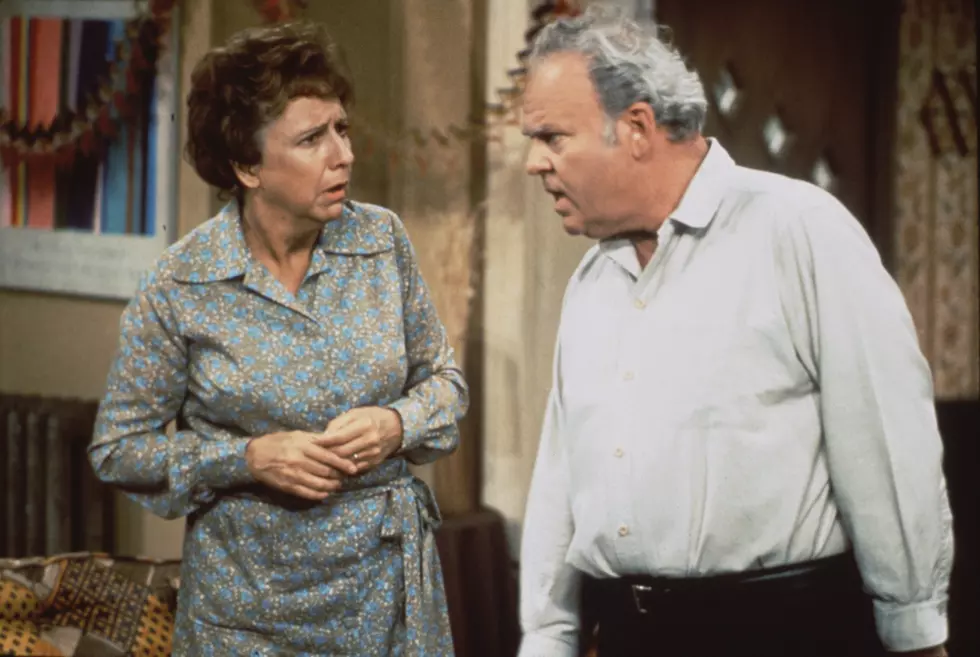
Just how progressive was All in the Family? In something that feels very 2026, the network ran a disclaimer before the first episode, which aired in January 1971, essentially telling viewers not to panic.
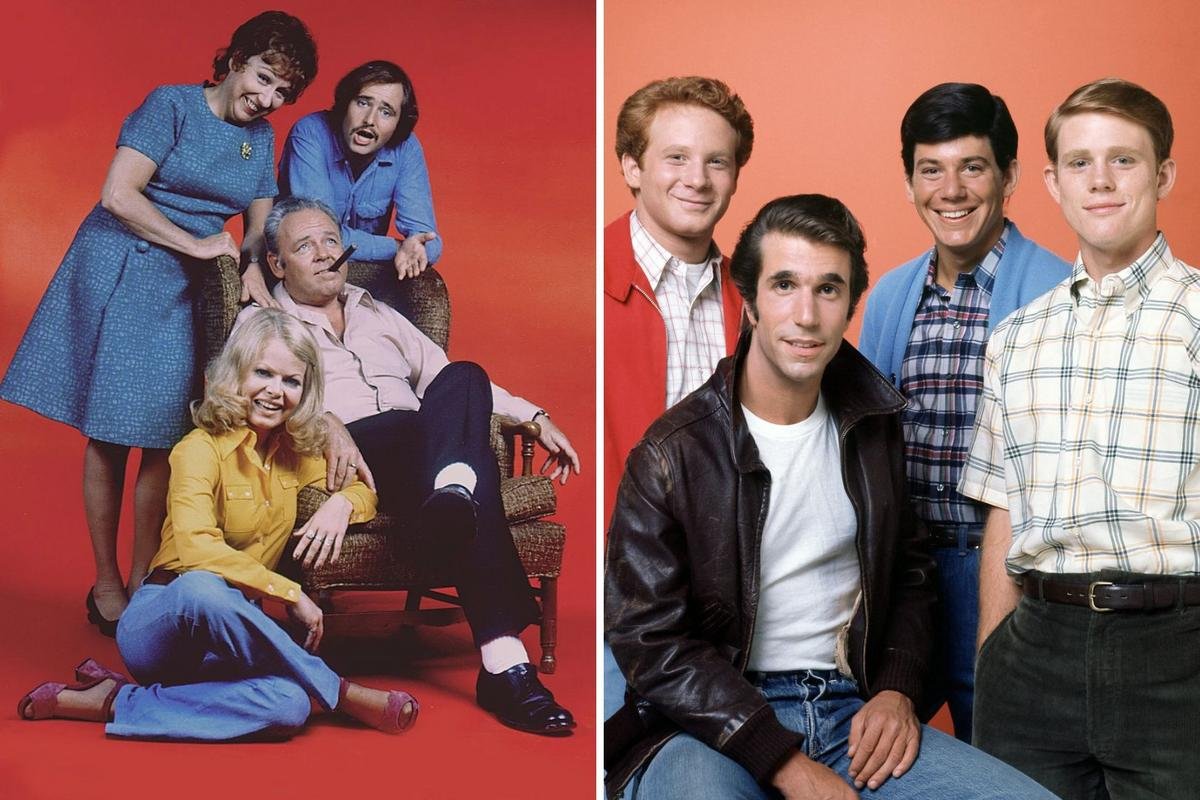
Did they panic? Sure, a little. But the numbers grew. Based on the British sitcom Till Death Us Do Part, the groundbreaking show shifted dinner-table discussions to include race, the war in Vietnam, and feminism. Far from being a family you’d envy or want to emulate, the Bunkers — Carroll O’Connor’s Archie, Jean Stapleton’s Edith, and Rob Reiner and Sally Struthers as Meathead and Gloria — became TV’s first family.
READ MORE: TV Shows With Only One Surviving Cast Member
For five straight seasons, the show was No. 1 in the ratings. It also had the distinction of — get this — being the first sitcom where you heard a toilet flush.
Watch the ‘All in the Family’ Opening
Creator Norman Lear’s impact on television was far-reaching, and the All in the Family spinoffs — Maude, The Jeffersons, Good Times (by way of Maude) and Archie Bunker’s Place — changed TV in their own ways.
Was Lear worried about the panic his flagship show would cause? Not in hindsight. As he told NPR in 2014, “It went on the air, and believe me, no state seceded from the Union.”
M*A*S*H (1972–83)
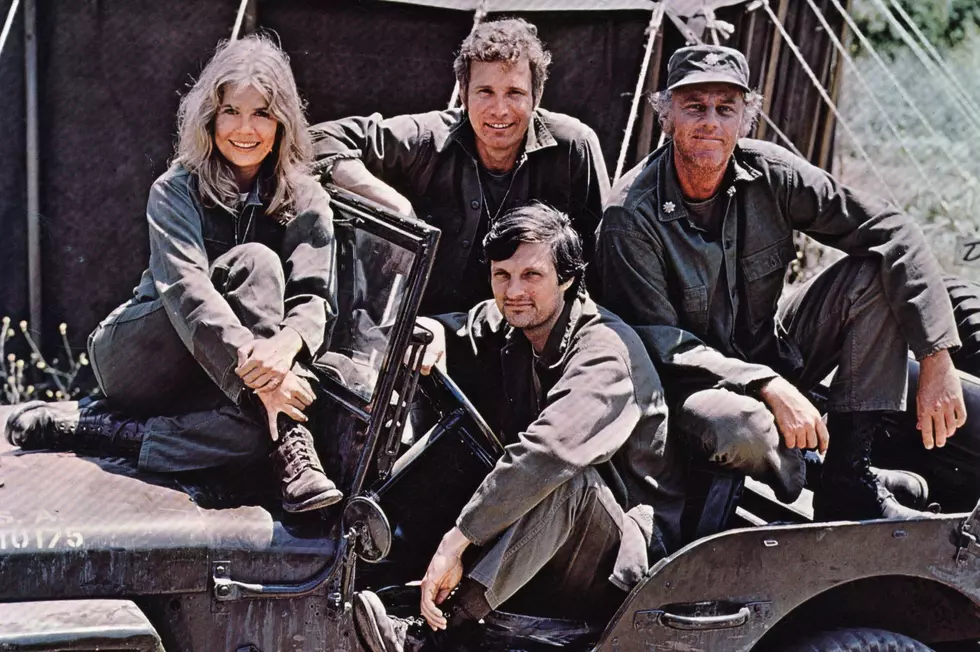
A defining fact about M*A*S*H was that the Korean War lasted about three years. M*A*S*H lasted 11 years. For an entire generation of kids, the sound of that theme song meant one thing: bedtime.
M*A*S*H was already a cultural icon well before it hit the small screen. Starting first as a novel in 1968, “MASH: A Novel About Three Army Doctors” was written by “Richard Hooker,” the pen name of Dr. H. Richard Hornberger. The story drew on his own experience as a surgeon with the 8055th MASH unit in Korea.
The novel was then adapted into a successful film by Robert Altman, with Donald Sutherland as Hawkeye and Elliott Gould as Trapper John. If that second name sounds familiar, it’s because the character later got his own series, Trapper John, M.D., starring Pernell Roberts. It was technically a spinoff of the movie, not the TV show, which is why Wayne Rogers, TV’s original Trapper, was nowhere to be found.
READ MORE: 12 TV Theme Songs From the ’70s I Can Still Sing by Heart
The TV series starring Alan Alda as Hawkeye ran 11 seasons, which was nearly four times as long as the actual war.
One of M*A*S*H’s most defining strengths was its incredible blending of tragedy and comedy. It did not ignore the emotional aspects of war in the least, but it was able to use that tragedy to bring light to darkness, which made the more serious moments land that much harder. Strangely, the show had a laugh track, which CBS insisted on. There was a compromise, though: the laugh track was left out of the operating room scenes.
Watch the ‘M*A*S*H’ Opening
While the other series on our list are remembered for spawning numerous spin-offs, M*A*S*H is also remembered for sheer ratings power. The ratings were enormous. The series finale remains the go-to example of just how popular network TV could be during that time, and when “Goodbye, Farewell and Amen” aired on Feb. 28, 1983, it drew an astonishing 105 million viewers, making it the most-watched broadcast in U.S. history until the 2010 Super Bowl. It remains the most-watched scripted episode of TV ever. You still hear the story about New York’s water system being impacted by the series finale: apparently, the water system took a hit when viewers all ran to the bathroom at the same time after the show. Decades later, M*A*S*H remains a rerun success.
As you can imagine, pitching a show like M*A*S*H was not easy. Star Alan Alda once recalled a programming chief at the network reacting to one of the show’s dark early episodes by asking, “What is this, a situation tragedy?”
The Mary Tyler Moore Show (1970–77)
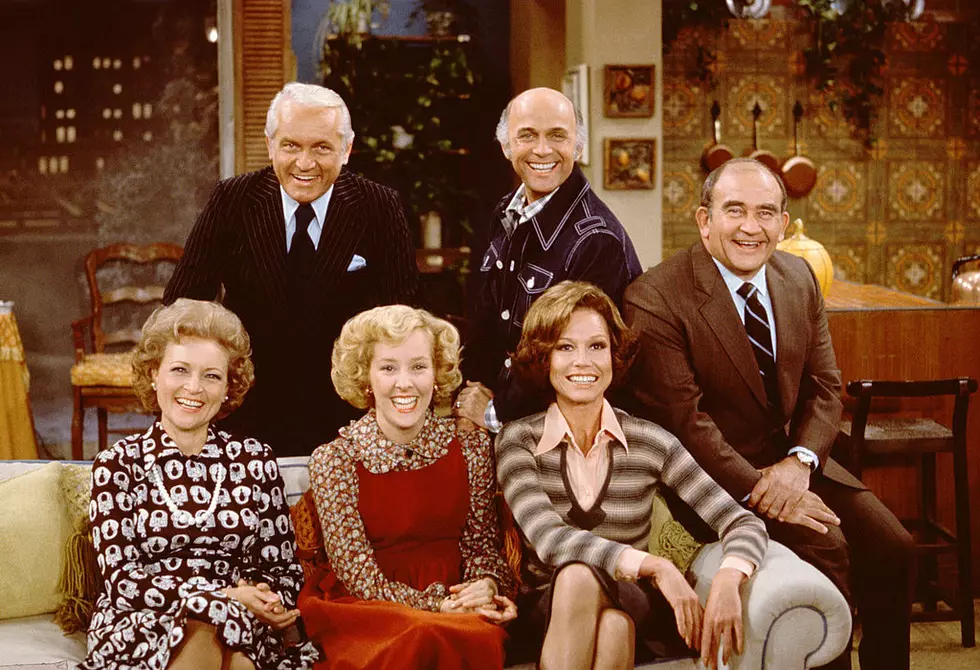
Ask a woman who was making her way up the career ladder in the 1970s (and ’80s, and ’90s and beyond…) who inspired her, and you’d likely hear one name: Mary Richards, or in reality, Mary Tyler Moore.
Was Mary Richards a feminist? In an interview with Larry King in 2002, Mary Tyler Moore answered that exact question: “She wasn’t aggressive about it, but she surely was.”
You might be surprised to learn that the original idea for the show was for Mary to be divorced. Not so shocking today, but back then, it wasn’t a popular idea. CBS said no, reportedly concerned that the audience would see this as her being divorced from the beloved actor Dick Van Dyke, whom Moore starred with on The Dick Van Dyke Show. The show would go on to have Mary set off on her own after a breakup.
But the compromise of Mary not waiting on a husband worked like a charm. With a cozy apartment, a friend upstairs, and a job she loved, she was making it on her own, and the theme song referenced that journey. In season one, “Love Is All Around” wondered whether this single woman in a new city could really manage by herself. By season two, the lyrics had changed, cheerfully assuring her she’d be just fine.
READ MORE: The ‘Mary Tyler Moore’ Apartment and TV’s Other Most Famous Homes
The hat toss in the air on a Minneapolis street still stands as one of the most iconic opening credits moments in TV history, with the song written and sung by Sonny Curtis, who played with Buddy Holly before joining the Crickets and also wrote the rock standard “I Fought the Law.”
Watch the ‘Mary Tyler Moore Show’ Opening
In terms of impact, the show basically wrote the blueprint for the workplace sitcom as we know it today, with the underlying premise consistently being that the co-workers become a family. Co-creator James L. Brooks went on to develop Taxi, and you’ll find the “found family” workplace theme runs nicely through WKRP, Cheers, The Office, and Parks and Recreation.
And spinoffs? There were plenty. Mary’s upstairs neighbor Rhoda Morgenstern, played by Valerie Harper, went on to have her own successful series, Rhoda, while Phyllis starred Cloris Leachman as Phyllis Lindstrom, Mary’s meddling landlady and friend. Lou Grant also came after, with a big mood shift, somehow turning Ed Asner’s gruff newsroom boss into the lead character in an hour-long newspaper drama. And get this: Asner won Emmys for playing Lou Grant in a comedy and a drama. That’s pink-wedge Trivial Pursuit material.
Happy Days (1974–84)
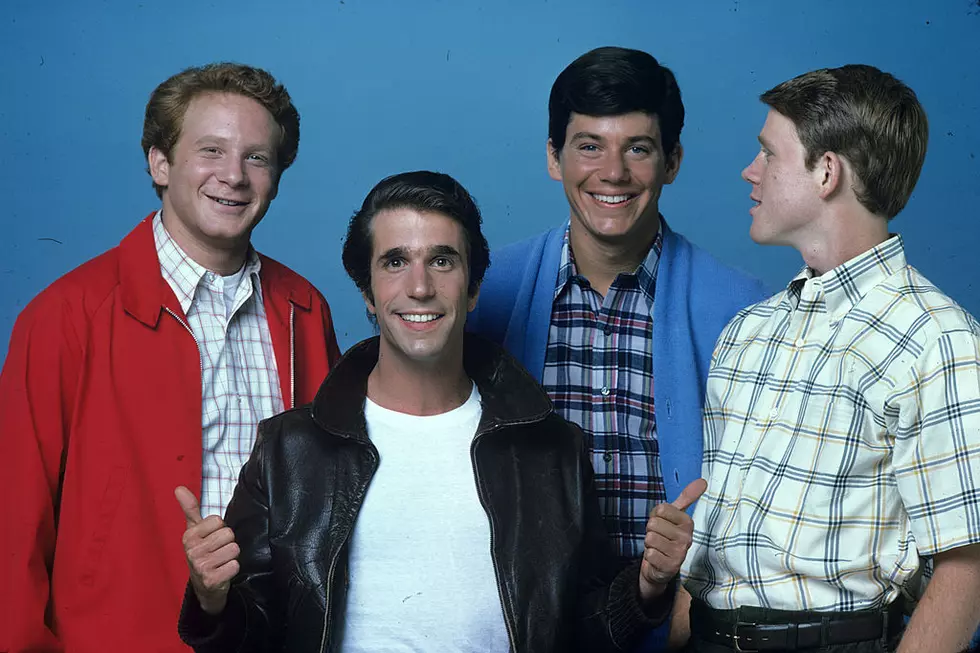
While some of this list focused on the present day, Happy Days was a bit of an anomaly, turning the clock back a couple of decades to the ’50s — specifically, ’50s Milwaukee.
With the popularity of George Lucas’ American Graffiti still riding high, the time was perfect to bring back some of the post-war optimism of the ’50s. The show focused on Richie Cunningham, played by an already known (thanks to Andy Griffith) Ron Howard — who actually appeared in American Graffiti — but as the series progressed, it became clear that a minor character, Arthur Fonzarelli (Henry Winkler), was becoming the breakout star. And in true ’70s form, if a catchphrase takes off, there’s no stopping the train. Fonzie’s thumbs-up “Aaaayy” could arguably be called the most famous catchphrase in TV history.
The show did go through its share of major changes, though. The iconic opening theme was originally “Rock Around the Clock” by Bill Haley & His Comets, but was later replaced by the original song the show is most known for, the one that runs through the days of the week and ends on the show’s title.
Watch the ‘Happy Days’ Opening
The show was also famous for completely erasing one of its major characters, Richie’s brother, Chuck, who went to college and was never seen or mentioned again. His character was deemed unnecessary. He vanished so completely that disappearing TV characters are now said to have “Chuck Cunningham syndrome.”
Probably the biggest but least talked-about change was that the first seasons of the series were shot single-camera style and not in front of a live studio audience. That approach mimicked American Graffiti, but the show was later switched to a traditional multi-camera sitcom setup, which changed the entire vibe. Fonzie’s wardrobe changed, too. He went from a simple tan jacket to a leather motorcycle jacket, which made the network nervous, but everything turned out OK.
In terms of longevity, Happy Days had it in spades. In 1977, the Fonz famously water-skied over a shark (while wearing swim trunks alongside his leather jacket, naturally), which had people asking, “Are they out of ideas?” and eventually gave us the phrase “Jumping the shark…,” used to describe a TV show that had run its course. Did this bother Winkler? Not in the least. He told NPR in 2023, “… I think I had very nice legs at that time.”
The spin-offs were plentiful and wildly varied. Laverne & Shirley gave Fonzie’s and Richie’s dates their own show, and Mork & Mindy turned a one-off alien guest star into a pop culture sensation and Robin Williams a star. Then Richie’s little sister, Joanie (Erin Moran), grew up and got her own show, Joanie Loves Chachi, with Scott Baio, but that spinoff wasn’t built to last.
Want more retro TV trivia? Check out our list of ’80s and ’90s TV shows that were always on, but nobody seemed to watch.
Did Anyone Watch These TV Shows in the 1980s and 1990s?
While you might think “watching while distracted” is a modern habit, even back in the day the TV was just… there, humming along while you did other things. These were the shows that weren’t exactly “must-see TV,” more like “might-see TV” — part of the culture, but you had to wonder: who was actually watching?
Gallery Credit: Stephen Lenz
QUIZ: Can You Guess the Iconic TV Show From Just One Opening Freeze-Frame?
Think you’re the ultimate TV fan? How well do you know your classic TV intros? Put your knowledge to the test with our quiz. We’ll show you a freeze-frame from the opening credits of an iconic TV show—take your best guess, then scroll to see if you were right and watch the full opening. Good luck!
Gallery Credit: Stephen Lenz
